Stock Analysis · Sphere Entertainment Co (SPHR)
Overview
Sphere Entertainment Co (SPHR) is an entertainment company best known for operating and developing “destination” venues built around immersive, large-format audio-visual experiences. Its flagship asset is Sphere in Las Vegas, a venue designed to host live events (concerts, sports-related events, corporate events) as well as proprietary immersive productions. The company’s business model combines venue operations (ticketing and on-site spending) with the ability to create and monetize unique content designed specifically for its venue technology.
In its SEC filings, Sphere Entertainment describes revenue primarily through live entertainment events and venue-related activity, along with revenue tied to content and event-related arrangements. In simple terms, the main recurring drivers typically include:
- Event-related revenue (ticket sales and event presentation activity at its venues)
- On-site spending and venue services (food and beverage, merchandise, premium hospitality, and venue-related fees tied to events)
- Content and production-related revenue (Sphere-specific immersive productions and related arrangements)
- Advertising/sponsorship-style revenue tied to venue presence and brand partnerships (where applicable)
Exact segment percentages can change meaningfully quarter to quarter because the event calendar and the mix between third‑party shows and company-produced content can vary.
The recent income/expense mix shown above highlights a key structural feature of the business: even when revenue rises, costs and overhead can remain large because operating a specialized venue and producing immersive content can be expensive. That dynamic is central to understanding both the potential and the uncertainty in long-term results.
Key Figures
| Metric | Value | Industry ⓘ |
|---|---|---|
| Date | Feb 08, 2026 | |
| Context | ||
| Sector | Communication Services | |
| Industry | Entertainment | |
| Market Cap ⓘ | $3.36B | |
| Beta ⓘ | 1.65 | |
| Fundamental | ||
| P/E Ratio ⓘ | N/A | 50.96 |
| Profit Margin ⓘ | -27.40% | 4.93% |
| Revenue Growth ⓘ | 15.20% | 5.20% |
| Debt to Equity ⓘ | 46.44% | 80.15% |
| PEG ⓘ | N/A | |
| Free Cash Flow ⓘ | $173.23M | |
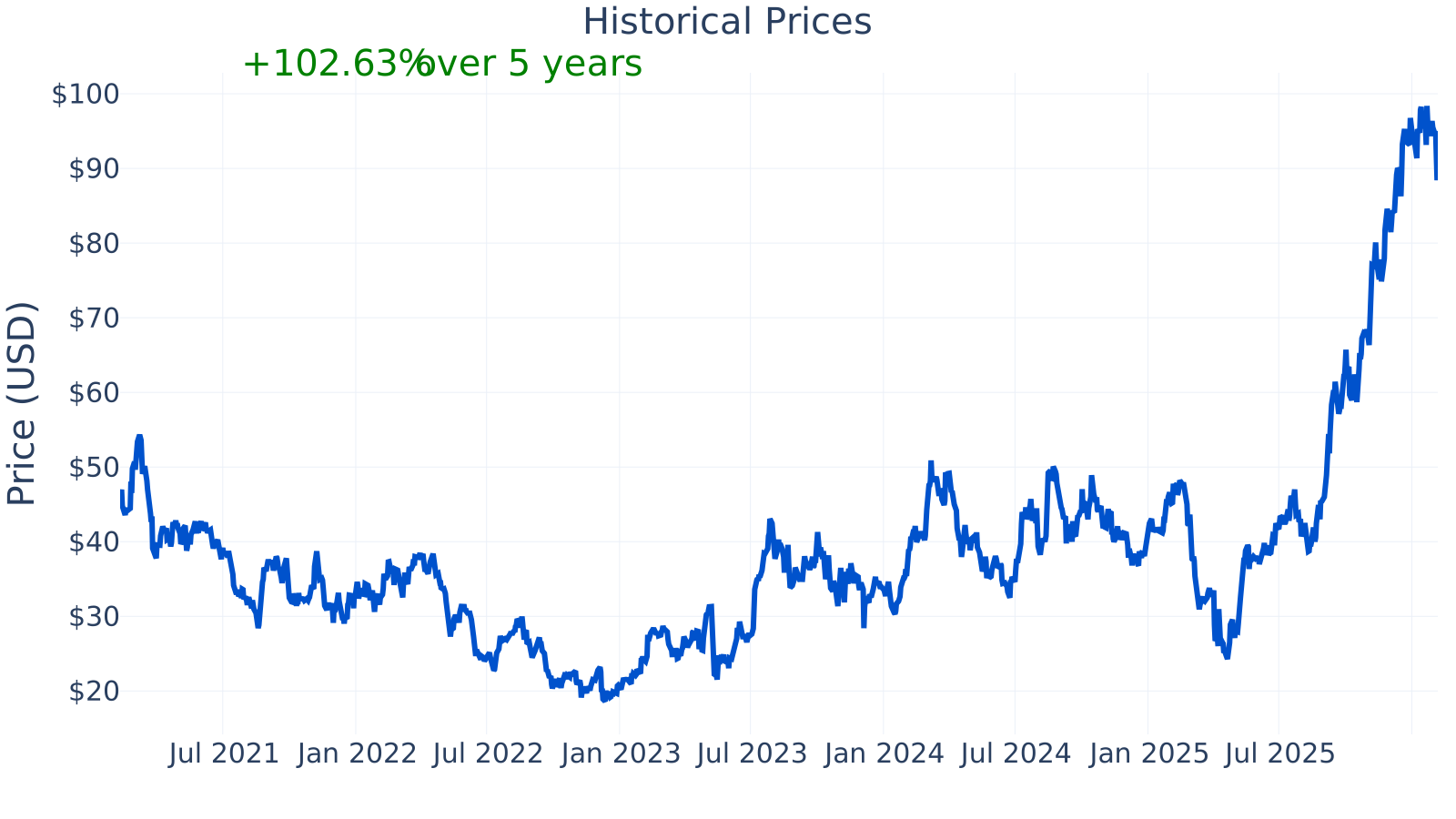
Sphere Entertainment’s market capitalization is about $3.36B, and the stock has shown high sensitivity to market moves (beta ~1.65), which commonly translates into larger price swings than the broader market.
Profitability is currently a key debate. The latest profit margin shown is about -27.4%, below the industry median of roughly 4.9%. At the same time, the company’s latest year-over-year revenue growth is about 15.2%, which is above the industry median of roughly 5.2%.
On balance sheet leverage, debt-to-equity is about 46%, which is lower than the industry median (about 80%). Free cash flow over the trailing twelve months is shown at about $173.2M, a notable change versus prior periods when free cash flow was negative.
Growth (Medium)
Sphere Entertainment operates within the broader live entertainment and out-of-home experiences market—an area that benefits from consumer spending on experiences and premium events. The company’s approach is not just “more seats” or “more shows,” but differentiation through a venue format that is difficult to replicate quickly: a purpose-built immersive environment plus content designed specifically for that environment.
Strategically, the long-term growth logic depends on a few practical levers:
- Higher utilization of the venue calendar (more event nights and more consistent scheduling)
- Mix improvement (more premium events and/or content formats that carry better economics)
- Monetization depth (premium hospitality, suites, sponsorships/brand integrations, and on-site spending)
- Repeatable “playbook” potential if the company can eventually expand the concept beyond a single flagship venue
Revenue growth has been volatile over time, with some quarters showing sharp declines and others showing strong increases. The latest reading (about +15% year over year) is above the industry median, but the pattern suggests results can depend heavily on the event slate, the timing of productions, and year-over-year comparability.
The free cash flow trend is a notable swing: it was deeply negative in earlier periods (hundreds of millions of dollars per year) and has recently turned positive. For a venue-and-content model, sustained positive free cash flow can be an important signal because it suggests the business may be moving from a build-out/launch phase toward a more self-funding operating phase. The key question is durability—whether positive free cash flow holds across a full cycle of event schedules and production spending.
Risks (High)
This article is for informational purposes only and does not constitute financial advice. Some content is AI-generated. See Disclaimer