Stock Analysis · Steven Madden Ltd (SHOO)
Overview
Steven Madden, Ltd. designs, sources, markets, and sells fashion-focused footwear, accessories, and apparel under the Steve Madden brand and other owned and licensed brands. The company uses a mix of wholesale distribution (selling to department stores, specialty retailers, and online partners) and direct-to-consumer channels (its own stores and e-commerce), with products typically positioned around trend-driven styles at accessible price points.
Revenue is generally generated through a combination of product categories and selling channels, with footwear as the core business and accessories/apparel as complementary lines. In its SEC filings, the company commonly discusses its business through operating segments such as Wholesale and Direct-to-Consumer, and it may also break out licensing activity where applicable (percentages vary by period and are not provided in the figures shown here).
- Footwear (core product line; includes women’s, men’s, and kids categories)
- Accessories & apparel (handbags, small leather goods, belts, and select apparel)
- Licensing and other (where applicable, based on brand licensing arrangements)
The simplified picture is that Steven Madden earns money by creating and merchandising product designs, efficiently sourcing production, and then distributing those products through wholesale partners and its own retail and digital channels.
From 2021 to 2024, total revenue increased from about $1.87B to about $2.28B. Over the same period, selling, general, and administrative expenses rose in dollar terms (from about $348M to about $464M), and net income was lower in 2024 than in 2021–2022 (about $169M in 2024 vs. about $191M in 2021 and $216M in 2022). This suggests that while the company grew sales over the period, profitability did not rise in a straight line, reflecting the reality that fashion retail and wholesale can be sensitive to promotions, product mix, and operating cost pressure.
Key Figures
| Metric | Value | Industry ⓘ |
|---|---|---|
| Date | Feb 23, 2026 | |
| Context | ||
| Sector | Consumer Cyclical | |
| Industry | Footwear & Accessories | |
| Market Cap ⓘ | $2.90B | |
| Beta ⓘ | 1.11 | |
| Fundamental | ||
| P/E Ratio ⓘ | 51.14 | 29.80 |
| Profit Margin ⓘ | 2.38% | 5.43% |
| Revenue Growth ⓘ | 6.90% | 6.90% |
| Debt to Equity ⓘ | 63.50% | 63.50% |
| PEG ⓘ | 1.83 | |
| Free Cash Flow ⓘ | $133.13M | |
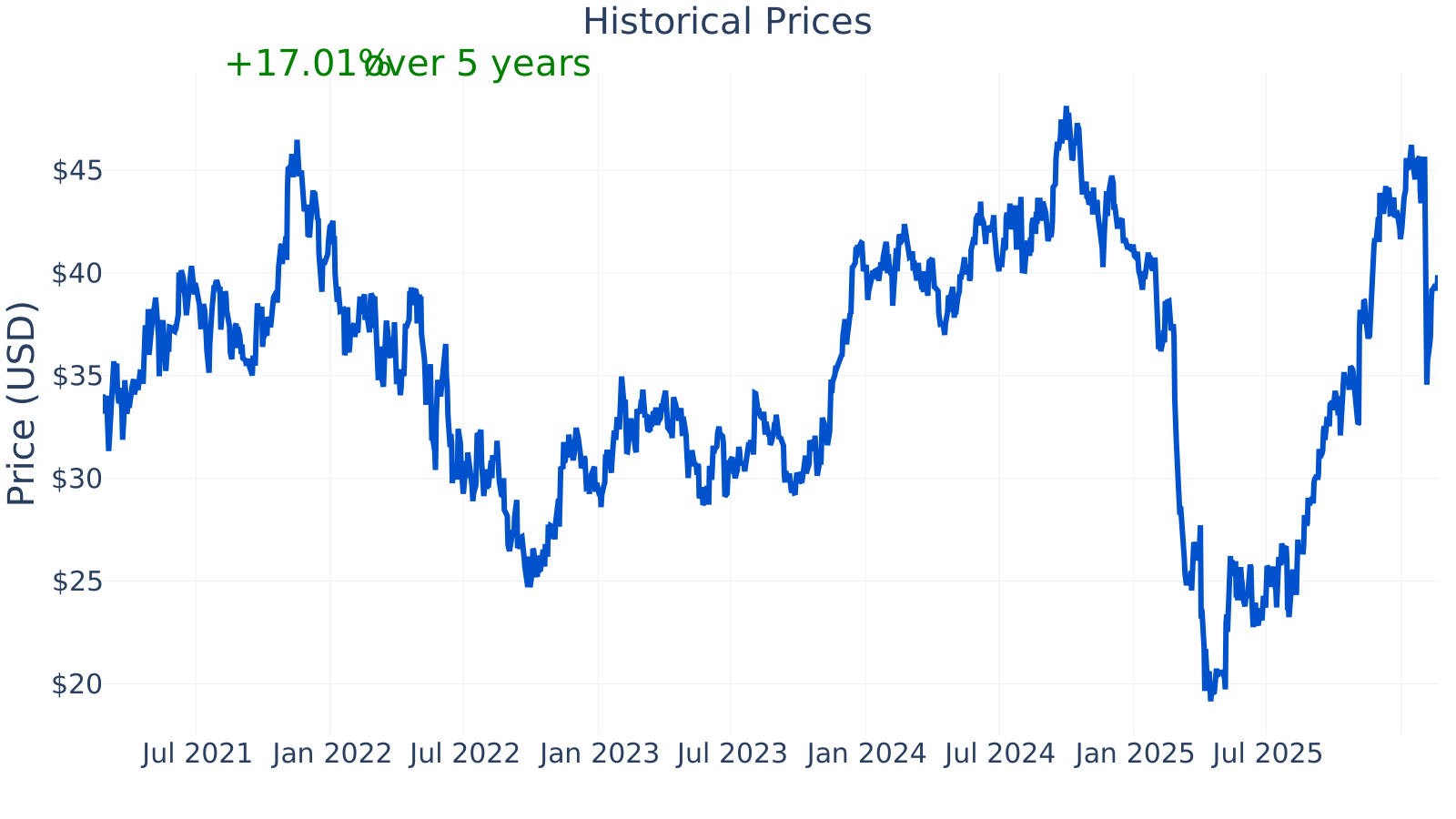
At the latest snapshot, Steven Madden’s market capitalization is about $2.9B and its beta is 1.11, which typically indicates price moves somewhat similar to (and slightly more volatile than) the broader market.
On profitability, the company’s profit margin is about 2.38% versus an industry median near 5.43%. On growth, the company’s year-over-year revenue growth is about 6.9%, in line with the industry median shown. Free cash flow over the last twelve months is about $133M, which matters because cash flow can be used for reinvestment, share repurchases, or strengthening the balance sheet.
Growth (Medium)
Steven Madden operates in footwear and accessories, a large and mature consumer category that tends to grow with population, income, and fashion cycles rather than through rapid structural expansion. That means long-term growth often depends on brand strength, product relevance, distribution reach, and execution (inventory discipline, pricing, and marketing), rather than a single technology-like adoption curve.
The company’s strategy—maintaining a broad distribution network while expanding direct-to-consumer (stores and e-commerce) and extending accessories—can support growth by diversifying where sales come from and by capturing more of the retail margin when selling directly. Direct-to-consumer can also provide better control over brand presentation and more immediate feedback on trends, though it also brings higher operating costs (rent, labor, fulfillment) than pure wholesale.
Revenue growth has been uneven quarter-to-quarter over the last several years, including periods of negative year-over-year comparisons and later re-acceleration. More recently, the chart ends around mid-to-late 2025 with growth returning to mid-single digits (about 6–7%), which is consistent with a steadier, mature-category pace rather than hyper-growth.
Free cash flow has remained positive across the periods shown, but it declined from a peak around 2023 (about $258M) to about $163M in 2025, with the latest twelve-month figure listed as about $133M. For a consumer brand business, sustained positive free cash flow is a constructive sign, but the downtrend can indicate a tougher operating environment, higher working-capital needs (such as inventory), or margin pressure.
Risks (High)
The biggest business risk is that footwear and accessories are highly competitive and trend-driven. Demand can shift quickly with changing consumer preferences, and fashion misses can lead to markdowns and weaker margins. The category is also sensitive to consumer spending, which tends to soften when inflation, interest rates, or employment conditions pressure household budgets.
Another key risk is margin volatility. Even when revenue grows, profitability can fall if product and channel mix changes, promotions increase, or costs rise (freight, labor, and sourcing). This is especially relevant for companies balancing wholesale (often steadier volumes, lower operating costs) and direct-to-consumer (potentially higher gross margin, but higher selling and fulfillment costs).
Debt-to-equity is shown at about 63%, matching the industry median in the table. The time series shows a long period where leverage was closer to the mid-teens (roughly 13–20%), followed by a noticeable step up in 2025 to the mid-60% range. A higher leverage level can reduce flexibility if earnings weaken, because more cash may be needed for interest and fixed obligations.
Profit margin has declined over time from double-digit levels earlier in the period to low single digits most recently (about 2.38%), and it sits below the industry median shown. Lower margins can leave less cushion for forecasting errors, inventory issues, or promotional activity during weaker demand periods.
Competitive positioning is another important consideration. Steven Madden is a well-known brand in fashion footwear, but it competes with many large, well-capitalized players across multiple price points and styles. Competition typically includes other branded footwear and accessory companies and broad lifestyle brands that also sell shoes and handbags. In practice, competitive advantages in this space usually come from a combination of brand recognition, speed-to-market on trends, strong wholesale relationships, and effective direct-to-consumer execution; these advantages can be meaningful but are not permanent, so consistent product and merchandising performance matters.
Valuation
Valuation is often discussed using the price-to-earnings (P/E) ratio, which compares the company’s stock price to its earnings. The latest P/E shown in the table is about 51.1, which is above the industry median of about 29.8. A higher P/E can reflect expectations for stronger future growth, higher long-term profitability, or a perception of brand durability—but it also means the valuation can be more sensitive if earnings disappoint.
The historical P/E chart shows that Steven Madden’s P/E has varied widely over time, including periods where it was near or below the industry and more recent points where it is notably higher. When the P/E rises while profit margins are under pressure, the valuation tends to rely more heavily on a recovery in earnings (through margin improvement, higher volumes, or both) to remain supported.
Conclusion
Steven Madden is a recognizable consumer brand business centered on footwear, supported by accessories and a mix of wholesale and direct-to-consumer distribution. Over the 2021–2024 period shown, the company grew revenue overall, and it has generated positive free cash flow, which is an important characteristic for operating resilience.
At the same time, recent indicators highlight meaningful pressure points: profit margins have trended down to low single digits, leverage increased sharply in 2025 compared with the prior multi-year range, and the current P/E ratio is elevated versus the industry median. Taken together, the long-term picture depends heavily on whether the company can stabilize and improve profitability while continuing to keep product relevant in a highly competitive, trend-driven category.
Sources:
- SEC EDGAR — Steven Madden, Ltd. Form 10-K (Annual Report)
- SEC EDGAR — Steven Madden, Ltd. Form 10-Q (Quarterly Reports)
- Steven Madden, Ltd. Investor Relations — SEC Filings
- Wikipedia — “Steve Madden” (company background and general description)
This article is for informational purposes only and does not constitute financial advice. Some content is AI-generated. See Disclaimer