Stock Analysis · MACOM Technology Solutions Holdings Inc (MTSI)
Overview
MACOM Technology Solutions Holdings Inc. (MTSI) is a semiconductor company that designs and sells specialized chips and components used to move, convert, and amplify high-frequency signals. In simple terms, its products help data travel efficiently in places where performance and reliability matter a lot, such as telecommunications networks, data centers, defense systems, and industrial applications.
MACOM focuses on high-performance analog and mixed-signal semiconductor technology, including radio frequency (RF), microwave, millimeter-wave, and photonic (optical) solutions. These parts are typically sold to equipment manufacturers rather than directly to consumers, and the demand is tied to long product cycles, qualification requirements, and customer programs.
Based on how MACOM describes its business in its SEC filings, revenue is generally driven by a mix of end markets rather than consumer electronics. The company commonly groups revenue by end market categories such as:
- Telecommunications (infrastructure and networks)
- Data center (high-speed connectivity and optical networking)
- Industrial & defense (aerospace/defense programs and industrial systems)
Exact percentages by end market can vary by period and are typically disclosed in the company’s filings and investor materials when applicable.
Over the periods shown, revenue increases from about $607M to about $967M, while spending on research and development also rises (from about $139M to about $244M). That combination often reflects a company investing more heavily to support a larger product portfolio and future programs, although it can also pressure near-term profitability if costs grow faster than operating income.
Key Figures
| Metric | Value | Industry ⓘ |
|---|---|---|
| Date | May 04, 2026 | |
| Context | ||
| Sector | Technology | |
| Industry | Semiconductors | |
| Market Cap ⓘ | $21.32B | |
| Beta ⓘ | 1.60 | |
| Fundamental | ||
| P/E Ratio ⓘ | 128.01 | 53.51 |
| Profit Margin ⓘ | 15.88% | 6.16% |
| Revenue Growth ⓘ | 24.50% | 19.70% |
| Debt to Equity ⓘ | 41.95% | 20.71% |
| PEG ⓘ | 2.05 | |
| Free Cash Flow ⓘ | $132.74M | |
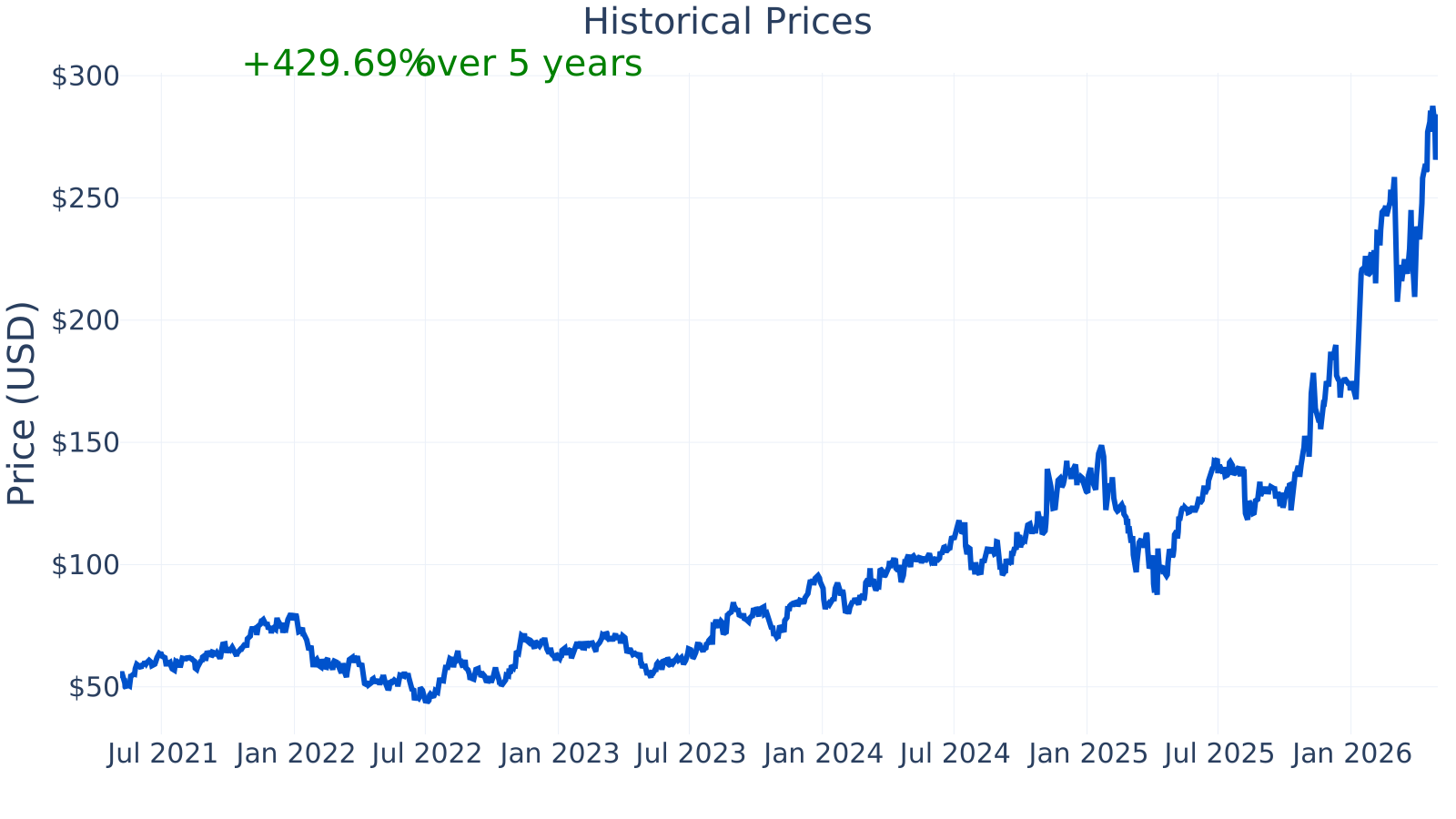
MACOM’s market capitalization is about $21.3B, and the stock’s beta of ~1.60 indicates the share price has historically moved more than the broader market (higher volatility).
Profitability and growth metrics appear stronger than the median company in the semiconductor peer set shown: the latest profit margin is ~15.9% versus an industry median of ~6.2%, and year-over-year revenue growth is ~24.5% versus an industry median of ~19.7%. Free cash flow over the trailing twelve months is about $133M, indicating the business has recently generated cash after operating needs and capital spending.
Valuation metrics are elevated compared with the peer median: the latest P/E ratio is ~128 versus an industry median of ~53.5. The PEG ratio of ~2.05 (a valuation measure that relates price-to-earnings to expected growth) is often interpreted as implying the market is pricing in meaningful growth, though PEG depends heavily on the growth assumptions behind it.
Growth (Medium)
MACOM operates in parts of the semiconductor industry that are supported by long-term trends: rising data traffic, upgrades in network infrastructure, and ongoing demand for high-performance components in defense and aerospace. These end markets tend to value reliability, signal quality, and power efficiency—areas where specialized analog and high-frequency semiconductor suppliers can differentiate.
The company’s strategy (as described across its public filings) centers on expanding and refreshing its product portfolio for telecom, data center connectivity, and industrial/defense uses, while investing in engineering to win customer programs that can last multiple years. A practical way to think about this: once a component is designed into a system, it may stay there for a long time, which can create steadier demand than more consumer-driven chip categories—though it still remains cyclical.
The year-over-year revenue growth pattern shows a dip into negative growth in parts of 2023, followed by a sharp rebound through 2024 and into 2025, with recent growth still solid at roughly 24.5%. This kind of swing is common in semiconductors, where customer ordering patterns and inventory cycles can create periods of slowdown followed by recovery.
Free cash flow has been positive across the periods shown, ranging from roughly $129M–$191M, with the most recent value around $133M. Positive free cash flow can support reinvestment in research and development and provide flexibility during downturns, though it can vary significantly over time depending on working capital and business conditions.
Risks (High)
MACOM’s main risks are tied to the nature of the semiconductor business and the company’s specific end markets. Demand can be cyclical, and customer purchasing can shift quickly when customers adjust inventories or delay capital spending (for example, telecom operators slowing network upgrades). In addition, a portion of demand can come from large customers or specific programs, which can increase volatility if a major program is delayed or a design win is lost.
Competition is also a meaningful risk. MACOM participates in markets where customers often evaluate suppliers on performance, power efficiency, reliability, long-term supply commitments, and cost. The competitive landscape includes large diversified analog and RF semiconductor providers as well as specialized players. Depending on the exact product line and customer, competitors can include companies such as Analog Devices, Broadcom, Qorvo, Skyworks Solutions, and other optical/RF component suppliers. MACOM is not the largest semiconductor company in this group, but it competes by focusing on specialized, high-performance niches and by maintaining a broad catalog across RF and optical technologies.
Financial risk factors include leverage and profitability variability. While debt can help fund growth, it increases financial obligations, and it matters more when industry conditions weaken.
Debt-to-equity trends downward from levels above 100% in 2021 to around 42% most recently. That is a notable improvement over time, but it remains above the industry median shown (about 21%), meaning MACOM still uses more leverage than the typical peer in the comparison set.
Profit margin has been volatile: very strong margins appear in parts of 2022 and early 2023, then margins turn negative across several quarters in 2024–2025, before recovering to a positive level of about 15.9% most recently. This variability can reflect changing demand, pricing/mix, operating cost levels, and accounting items. For long-term readers, the key takeaway is that profitability has not been steady quarter-to-quarter, even though the latest margin is above the industry median.
Valuation
MACOM’s valuation (as commonly summarized by the price-to-earnings ratio) is high relative to the semiconductor peer median in the table. A higher P/E often indicates the market expects stronger future earnings growth, improved profitability, or a more durable competitive position—though it can also increase sensitivity if results fall short of expectations.
The P/E history shown varies widely over time, with a marked increase starting in late 2023 and remaining well above the peer median in multiple periods. The latest P/E is around 107 on the chart (and ~128 in the latest metrics table), compared with an industry median around the 50s. In practical terms, this suggests the stock price embeds relatively optimistic assumptions about future performance compared to many peers, which can amplify downside if growth slows or margins compress.
Conclusion
MACOM is a specialized semiconductor supplier serving telecom, data center connectivity, and industrial/defense markets where performance and reliability matter. Revenue growth has recently been strong after a cyclical downturn, and free cash flow has been positive in the periods shown, supporting ongoing investment in engineering.
At the same time, the business shows meaningful cyclical and execution risk, including swings in profit margin and sensitivity to customer spending cycles. Leverage has improved substantially since 2021 but remains above the peer median in the comparison set.
The valuation metrics shown are elevated versus the industry median, indicating the market is placing a higher value on MACOM’s earnings than many semiconductor peers. That context makes future results—especially sustained growth and stable profitability—more important to monitor because expectations appear demanding relative to the sector.
Sources:
- SEC EDGAR — MACOM Technology Solutions Holdings, Inc. Form 10-K (Annual Report)
- SEC EDGAR — MACOM Technology Solutions Holdings, Inc. Form 10-Q (Quarterly Report)
- MACOM Investor Relations — Press Releases and SEC Filings
- Wikipedia — “MACOM Technology Solutions” (basic company background)
This article is for informational purposes only and does not constitute financial advice. Some content is AI-generated. See Disclaimer