Stock Analysis · MACOM Technology Solutions Holdings Inc (MTSI)
Overview
MACOM Technology Solutions Holdings, Inc. (MTSI) designs and sells specialized semiconductor products used to move, amplify, and process high-frequency signals. In simple terms, its chips help equipment send and receive data and power efficiently in demanding environments. The company markets solutions used across areas such as telecommunications networks (including high-speed fiber links), industrial and automotive applications, and defense-related electronics.
MACOM generates revenue primarily by selling semiconductor products and related solutions. The company reports revenue by end market in its filings (the exact mix can shift over time with customer demand and product cycles). A typical way MACOM describes its revenue drivers includes:
- Data center and telecom (networking, optical and high-speed connectivity components)
- Industrial and automotive (energy, factory automation, and certain vehicle-related applications)
- Defense (RF/microwave components for aerospace and defense systems)
Because MACOM operates in semiconductors, its business tends to be influenced by cycles in customer spending and inventory levels. At the same time, its product focus (high-performance analog/RF and optical connectivity) is often tied to long-term trends such as growing data traffic and continued upgrades in communications infrastructure.
Over the periods shown, revenue trends upward overall (from about $607M in fiscal 2021 to about $967M in fiscal 2025 in the view shown), while operating expenses—especially research and development—also rise. That combination highlights a common pattern for chip companies: investing heavily in new products while demand can vary year to year, which can lead to profitability swings.
Key Figures
| Metric | Value | Industry ⓘ |
|---|---|---|
| Date | Feb 07, 2026 | |
| Context | ||
| Sector | Technology | |
| Industry | Semiconductors | |
| Market Cap ⓘ | $17.69B | |
| Beta ⓘ | 1.43 | |
| Fundamental | ||
| P/E Ratio ⓘ | 106.25 | 45.89 |
| Profit Margin ⓘ | 15.88% | 9.42% |
| Revenue Growth ⓘ | 24.50% | 13.10% |
| Debt to Equity ⓘ | 41.95% | 25.62% |
| PEG ⓘ | 0.83 | |
| Free Cash Flow ⓘ | $132.74M | |
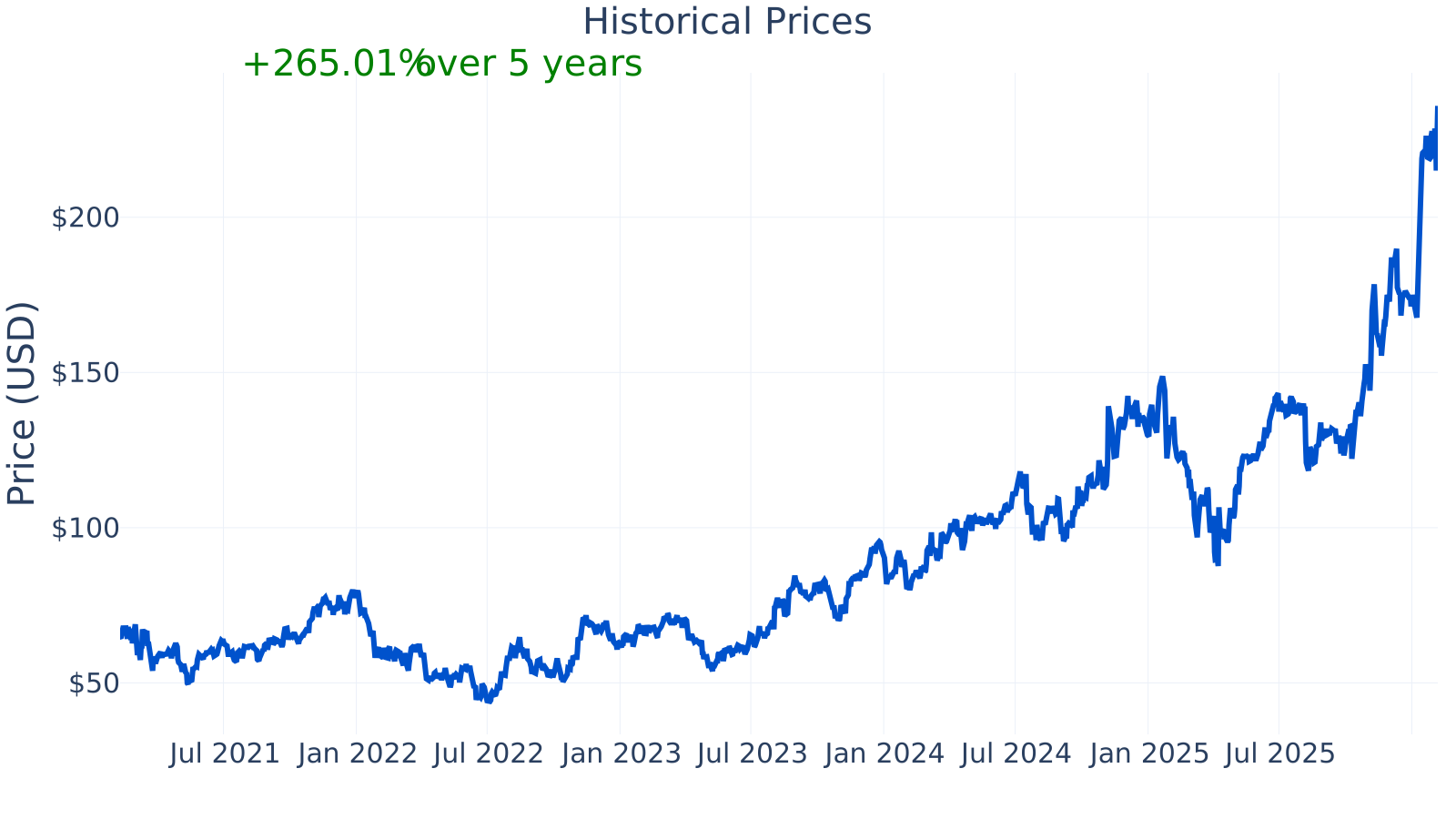
MACOM’s market capitalization is about $17.7B, and the stock has a beta of 1.43, which indicates it has tended to move more than the overall market. The company’s profit margin is about 15.9%, above the semiconductor industry median shown (about 9.4%). Recent year-over-year revenue growth is about 24.5%, also above the industry median shown (about 13.1%). Leverage is moderate with a debt-to-equity ratio of about 42% (above the industry median shown of about 25.6%). The P/E ratio is about 106, higher than the industry median shown (about 45.9). Free cash flow over the trailing twelve months is about $133M.
Growth (Medium)
MACOM participates in parts of the semiconductor industry that are supported by long-term demand for faster data movement and higher-frequency electronics. Upgrades in telecom and data communications infrastructure, ongoing growth in cloud and data center traffic, and continued use of specialized RF components in aerospace/defense can all contribute to multi-year demand. However, these end markets can still be cyclical, with periods where customers slow orders to work down inventory.
Strategically, MACOM’s growth approach centers on developing specialized analog, RF, microwave, and optical semiconductor products and expanding its product content in systems that need high performance. The company’s sustained spending on research and development (visible in its income statement structure) is consistent with competing in niches where product performance, reliability, and design expertise can matter as much as sheer manufacturing scale.
The revenue growth pattern shown is cyclical: growth slowed and turned negative in parts of 2023, then re-accelerated strongly through 2024 and into 2025. The most recent point shown is about 24.5% year-over-year, which is faster than the industry median displayed (about 13.1%). This suggests MACOM recently experienced a stronger demand phase or share gains in some of its markets, though the earlier dip is a reminder that growth may not be smooth from year to year.
Free cash flow remains positive in the periods shown, ranging roughly from $129M to $191M, with the latest trailing twelve-month figure around $133M. Positive free cash flow can matter for long-term resilience because it helps fund investment and provides flexibility during downturns, even though it can fluctuate with working capital needs and the pace of investment.
Risks (High)
This article is for informational purposes only and does not constitute financial advice. Some content is AI-generated. See Disclaimer


