Stock Analysis · M/I Homes Inc (MHO)
Overview
M/I Homes, Inc. is a U.S. homebuilder. It develops communities, builds single-family homes (and, in some markets, attached homes), and sells them to homebuyers. The company also typically offers related services tied to a home purchase, such as mortgage origination and title services, often through affiliated operations.
Economically, a homebuilder’s business model is straightforward: it acquires and develops lots, constructs homes, sells completed homes (or homes under contract), and manages costs (materials, labor, land development, and overhead). Results are influenced by home prices, construction costs, mortgage rates, and the pace of buyer demand.
M/I Homes’ revenue is primarily tied to home sales, with additional contribution from financial services associated with those home transactions. In general terms, the main sources of revenue are:
- Homebuilding (home sales) — the largest contributor, driven by closings volume and average selling prices
- Financial services — mortgage and title-related income connected to home closings
Over the last several years, the company’s total revenue moved from about $3.75B (2021) to $4.50B (2024), with a more recent level around $4.42B (2025). Profitability has also varied with the cycle: for example, net income reached about $563.7M (2024) and later was about $402.9M (2025). Interest expense increased meaningfully in 2023 versus earlier years, which matters because homebuilders often carry debt and inventory (land and homes under construction) on the balance sheet.
The 2021–2025 breakdown highlights the typical homebuilding “math”: a large portion of revenue is consumed by construction and land-related costs, with profitability depending on keeping selling prices ahead of build costs and overhead. One notable shift is that interest expense rose sharply in 2023 compared with 2021–2022, consistent with a higher-rate environment and/or changing financing needs, and then moderated later.
Key Figures
| Metric | Value | Industry ⓘ |
|---|---|---|
| Date | Feb 08, 2026 | |
| Context | ||
| Sector | Consumer Cyclical | |
| Industry | Residential Construction | |
| Market Cap ⓘ | $3.74B | |
| Beta ⓘ | 1.78 | |
| Fundamental | ||
| P/E Ratio ⓘ | 9.62 | 12.00 |
| Profit Margin ⓘ | 9.12% | 8.48% |
| Revenue Growth ⓘ | -4.80% | -4.90% |
| Debt to Equity ⓘ | 34.32% | 34.53% |
| PEG ⓘ | 0.78 | |
| Free Cash Flow ⓘ | $132.00M | |
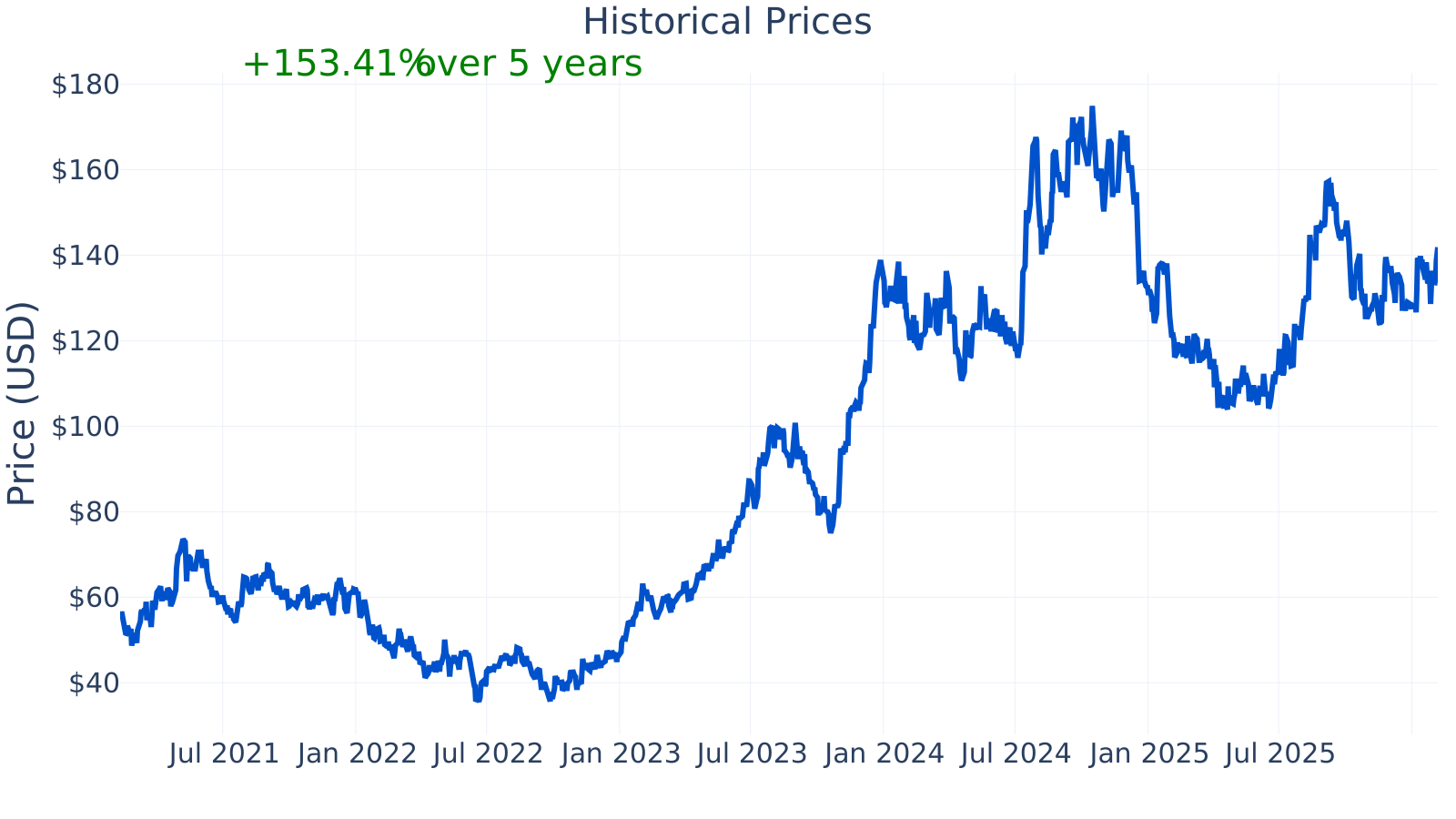
At a glance, the company is a mid-sized public homebuilder with an equity market value of about $3.74B. The stock’s beta of 1.78 indicates it has tended to move more than the broader market, which is common for cyclical businesses like homebuilding.
Profitability and balance-sheet leverage (debt compared with equity) sit close to industry norms in the latest snapshot, while valuation multiples appear below the industry median. The latest year-over-year revenue growth shown is slightly negative (-4.8%), broadly in line with the industry median (-4.9%), which suggests company performance is moving with the broader housing cycle rather than dramatically diverging from it.
Growth (Medium)
Homebuilding is a large, long-lived industry tied to population growth, household formation, employment trends, and the cost of financing (mortgage rates). Over long periods, housing demand tends to grow, but the path is uneven: activity can slow quickly when affordability deteriorates or when economic confidence falls.
M/I Homes’ results show this cyclical pattern. Revenue growth was strong in parts of 2021–2022, then turned mixed, including periods of contraction. That type of swing is typical for builders as they respond to changing buyer demand and incentives needed to sell homes.
The year-over-year revenue growth line illustrates that growth has not been linear: it ranged from very strong increases (for example, above 40% in early 2021) to declines (including around -20% in late 2023 and about -4.8% in late 2025). For long-term planning, a key question is whether a builder can stay disciplined on land buying, keep communities selling, and protect margins when conditions soften.
Cash generation is also important because builders must continuously fund land development and construction. Free cash flow can be positive for extended periods and then drop when the company invests more heavily in inventory or when the market slows.
The free cash flow trend shows that cash generation has been volatile, including a negative period (around -$49M in 2022) and strong positives later (above $400M around 2024), followed by a lower recent level (about $132M most recently shown). This pattern is common in homebuilding: inventory build and land spend can absorb cash even when earnings remain positive.
Potential catalysts for future growth in this business generally include: easing mortgage rates (improving affordability), wage growth and employment strength (supporting demand), and effective land/community positioning that matches what buyers want (price points, locations, and product mix). These are industry and execution factors rather than one-time events.
Risks (High)
This article is for informational purposes only and does not constitute financial advice. Some content is AI-generated. See Disclaimer


