Stock Analysis · MGM Resorts International (MGM)
Overview
MGM Resorts International is a hospitality and entertainment company best known for owning and operating large resort properties that combine hotels, casinos, restaurants, shows, and event space. Its operations are concentrated in major travel and gaming destinations, especially Las Vegas, and it also has exposure to regional U.S. gaming markets. In addition, MGM participates in online sports betting and iGaming through its BetMGM joint venture.
In simple terms, MGM’s business is designed to earn money from people who travel for vacations, conventions, nightlife, and live entertainment—and from gaming activity that happens on-site at its resorts and, to a smaller degree, online.
Revenue is generally driven by a mix of resort hotel stays, casino play, food and beverage, entertainment, and other on-property spending. MGM reports results through business segments (rather than a single universal “product” breakdown), and the mix can shift depending on travel demand, major events, and the strength of gaming activity in its markets.
Across recent years, MGM’s total revenue increased substantially versus the early post-pandemic period, while profitability has been more volatile. Interest expense remains meaningful, which is typical for capital-intensive resort operators that use significant debt to finance properties and large projects.
Key Figures
| Metric | Value | Industry ⓘ |
|---|---|---|
| Date | May 08, 2026 | |
| Context | ||
| Sector | Consumer Cyclical | |
| Industry | Resorts & Casinos | |
| Market Cap ⓘ | $9.75B | |
| Beta ⓘ | 1.28 | |
| Fundamental | ||
| P/E Ratio ⓘ | 52.21 | 19.89 |
| Profit Margin ⓘ | 1.03% | 4.08% |
| Revenue Growth ⓘ | 4.20% | 3.45% |
| Debt to Equity ⓘ | 1287.75% | 370.23% |
| PEG ⓘ | 1.14 | |
| Free Cash Flow ⓘ | $1.73B | |
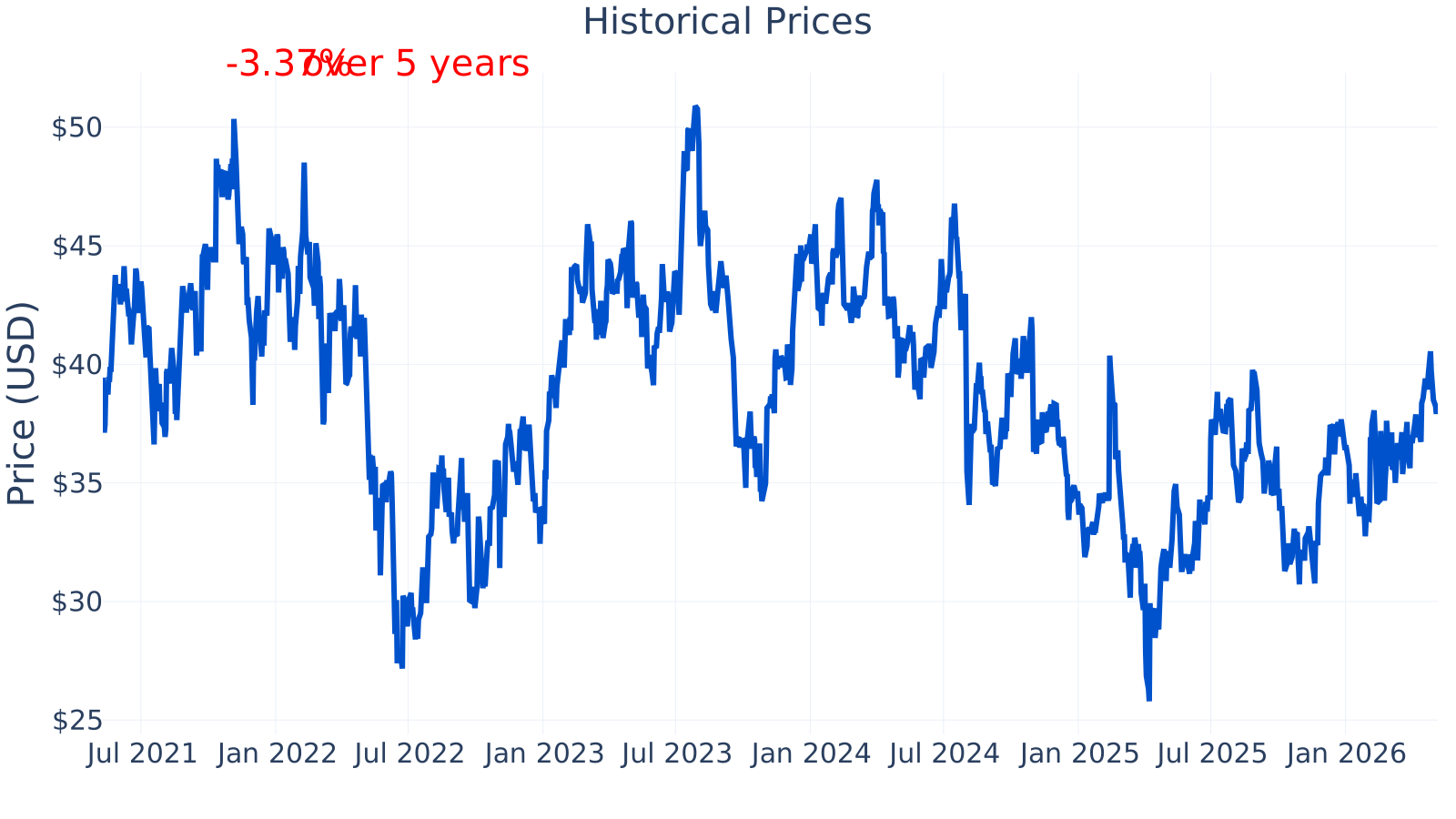
MGM’s market capitalization is about $9.75B, placing it among the larger publicly traded resort and casino operators. The stock’s beta of ~1.29 indicates it has tended to move more than the overall market, which is common for economically sensitive travel and leisure businesses.
On profitability, the latest profit margin is ~1.03%, below the industry median of about 4.09%, suggesting MGM’s recent bottom-line results have been relatively thin versus peers. On growth, latest year-over-year revenue growth is ~4.2%, slightly above the industry median of about 3.45%. Leverage stands out: debt-to-equity is ~1,288% versus an industry median near 370%, highlighting a substantially more leveraged balance sheet than the typical peer.
Growth (Medium)
The resorts and casinos industry tends to grow with tourism, consumer spending, and convention/event activity. It is also shaped by local regulation (gaming is licensed), and by long-term destination appeal—Las Vegas in particular has been repositioning over time toward a broader entertainment and events model rather than relying only on casino floors.
MGM’s strategy aligns with several potential long-term drivers: leveraging a portfolio of well-known properties in high-traffic destinations; capturing wallet share across hotel, dining, entertainment, and gaming; and participating in online gaming via BetMGM, which provides exposure to a channel that does not require building new physical resorts. In practice, these drivers can support growth, but results can still swing with the economic cycle.
Revenue growth has normalized compared with the unusually high growth rates seen during earlier recovery periods. More recently, growth has been modest, including a short stretch of slightly negative year-over-year comparisons before returning to positive territory (about 4.2% most recently).
Free cash flow over the trailing twelve months is about $1.73B, and the trend over the last few years shows variability but a recent rebound to the highest level shown. For a capital-intensive company, sustained free cash flow matters because it can support reinvestment in properties, debt reduction, or returns of capital (depending on management’s priorities and covenant constraints).
Risks (High)
MGM’s results are exposed to the broader economy. If consumer spending weakens, travel and discretionary entertainment often soften, which can reduce hotel occupancy, casino play, and on-property spending. Large resorts also have high fixed costs (staffing, maintenance, utilities), which can amplify the impact of downturns on profit.
Financial leverage is a central risk factor. MGM’s debt-to-equity level is much higher than the industry median, and it has risen sharply over time, with a notable spike in late 2025 and remaining elevated most recently (about 1,288%). Higher leverage can increase sensitivity to interest rates, refinancing conditions, and unexpected drops in operating cash flow.
Profitability has also been inconsistent. While MGM posted stronger margins in parts of 2021–2022, margins have generally trended down since then and sit around 1.0% most recently, below the industry median (about 4.2%). Thin margins can leave less room for error if costs rise, demand cools, or competitive intensity increases.
Competition is intense and varies by market. In Las Vegas, MGM competes with other large integrated resort operators for leisure travelers, conventions, and high-value casino customers. In regional markets, competition can include other licensed casinos as well as newer local capacity. In digital betting/iGaming (through BetMGM), competition includes other major online operators that can spend heavily on promotions and technology.
On competitive advantages, MGM benefits from scale, recognizable brands, prime resort locations, and an ecosystem approach (lodging + entertainment + dining + gaming) that can encourage guests to spend across multiple offerings. However, it is not the only scaled operator with these strengths, and maintaining property quality requires continuous capital spending.
Valuation
Valuation can be challenging to interpret for companies with earnings that swing due to one-time items, cyclical demand, and interest costs. MGM’s current P/E ratio is ~52.2, which is well above the industry median of about 19.9 in the table. Historically, MGM’s P/E has moved widely, including periods where it appeared much lower and at least one spike to very high levels (which can happen when earnings temporarily fall while the stock price does not drop proportionally).
In context, a higher P/E can reflect expectations for improving future earnings, but it can also reflect that recent earnings are temporarily depressed (making the ratio look “high” even if the business is not priced aggressively on other measures). Given MGM’s thin recent profit margin and high leverage, the P/E should be read alongside cash flow, debt levels, and the stability of operating performance rather than in isolation.
Conclusion
MGM Resorts International is a large, recognizable operator in an economically sensitive industry that blends travel, entertainment, and gaming. The company has demonstrated the ability to generate substantial free cash flow, and it has multiple avenues to participate in consumer demand (on-property spending across hotels, dining, entertainment, and gaming, plus online exposure through BetMGM).
At the same time, MGM’s current profile shows meaningful risk factors: relatively thin recent profit margins versus peers and a notably high debt-to-equity level compared with the industry median. For a long-term perspective, the key items to track are whether margins stabilize or improve through the cycle, whether leverage trends downward, and whether revenue growth remains resilient without relying on unusually favorable conditions.
Sources:
- SEC EDGAR — MGM Resorts International filings (Form 10-K, Form 10-Q)
- MGM Resorts International — Investor Relations materials (annual report and investor presentations)
- MGM Resorts International — Earnings call materials (company-hosted transcripts or prepared remarks, when available)
- Wikipedia — “MGM Resorts International” (basic company background)
This article is for informational purposes only and does not constitute financial advice. Some content is AI-generated. See Disclaimer