Stock Analysis · Lumen Technologies Inc (LUMN)
Overview
Lumen Technologies Inc (LUMN) is a U.S.-based telecommunications and network services company. It operates large-scale fiber networks and sells connectivity and related services to businesses, government organizations, and wholesale customers (other carriers and service providers). In simple terms, Lumen’s business is about moving data reliably and securely—through long-distance fiber routes, metro networks, and enterprise-grade networking services.
In its SEC filings, Lumen describes its revenue primarily by customer type and service families (rather than a simple “product shelf”). The largest revenue streams generally come from business and wholesale connectivity/networking services, with smaller contributions from consumer services (where still present) and other items. Exact percentages can change over time and depend on how the company groups categories in its reports, but the typical “largest to smaller” ordering in filings is often:
- Business / enterprise network services (connectivity, IP, VPN, Ethernet, wavelength, SD-WAN and related services)
- Wholesale services (services provided to other carriers and service providers)
- Mass Markets / consumer-related services (legacy voice/broadband and other consumer offers where applicable)
- Other / ancillary (varies by period and reporting classification)
Over the last several years, Lumen has also been reshaping its portfolio, including asset divestitures and a stronger emphasis on fiber-based services and enterprise customers. This kind of transition can materially change the mix of revenue and the year-to-year comparability of results, so reading the company’s segment discussion in the latest 10-K/10-Q is especially important for context.
The multi-year income flow highlights a notable revenue decline from 2021 to 2025, along with large swings in operating income and net income. It also shows that interest expense remains a meaningful recurring cost, which matters in a capital-intensive industry like telecom.
Key Figures
| Metric | Value | Industry ⓘ |
|---|---|---|
| Date | Feb 16, 2026 | |
| Context | ||
| Sector | Communication Services | |
| Industry | Telecom Services | |
| Market Cap ⓘ | $8.61B | |
| Beta ⓘ | 1.54 | |
| Fundamental | ||
| P/E Ratio ⓘ | N/A | 15.09 |
| Profit Margin ⓘ | -14.02% | 6.18% |
| Revenue Growth ⓘ | -8.70% | 2.10% |
| Debt to Equity ⓘ | -1585.23% | 113.97% |
| PEG ⓘ | 54.58 | |
| Free Cash Flow ⓘ | -$1.33B | |
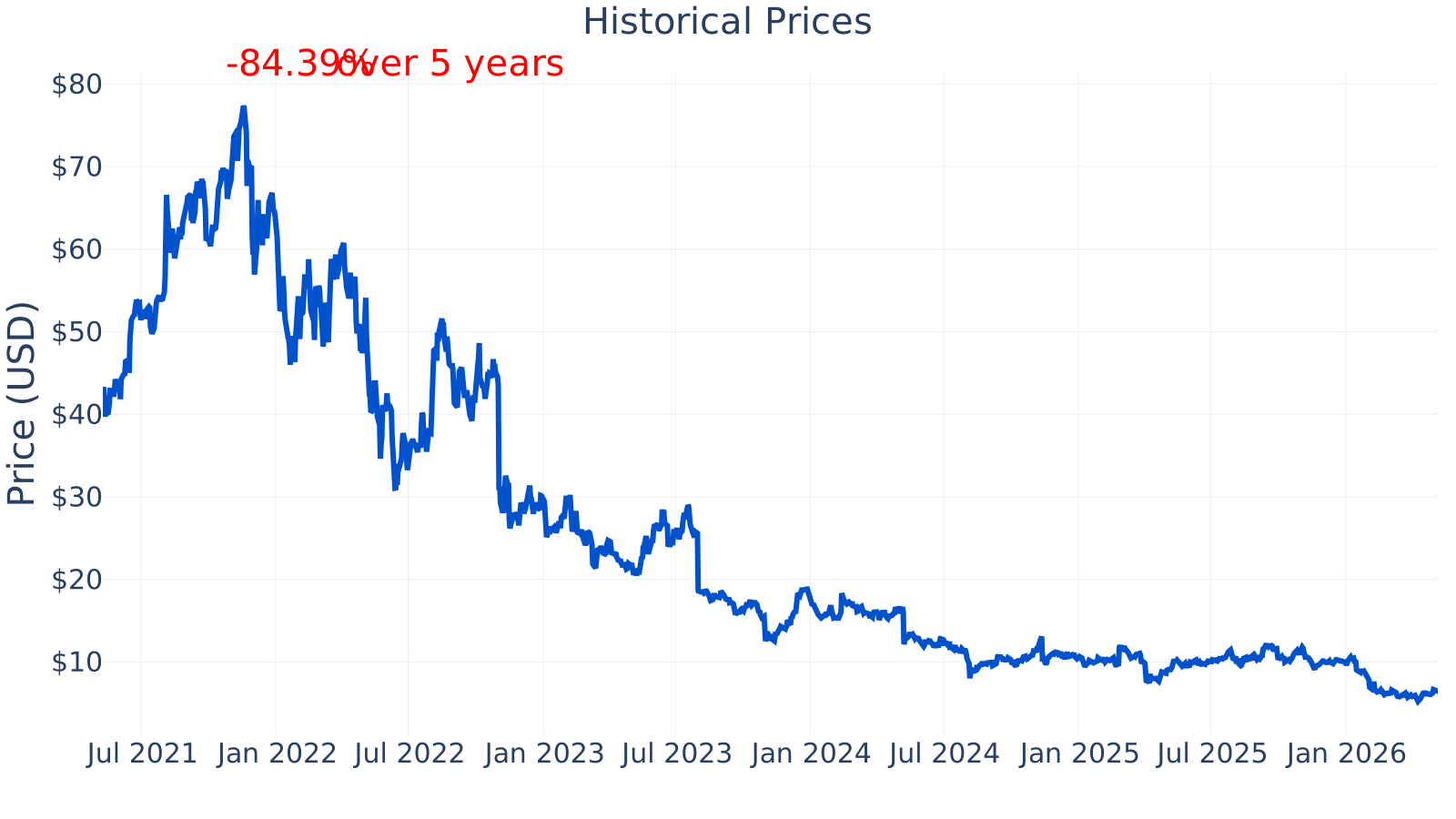
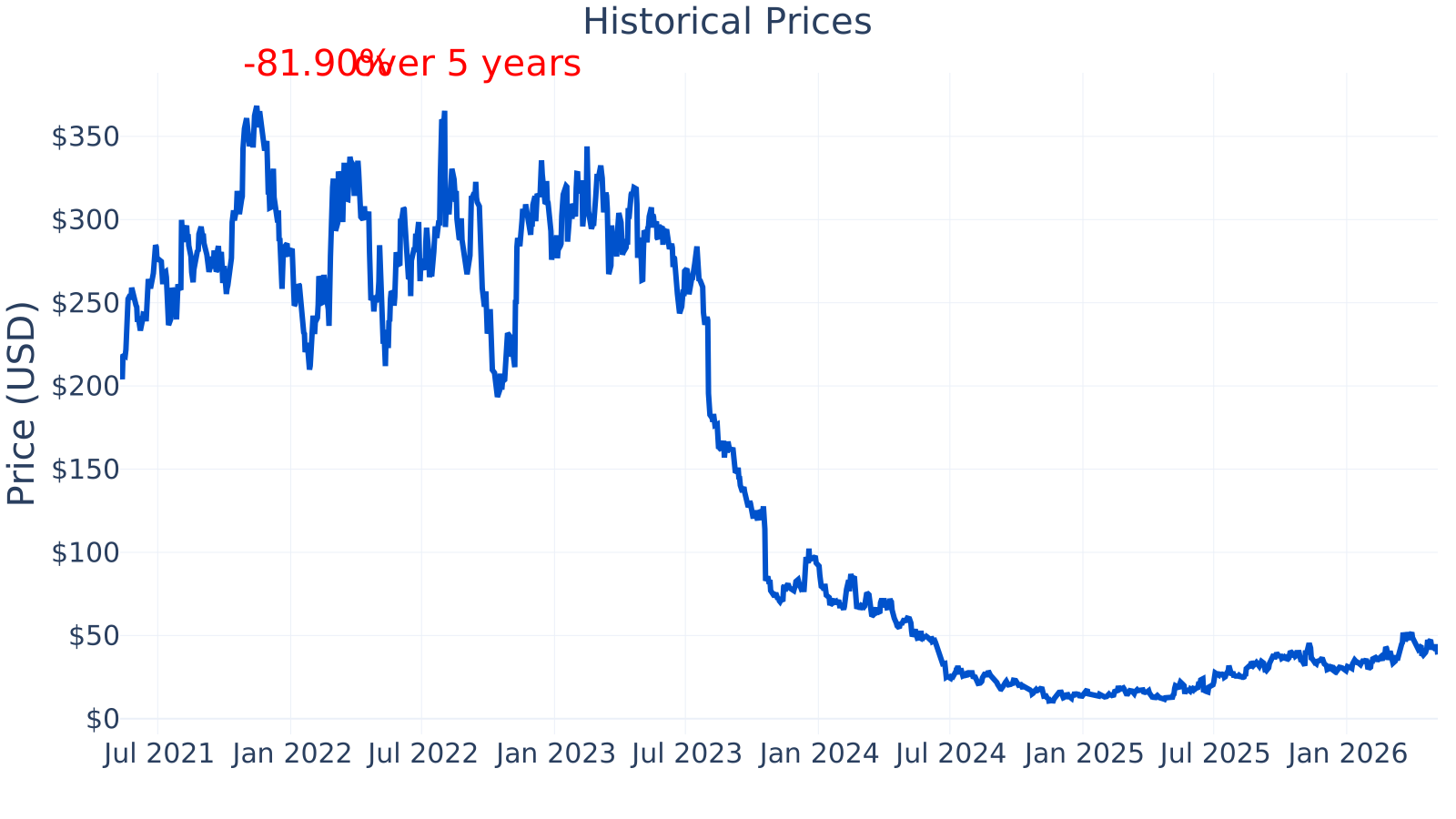
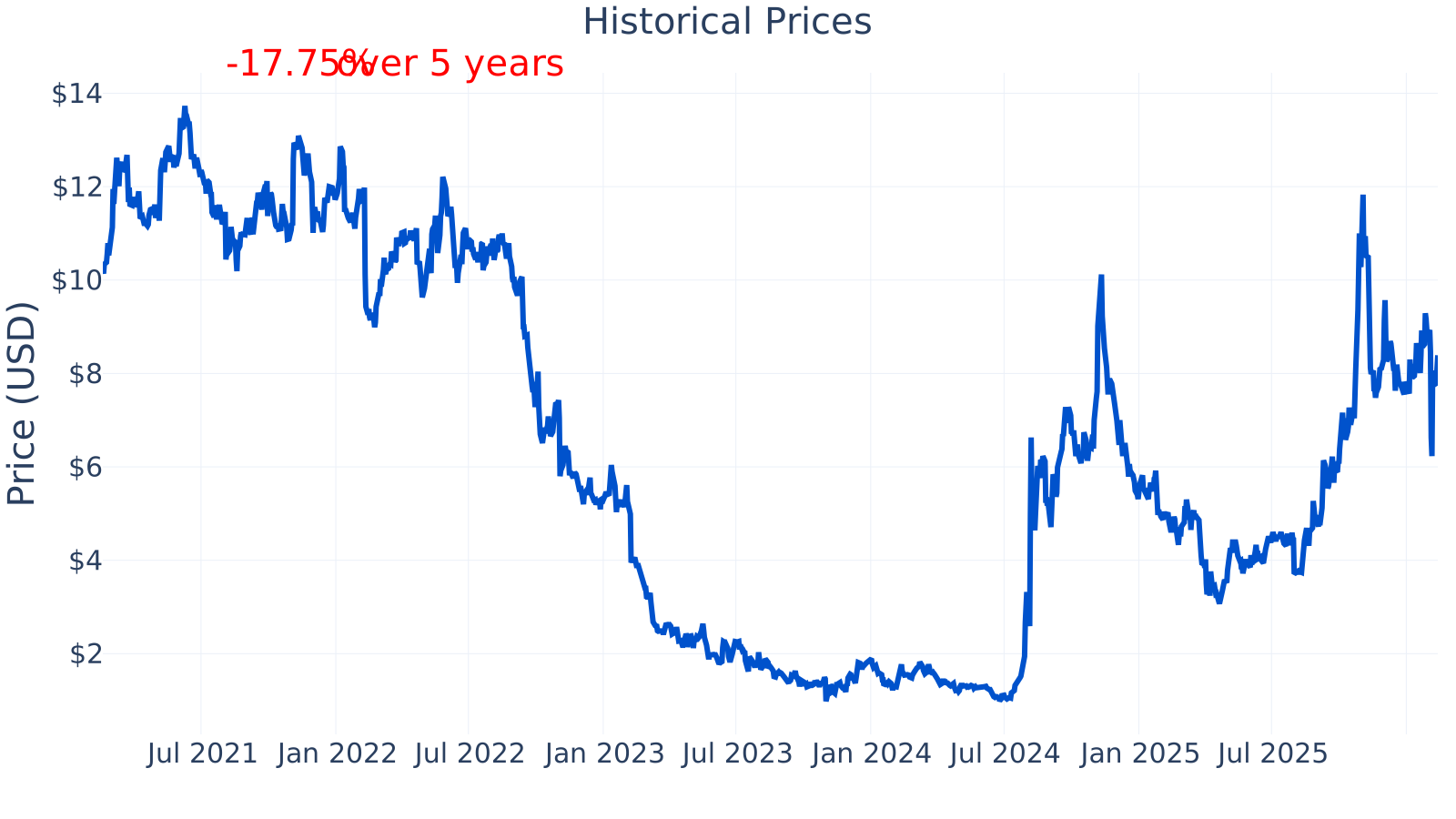
Lumen’s market capitalization is about $8.6B, and the stock’s beta (~1.54) suggests the share price has tended to move more than the broader market.
Profitability and growth indicators are challenged versus the industry median: the latest profit margin is about -14.0% compared with an industry median near 6.2%, and year-over-year revenue growth is about -8.7% versus an industry median near 2.1%. Free cash flow (TTM) is shown as -$1.33B, which—if sustained—can reduce financial flexibility in a business that needs ongoing network investment.
Growth (Low)
Telecom and fiber-based connectivity are part of the infrastructure behind long-term trends such as cloud computing, video, remote work, and data-center interconnection. That backdrop is supportive for companies with high-quality networks and the ability to win and retain enterprise customers.
That said, Lumen’s recent trajectory (as reflected in its financials) points to a business in transition rather than a straightforward growth story. Revenue has been shrinking for multiple years, which can happen when legacy products decline faster than newer services expand, when customer churn is elevated, and when the company is repositioning after divestitures.
The chart shows revenue declining year over year across the displayed periods, with some improvement at points but remaining negative. For long-term compounding, the key question is whether stabilization can occur—through a combination of customer retention, new product momentum, and a revenue base increasingly tied to fiber and enterprise networking.
Free cash flow has also been volatile over time, including periods where it turned negative. In telecom, free cash flow is closely watched because network upkeep and upgrades require steady capital spending, and debt servicing can be significant. A sustained return to consistently positive free cash flow is often a central metric to monitor for a turnaround-style situation.
Risks (Very High)
Lumen faces several risks that can matter for long-term shareholders. First is structural revenue pressure: legacy voice and older network services can decline over time, and replacing those revenues with newer offerings is not automatic. Second is execution risk: large telecom networks involve complex operations, long sales cycles, and service-quality expectations that can be difficult to meet while also reducing costs.
Leverage indicators appear unusual and highly variable in the periods shown, including extremely high and even negative debt-to-equity values. In practice, this often reflects accounting effects such as very low (or negative) equity rather than a simple “debt level went negative.” Regardless, the pattern signals that the capital structure deserves careful reading in the balance sheet and footnotes, because high leverage or weak equity can amplify downside during operational setbacks and can constrain strategic options.
Profit margins have been volatile and frequently negative, and they compare unfavorably to the industry median across most periods displayed. Large negative margins can be driven by restructuring, impairment charges, or other non-cash items; however, persistent weak profitability still matters because it affects the company’s ability to reinvest, reduce debt, and compete on price and service.
On competitive positioning, telecom is generally a highly competitive market with powerful incumbents and aggressive pricing. Lumen has a meaningful fiber footprint and enterprise relationships, but it is not typically described as the clear market leader across the broad U.S. telecom landscape. Competitive advantages, where present, tend to be network reach (routes, metro fiber), existing enterprise contracts, and operational know-how. These strengths must be weighed against the scale, bundling ability, and capital resources of larger rivals.
Main competitors often include:
- AT&T and Verizon (large U.S. telecom operators with broad enterprise and network offerings)
- T-Mobile (strong in wireless; also expanding into business connectivity in some areas)
- Comcast Business and Charter Spectrum Business (cable operators with growing business connectivity)
- Fiber specialists and regional providers (varies by geography and product, including data-center and metro-fiber focused competitors)
The competitive challenge is that many customers have alternatives, and switching can occur when pricing, service levels, or bundled offerings differ. This tends to limit pricing power unless the provider offers unique coverage, performance, or contractual stickiness.
Valuation
A traditional P/E ratio can be less informative for Lumen in periods where earnings are negative or heavily distorted by non-recurring items, impairments, restructuring, or large one-time gains/losses. In the chart, Lumen’s P/E is frequently not shown (set to 0 in the visualization when not meaningful), while the industry median remains in a more typical range. This pattern is consistent with a company where valuation is often discussed using other lenses (for example, cash flow measures, leverage, and the sustainability of operating performance), rather than relying on earnings-based multiples alone.
With the company showing negative profit margin and negative year-over-year revenue growth, interpreting whether the stock price is “expensive” or “cheap” is tightly linked to expectations about stabilization, future cash generation, and balance-sheet resilience. In other words, valuation here is closely tied to whether operating performance and cash flow can become consistently durable—because the downside case in highly competitive, capital-intensive telecom can be influenced by leverage, refinancing conditions, and ongoing network investment requirements.
Conclusion
Lumen operates in a critical long-term area—network connectivity and fiber infrastructure—but its recent fundamentals reflect a business under pressure, with multi-year revenue decline, volatile cash generation, and profitability that has often lagged industry norms. The financial profile shown also indicates that leverage and capital structure dynamics are important to understand, because they can shape strategic flexibility in both good and difficult operating environments.
From a long-term, fundamentals-based perspective, the key items to track in future filings are (1) whether revenue trends stabilize, especially in core enterprise/fiber categories, (2) whether free cash flow becomes consistently positive after capital spending and interest costs, and (3) whether leverage and equity metrics improve in a way that reduces financial stress. These factors tend to be central in assessing durability for a telecom operator in transition.
Sources:
- SEC EDGAR — Lumen Technologies, Inc. filings (Form 10-K, Form 10-Q)
- Lumen Technologies — Investor Relations materials and SEC filing archive (company-hosted)
- Wikipedia — “Lumen Technologies” (basic company background)
This article is for informational purposes only and does not constitute financial advice. Some content is AI-generated. See Disclaimer