Stock Analysis · Lumen Technologies Inc (LUMN)
Overview
Lumen Technologies Inc (LUMN) is a U.S.-based telecommunications and network services company. It operates large-scale fiber networks and sells connectivity and related services to businesses, government organizations, and wholesale customers (other carriers and service providers). In simple terms, Lumen’s business is about moving data reliably and securely—through long-distance fiber routes, metro networks, and enterprise-grade networking services.
In its SEC filings, Lumen describes its revenue primarily by customer type and service families (rather than a simple “product shelf”). The largest revenue streams generally come from business and wholesale connectivity/networking services, with smaller contributions from consumer services (where still present) and other items. Exact percentages can change over time and depend on how the company groups categories in its reports, but the typical “largest to smaller” ordering in filings is often:
- Business / enterprise network services (connectivity, IP, VPN, Ethernet, wavelength, SD-WAN and related services)
- Wholesale services (services provided to other carriers and service providers)
- Mass Markets / consumer-related services (legacy voice/broadband and other consumer offers where applicable)
- Other / ancillary (varies by period and reporting classification)
Over the last several years, Lumen has also been reshaping its portfolio, including asset divestitures and a stronger emphasis on fiber-based services and enterprise customers. This kind of transition can materially change the mix of revenue and the year-to-year comparability of results, so reading the company’s segment discussion in the latest 10-K/10-Q is especially important for context.
The multi-year income flow highlights a notable revenue decline from 2021 to 2025, along with large swings in operating income and net income. It also shows that interest expense remains a meaningful recurring cost, which matters in a capital-intensive industry like telecom.
Key Figures
| Metric | Value | Industry ⓘ |
|---|---|---|
| Date | Feb 16, 2026 | |
| Context | ||
| Sector | Communication Services | |
| Industry | Telecom Services | |
| Market Cap ⓘ | $8.61B | |
| Beta ⓘ | 1.54 | |
| Fundamental | ||
| P/E Ratio ⓘ | N/A | 15.09 |
| Profit Margin ⓘ | -14.02% | 6.18% |
| Revenue Growth ⓘ | -8.70% | 2.10% |
| Debt to Equity ⓘ | -1585.23% | 113.97% |
| PEG ⓘ | 54.58 | |
| Free Cash Flow ⓘ | -$1.33B | |
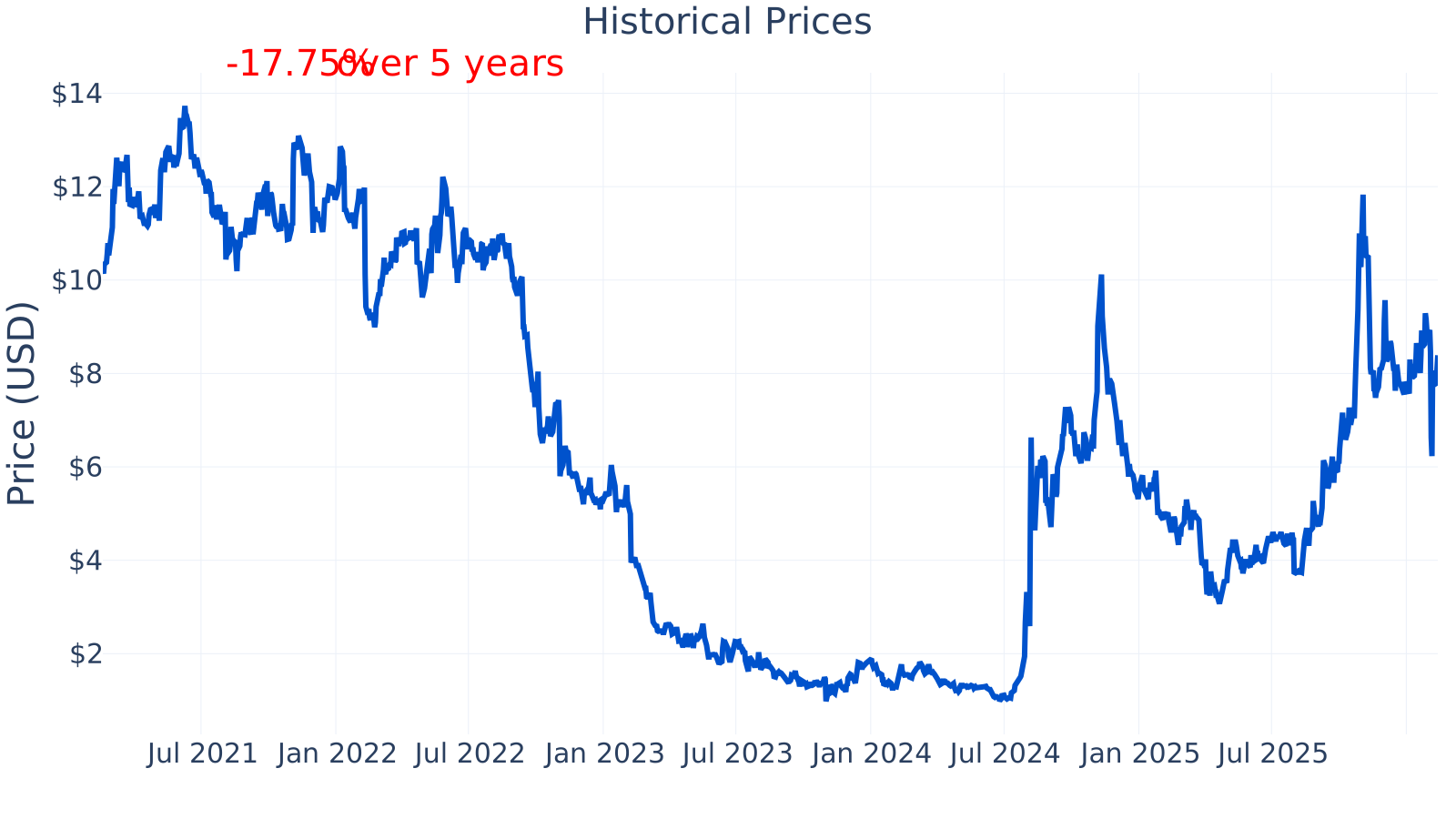
Lumen’s market capitalization is about $8.6B, and the stock’s beta (~1.54) suggests the share price has tended to move more than the broader market.
Profitability and growth indicators are challenged versus the industry median: the latest profit margin is about -14.0% compared with an industry median near 6.2%, and year-over-year revenue growth is about -8.7% versus an industry median near 2.1%. Free cash flow (TTM) is shown as -$1.33B, which—if sustained—can reduce financial flexibility in a business that needs ongoing network investment.
Growth (Low)
Telecom and fiber-based connectivity are part of the infrastructure behind long-term trends such as cloud computing, video, remote work, and data-center interconnection. That backdrop is supportive for companies with high-quality networks and the ability to win and retain enterprise customers.
That said, Lumen’s recent trajectory (as reflected in its financials) points to a business in transition rather than a straightforward growth story. Revenue has been shrinking for multiple years, which can happen when legacy products decline faster than newer services expand, when customer churn is elevated, and when the company is repositioning after divestitures.
The chart shows revenue declining year over year across the displayed periods, with some improvement at points but remaining negative. For long-term compounding, the key question is whether stabilization can occur—through a combination of customer retention, new product momentum, and a revenue base increasingly tied to fiber and enterprise networking.
Free cash flow has also been volatile over time, including periods where it turned negative. In telecom, free cash flow is closely watched because network upkeep and upgrades require steady capital spending, and debt servicing can be significant. A sustained return to consistently positive free cash flow is often a central metric to monitor for a turnaround-style situation.
Risks (Very High)
This article is for informational purposes only and does not constitute financial advice. Some content is AI-generated. See Disclaimer