Stock Analysis · Lululemon Athletica Inc (LULU)
Overview
Lululemon Athletica Inc is a specialty retailer focused on athletic apparel, footwear, and accessories. The brand is best known for premium yoga and training products, and it sells through a mix of company-operated stores and direct-to-consumer channels (including e-commerce and mobile/app experiences). Beyond products, Lululemon also emphasizes community-based marketing (events, ambassadors, and local activations) to support brand awareness and customer engagement.
In its financial reporting, Lululemon’s revenue is primarily driven by product categories and sales channels (rather than a wide range of unrelated business lines). In general terms, the largest revenue drivers are:
- Apparel (the core of the business, historically the largest category)
- Direct-to-consumer (online/app sales, alongside in-store sales)
- Footwear and accessories (smaller than apparel but strategically important for diversification)
For exact, current percentages by category, channel, and geography, the most reliable reference is the company’s latest Form 10-K/10-Q segment and revenue disclosure.
Across the period shown, total revenue rises steadily (from about $6.3B to about $10.6B), while gross profit also increases (about $3.6B to about $6.3B). Over the same span, operating expenses grow as the company scales, but net income also increases (roughly $1.0B to about $1.8B), indicating that profitability has remained meaningful while the business expanded.
Key Figures
| Metric | Value | Industry ⓘ |
|---|---|---|
| Date | Feb 07, 2026 | |
| Context | ||
| Sector | Consumer Cyclical | |
| Industry | Apparel Retail | |
| Market Cap ⓘ | $20.50B | |
| Beta ⓘ | 1.01 | |
| Fundamental | ||
| P/E Ratio ⓘ | 12.02 | 17.99 |
| Profit Margin ⓘ | 15.72% | 8.42% |
| Revenue Growth ⓘ | 7.10% | 7.30% |
| Debt to Equity ⓘ | 39.16% | 104.73% |
| PEG ⓘ | 1.60 | |
| Free Cash Flow ⓘ | $1.13B | |
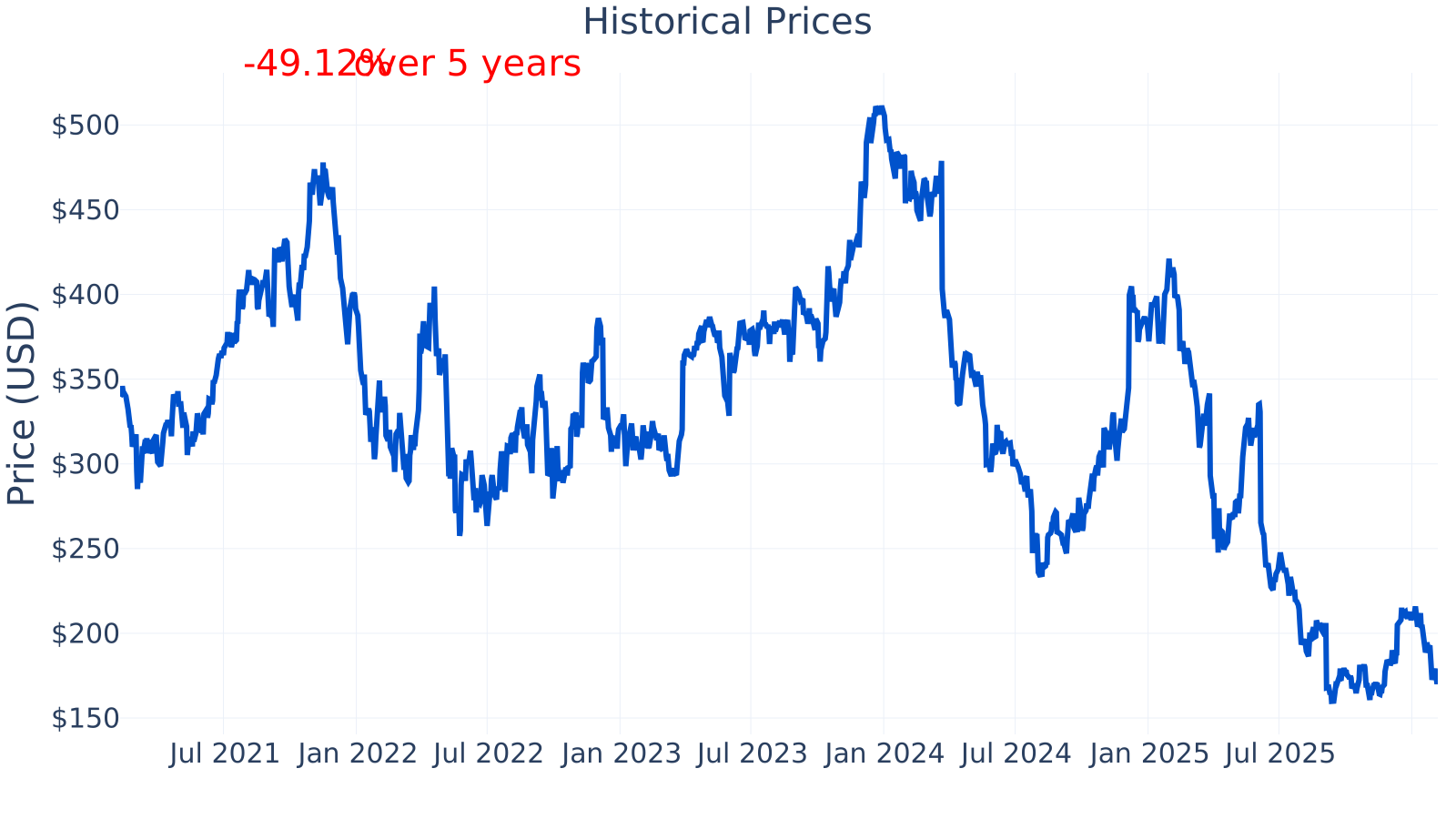
Lululemon’s market capitalization is about $20.5B. The stock’s beta (~1.01) suggests price movements that have been roughly in line with the broader market. The latest P/E ratio (~12.0) is below the industry median (~18.0) shown here. Profitability stands out: the latest profit margin is ~15.7% versus an industry median of ~8.4%. Year-over-year revenue growth is about 7.1%, close to the industry median (~7.3%). Balance sheet leverage appears lower than many peers, with debt-to-equity ~39% versus an industry median ~105%. Trailing twelve-month free cash flow is about $1.13B, reflecting ongoing cash generation after operating needs and capital spending.
Growth (Medium)
Lululemon operates in athletic and lifestyle apparel, an area supported over time by trends such as “athleisure,” health and wellness participation, and consumers wearing performance-inspired clothing beyond workouts. Even in a mature apparel market, premium brands can grow by increasing penetration in underrepresented categories (for example, men’s), expanding internationally, and building more direct relationships with customers through digital channels and loyalty ecosystems.
The revenue growth pattern shown indicates that growth has moderated over time compared with earlier, unusually high rates. More recently, year-over-year growth is in the mid-to-high single digits range, which is closer to what many established retailers experience once they reach a larger scale. For long-term business momentum, a key question is whether Lululemon can re-accelerate through product innovation, international expansion, and category diversification, or whether growth remains more incremental.
Free cash flow has been positive in each period shown, with a notable dip around 2023 and a rebound thereafter (reaching roughly $1.13B most recently). Consistent free cash flow can matter for long-term resilience because it supports internal reinvestment (stores, technology, supply chain) and financial flexibility, even during weaker demand cycles.
Potential catalysts typically discussed in company materials and filings for an apparel retailer like Lululemon include: expanding store footprint in targeted regions, improving productivity in existing stores, growing direct-to-consumer engagement, and successfully scaling newer categories such as footwear. The durability of brand perception and full-price selling (limited discounting) is another important driver for long-term outcomes.
Risks (Medium)
This article is for informational purposes only and does not constitute financial advice. Some content is AI-generated. See Disclaimer