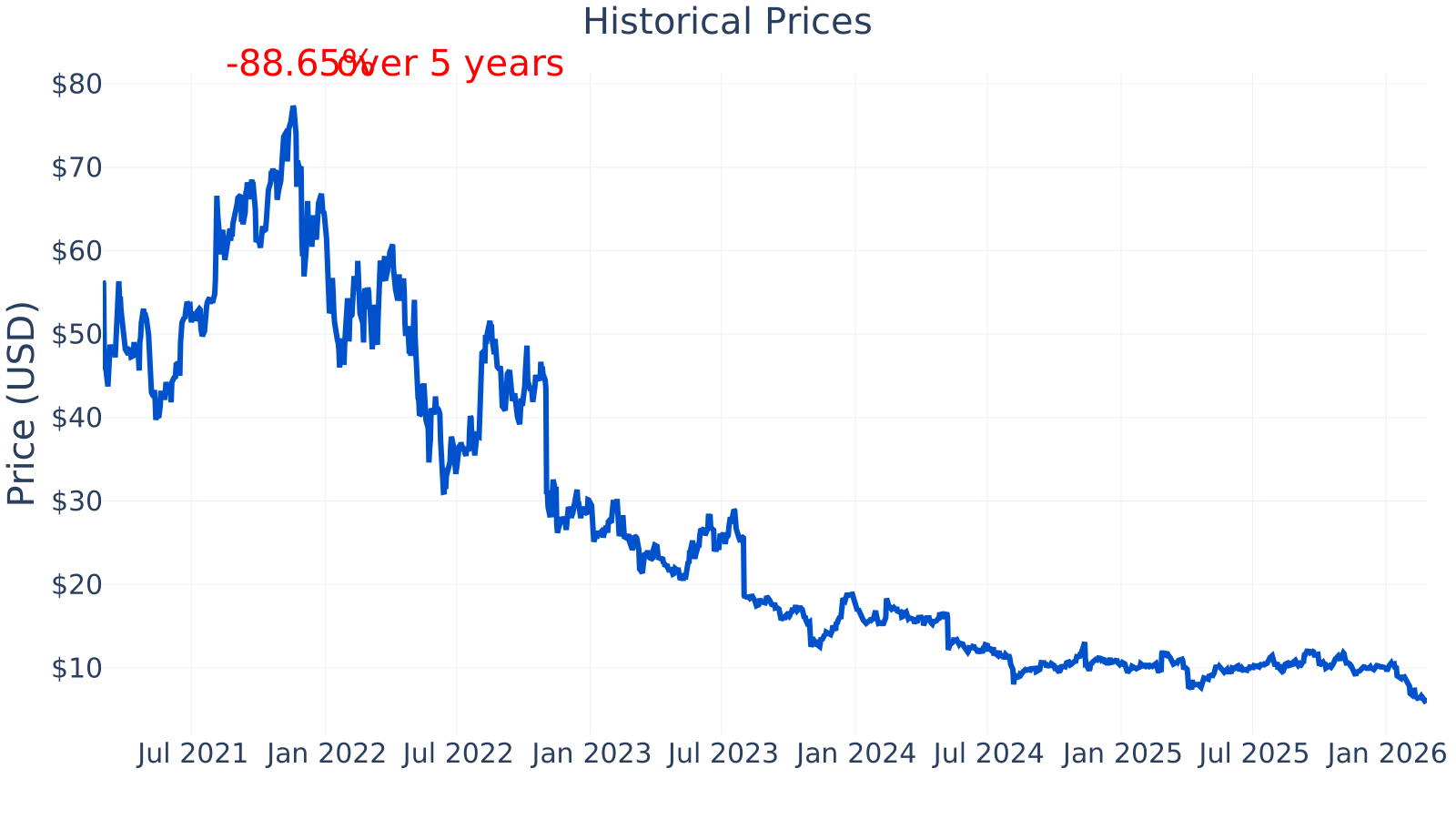
Stock Analysis · Lucid Group Inc (LCID)
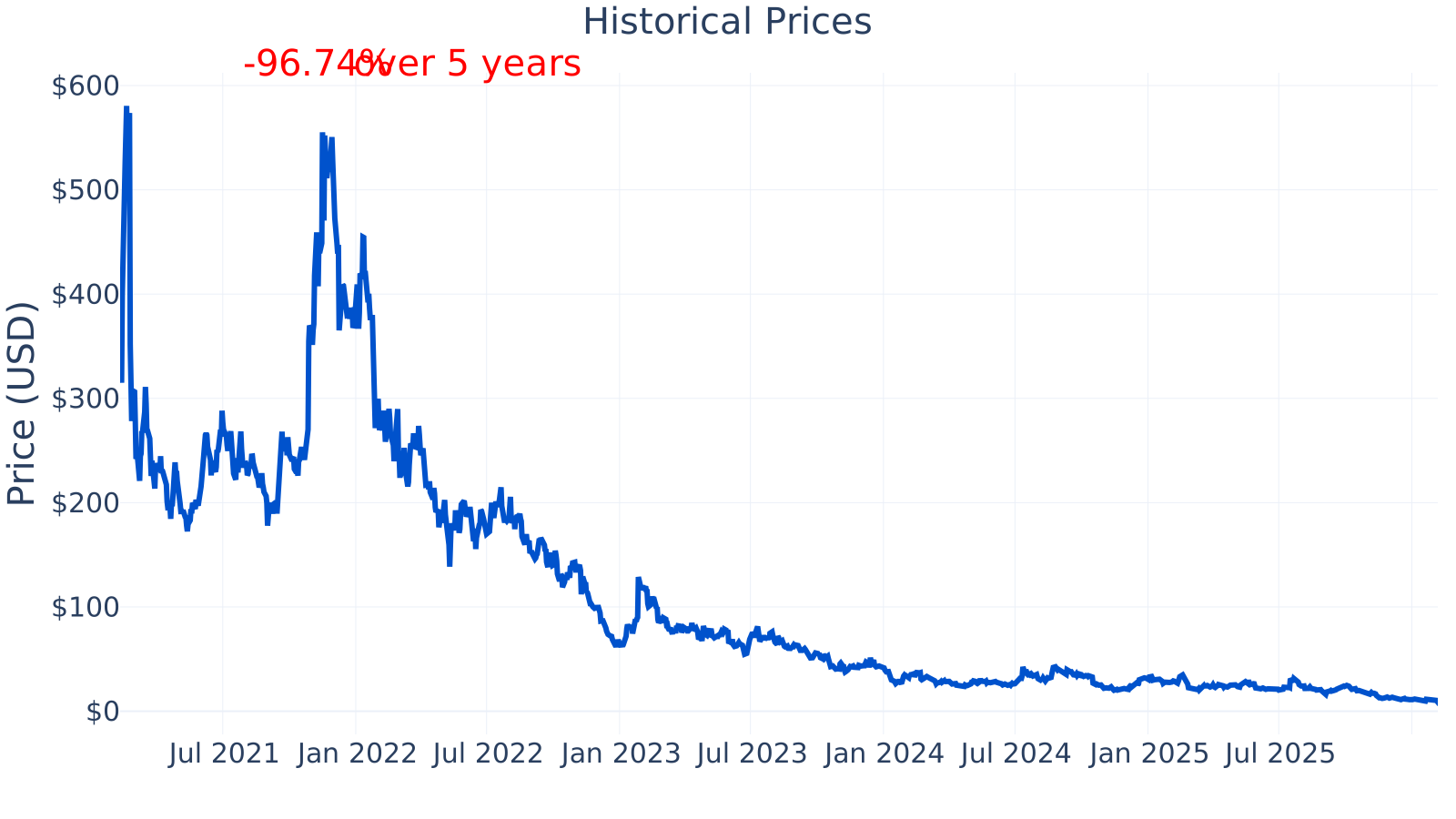
Overview
Lucid Group Inc designs and manufactures battery-electric vehicles (EVs). The company’s current lineup has focused on premium sedans (Lucid Air), and it has also announced plans to expand into additional vehicle categories over time. Lucid is also involved in EV technology and manufacturing capabilities such as battery systems, powertrain components, and software that supports vehicle performance and user features.
In practice, Lucid’s business today is still primarily a vehicle manufacturer: it builds cars, delivers them to customers, and recognizes revenue largely when vehicles are delivered (with some revenue also coming from related items tied to sales and service activities, depending on the accounting treatment described in its filings).
Main sources of revenue (order of magnitude):
- Vehicle sales revenue (majority of revenue; percentage not provided here)
- Other revenue (smaller portion; may include items such as services and other ancillary revenue categories disclosed in filings)
The simplified view from recent years is that revenue has increased materially from early commercialization levels, while costs and operating expenses have remained far higher than revenue—resulting in ongoing losses.
Across recent years, total revenue rose from about $27 million (2021) to about $808 million (2024), while the company remained gross margin negative (for example, 2024 gross profit was about -$923 million). Operating expenses have also been substantial (for example, 2024 R&D about $1.18 billion and 2024 SG&A about $0.85 billion), which helps explain why net income has remained deeply negative.
Key Figures
| Metric | Value | Industry ⓘ |
|---|---|---|
| Date | Feb 08, 2026 | |
| Context | ||
| Sector | Consumer Cyclical | |
| Industry | Auto Manufacturers | |
| Market Cap ⓘ | $3.52B | |
| Beta ⓘ | 1.11 | |
| Fundamental | ||
| P/E Ratio ⓘ | N/A | 21.50 |
| Profit Margin ⓘ | -214.10% | 1.46% |
| Revenue Growth ⓘ | 68.30% | 9.40% |
| Debt to Equity ⓘ | 75.61% | 87.12% |
| PEG ⓘ | N/A | |
| Free Cash Flow ⓘ | -$3.40B | |
Lucid’s latest snapshot shows a market capitalization of about $3.5B and a beta around 1.11, which indicates the stock has tended to move somewhat more than the broader market. Profitability remains a major issue: profit margin is about -214%, far below the industry median near 1.46%. On growth, the latest year-over-year revenue growth is shown at about 68% versus an industry median around 9%, reflecting that Lucid is still scaling from a smaller base. Leverage (debt relative to equity) is shown at about 76%, somewhat below the industry median near 87%. Free cash flow over the trailing twelve months is about -$3.4B, highlighting continued cash consumption.
Growth (Medium)
Lucid operates in the EV industry, which is closely tied to multi-year trends such as electrification of transportation, battery cost improvements, charging ecosystem build-out, and emissions regulations. Over the long run, these trends can support EV adoption. However, the pace of EV growth can be uneven because demand depends on factors like pricing, incentives, interest rates, charging availability, and model availability.
Lucid’s growth strategy has centered on building a premium brand and scaling manufacturing. In theory, premium positioning can support higher average selling prices, but it also tends to come with a narrower customer base and high expectations for quality and service. For a manufacturer, the most important operational goal is typically to increase deliveries while improving unit economics (moving from negative gross margins toward positive gross margins), because scale and manufacturing learning curves often drive the biggest improvements in profitability.
Recent revenue growth has been volatile, which is common for early-stage automakers. The most recent figure shown is about 68% year-over-year, but earlier periods included both very large increases (from low starting levels) and declines. For long-term fundamentals, consistency of demand and the ability to translate revenue growth into improving margins tend to matter more than any single quarter or year.
Cash flow remains a central part of the story. Trailing twelve-month free cash flow is shown around -$3.4B. While the chart suggests some improvement from the most negative point (around -$3.66B in 2023), free cash flow is still strongly negative. For a capital-intensive manufacturer, future progress typically depends on a combination of higher volume, better gross margin, tighter operating cost control, and access to funding if cash burn continues.
Risks (Very High)
This article is for informational purposes only and does not constitute financial advice. Some content is AI-generated. See Disclaimer