Stock Analysis · Lowe's Companies Inc (LOW)
Overview
Lowe’s Companies, Inc. is a home improvement retailer that sells products and services used to repair, remodel, maintain, and improve homes. It operates primarily through large-format retail stores and an e-commerce website, serving both do-it-yourself customers and professional customers (often called “Pros”), such as contractors and installers. In addition to products (like building materials, tools, and appliances), Lowe’s also supports projects through installation and other home services that are typically fulfilled through third-party service providers.
In its filings, Lowe’s generally describes its business as operating a single reportable segment (home improvement retail). Because of that reporting approach, the company does not typically break total revenue into detailed percentages by product category in a single standardized table. At a high level, revenue comes primarily from merchandise sales across major home improvement categories, with a smaller portion from service-related offerings tied to home projects (such as installation services).
Lowe’s also earns profit from complementary programs such as its private brand offerings and its credit-related partnership arrangements (for example, income associated with a co-branded credit card program), though merchandise sales remain the core driver of revenue.
Across the years shown, total revenue declined from about $96.3B (FY2022) to about $83.7B (FY2025), while net income moved between roughly $6.4B and $8.4B. Interest expense increased from about $0.9B (FY2022) to about $1.47B (FY2024–FY2025), which is consistent with a higher cost of debt and/or greater borrowing.
Key Figures
| Metric | Value | Industry ⓘ |
|---|---|---|
| Date | Feb 07, 2026 | |
| Context | ||
| Sector | Consumer Cyclical | |
| Industry | Home Improvement Retail | |
| Market Cap ⓘ | $156.16B | |
| Beta ⓘ | 0.98 | |
| Fundamental | ||
| P/E Ratio ⓘ | 23.04 | |
| Profit Margin ⓘ | 8.05% | |
| Revenue Growth ⓘ | 3.20% | |
| Debt to Equity ⓘ | -430.51% | |
| PEG ⓘ | 2.98 | |
| Free Cash Flow ⓘ | $7.05B | |
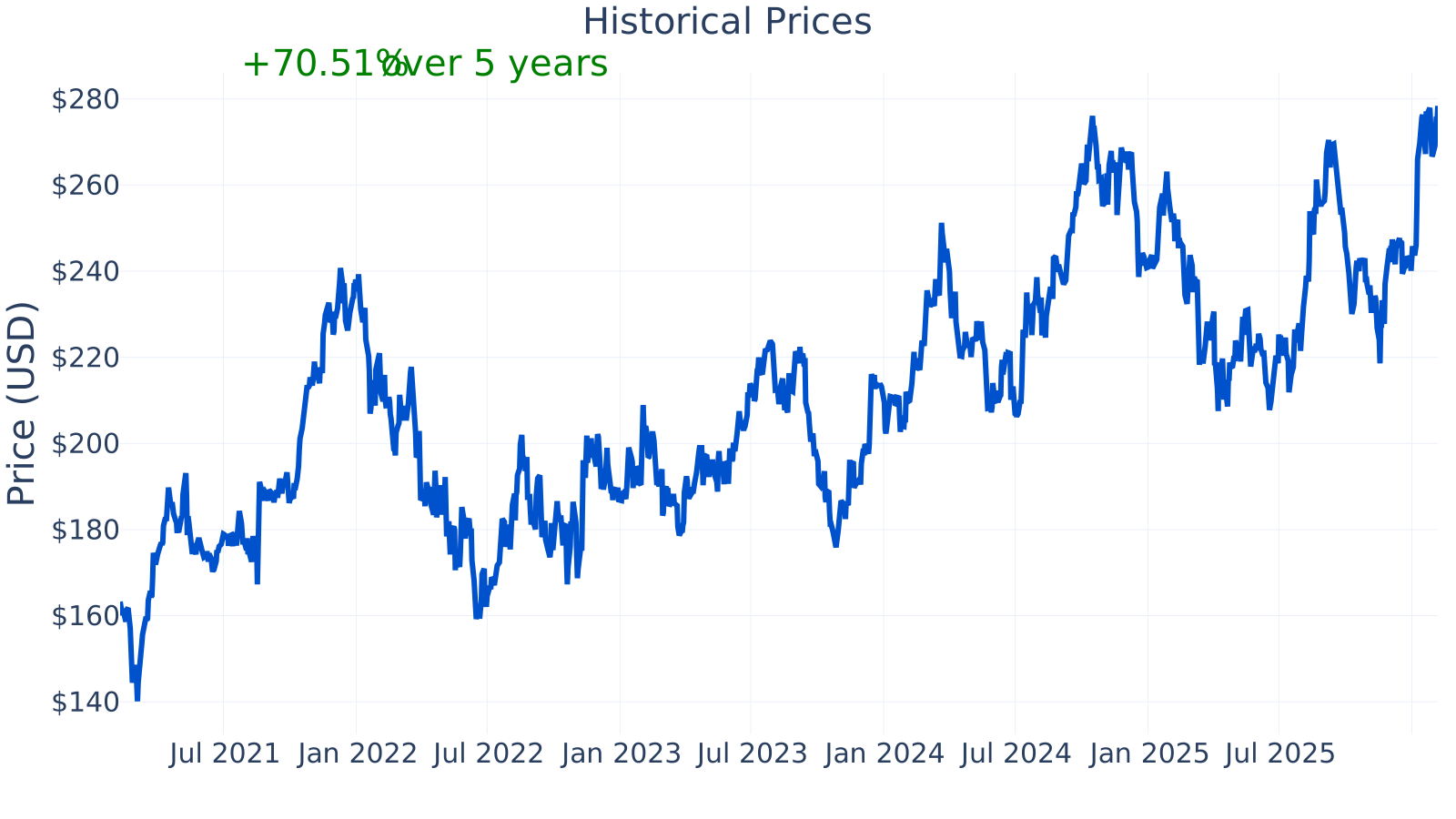
Lowe’s is a large public company with a market capitalization of about $156B and a beta close to 1.0 (0.98), which indicates price movement that has been broadly similar to the overall market historically. The latest profit margin shown is about 8.05%, and the most recent year-over-year revenue growth is about 3.2%. The table also shows about $7.05B in trailing twelve-month free cash flow, which is an important measure of cash generated after operating needs and capital spending. The P/E ratio is about 23.0 and the PEG ratio about 3.0, both commonly used valuation reference points (with PEG combining price and expected growth assumptions).
Growth (Medium)
Home improvement retail is closely tied to housing activity and household spending on repair and remodeling. This is not typically a “hyper-growth” industry; instead, it tends to be mature, with demand influenced by factors like home turnover, mortgage rates, home prices, storm and weather events, and the aging of the housing stock. Long-run demand often benefits from the ongoing need to maintain homes, but shorter cycles can be uneven.
Lowe’s strategy has emphasized serving both everyday consumers and professional customers. The “Pro” customer can matter because Pros tend to purchase more frequently and in larger baskets, and their demand can be linked to repair/remodel workflows rather than purely discretionary weekend projects. In a mature retail category, execution—pricing, inventory, in-stock performance, delivery capabilities, and customer experience—often matters as much as (or more than) store count expansion.
The revenue growth pattern shown is cyclical: stronger growth earlier in the period, then several quarters of contraction, followed by improvement back into modest positive territory (about 3.2% most recently). That kind of swing is consistent with a business that can be sensitive to macro conditions and project demand timing.
Free cash flow has remained substantial in the period displayed, ranging from about $6.2B to $8.3B. Even when revenue softened, cash generation stayed meaningful, which can provide flexibility for reinvestment in operations, debt service, and shareholder returns (subject to management decisions and market conditions).
Risks (Medium)
This article is for informational purposes only and does not constitute financial advice. Some content is AI-generated. See Disclaimer