Stock Analysis · Live Nation Entertainment Inc (LYV)
Overview
Live Nation Entertainment, Inc. (LYV) is a live entertainment company focused on concerts and related events. It operates across the lifecycle of a live show: working with artists to promote tours, operating and managing venues, and selling tickets—primarily through its Ticketmaster business. This “end-to-end” footprint is designed to connect artist supply (tours and performances), venue capacity (places to host events), and fan demand (ticketing and onsite spending).
In its SEC filings, Live Nation generally describes its business through three main operating segments: Concerts (promoting live music events), Ticketing (Ticketmaster), and Sponsorship & Advertising (brand partnerships tied to shows, venues, and tours). In many years, the Concerts segment is the largest revenue contributor, while Ticketing and Sponsorship & Advertising add additional revenue streams that can help diversify results beyond just selling concert tickets.
Based on the company’s segment reporting (which can vary by period and presentation), the revenue mix typically centers on:
- Concerts (often the largest share): revenue from promoting concerts, festival activity, and concert-related sales (including some onsite revenue depending on arrangements)
- Ticketing: ticketing service fees and related revenue through Ticketmaster
- Sponsorship & Advertising: sponsorship packages, branding, and advertising tied to tours, venues, and digital assets
Across recent years, company-wide revenue rose substantially compared with earlier periods, reflecting a much larger scale of activity than the 2021 level shown below.
From 2021 to 2025, total revenue increased from about $6.3B to about $25.2B. Over the same span, results moved from a net loss in 2021 to positive net income in subsequent years, while interest expense remained a recurring cost in the hundreds of millions—highlighting how financing costs can matter even when operations improve.
Key Figures
| Metric | Value | Industry ⓘ |
|---|---|---|
| Date | May 04, 2026 | |
| Context | ||
| Sector | Communication Services | |
| Industry | Entertainment | |
| Market Cap ⓘ | $37.21B | |
| Beta ⓘ | 1.15 | |
| Fundamental | ||
| P/E Ratio ⓘ | 117.49 | 51.79 |
| Profit Margin ⓘ | 1.97% | 3.44% |
| Revenue Growth ⓘ | 11.10% | 5.35% |
| Debt to Equity ⓘ | 572.03% | 69.42% |
| PEG ⓘ | 6.13 | |
| Free Cash Flow ⓘ | $333.61M | |
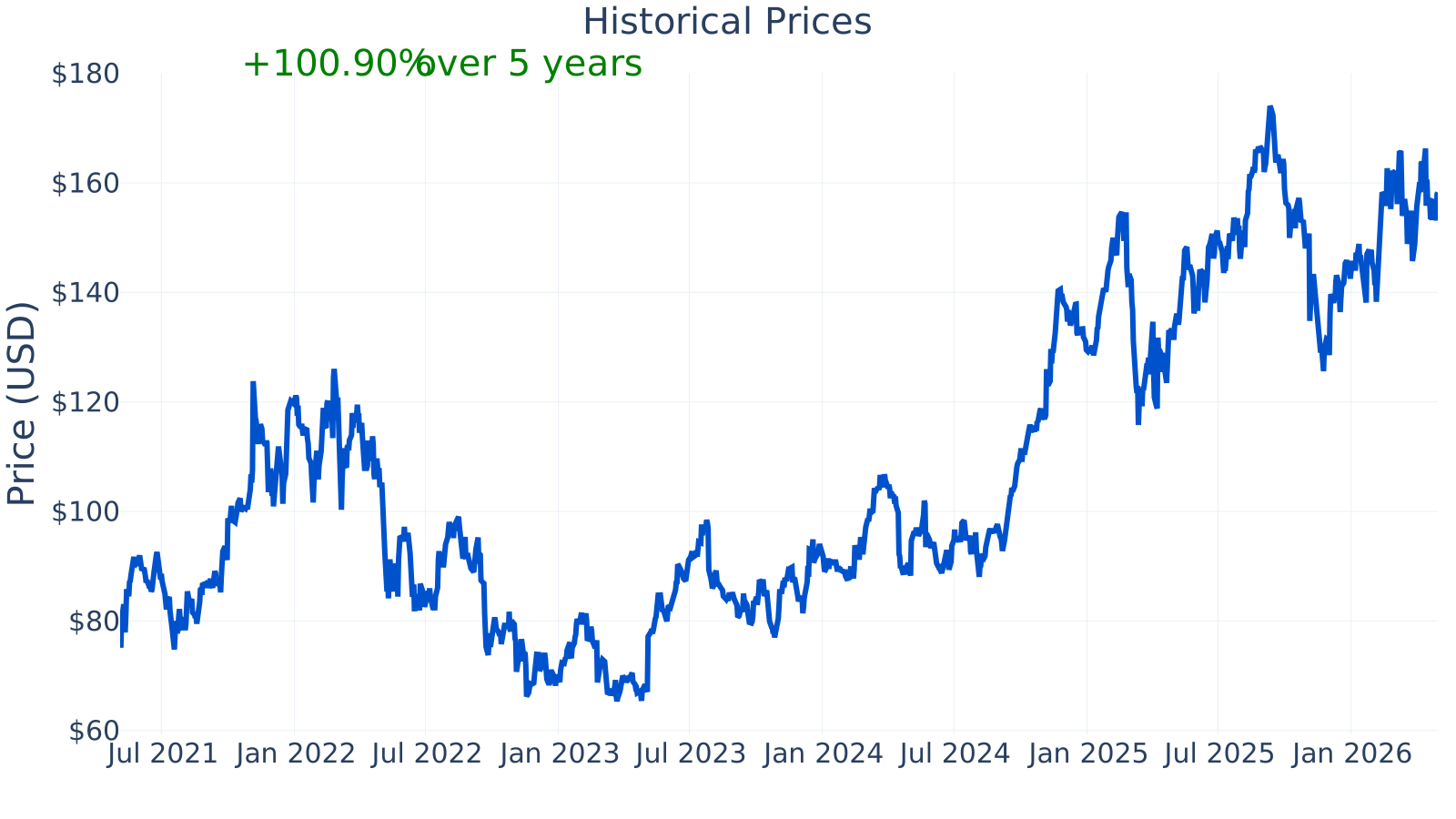
Live Nation’s market capitalization is about $37.2B. The stock’s beta of ~1.15 suggests it has tended to move somewhat more than the broader market over time (up and down). Profitability and growth metrics show a mixed picture: the latest profit margin is ~2.0% versus an industry median near 3.4%, while year-over-year revenue growth is ~11.1% versus an industry median near 5.35%. Leverage stands out: debt-to-equity is ~572% versus an industry median near 69%, indicating a much heavier debt load relative to accounting equity than many peers. The latest P/E ratio is ~117.5 versus an industry median near 51.8, and the PEG ratio is ~6.13 (a ratio that compares valuation to growth expectations, where higher values can imply a richer price relative to growth assumptions). Trailing twelve-month free cash flow is about $334M.
Growth (Medium)
Live Nation is positioned in the live entertainment industry, where demand is driven by touring cycles, consumer discretionary spending, and the willingness of fans to pay for experiences. Over the past several years, the industry has shown that large-scale tours and premium live experiences can generate substantial volumes, and Live Nation’s integrated model (promotion + venues + ticketing + sponsorship) is built to capture multiple revenue lines around the same events.
The company’s strategy is straightforward: expand and deepen relationships with artists and venues, drive ticketing volumes through Ticketmaster, and grow high-margin sponsorship/advertising tied to its platform. Because many costs for tours and events are variable (they rise with the number and scale of shows), growth often depends on maintaining a strong pipeline of events and managing pricing, revenue shares, and operating execution.
Revenue growth has been volatile quarter-to-quarter, including periods of negative growth, but the most recent year-over-year figure shown is about 11.1%, above the median for its industry group in the same table. This pattern fits a business that can be influenced by event timing, tour calendars, and comparisons to unusually strong prior periods.
Free cash flow over the trailing twelve months is positive (about $334M in the latest metrics table), but the longer view shown indicates sizable swings over time (from billions to under a billion). For a live-events operator, cash generation can fluctuate with working capital needs (such as deposits, payables/receivables timing), event schedules, and investment in venues and technology.
Potential catalysts that can influence growth include: continued high demand for large tours and festivals, growth in premium ticketing and VIP offerings, expanding venue footprint or improved venue economics, and continued scaling of sponsorship and advertising packages that leverage the company’s global reach.
Risks (High)
A central risk is that Live Nation operates in a discretionary spending category. If consumers cut back, it can reduce demand for concerts, festivals, and premium add-ons. The business is also exposed to event-driven disruptions (for example, cancellations or operational issues), as well as reputational risks tied to ticketing practices and customer experience.
Leverage is a key consideration. The latest debt-to-equity is about 572%, far above the industry median shown (about 69%). The historical pattern also indicates that this measure has been elevated for multiple years. Higher leverage can increase sensitivity to interest rates, refinancing conditions, and downturns in operating performance.
Profit margins have improved substantially compared with earlier periods when the company reported negative margins, but the latest profit margin shown is about 2.0%, below the industry median near 4.4%. Thin margins can leave less room for error if costs rise (artist guarantees, production, staffing, venue operations) or if demand softens.
Live Nation does have competitive strengths that can function as advantages: scale in global concert promotion, a large venue network, and one of the most widely used ticketing platforms (Ticketmaster). Scale can help with negotiating leverage, data-driven marketing, and the ability to offer integrated solutions to artists and venues. However, the company’s size also brings scrutiny, including regulatory and legal risks, particularly around competition and ticketing practices.
Competition varies by segment:
- Concert promotion / festivals: competition from other promoters and organizers (often regional or event-specific) and from artists choosing alternative tour structures.
- Ticketing: competition from other ticketing providers and venue/artist direct-to-fan approaches; switching can be limited by venue contracts and operational integrations.
- Venues: competition from other venue operators and from municipalities/owners choosing different management partners.
Overall positioning is that Live Nation is widely viewed as a leading global operator across promotion and ticketing, but leadership does not remove the operational, leverage, and regulatory risks that can materially affect results.
Valuation
Valuation indicators in the latest metrics table show a P/E ratio of ~117.5 compared with an industry median near 51.8. The historical series also shows the company’s P/E has at times been closer to (or below) the industry median, but more recently it appears higher than the peer midpoint shown. A higher P/E can reflect expectations for future earnings growth, confidence in business durability, or the market assigning a premium to a leading platform—though it can also mean the stock price is more sensitive if earnings growth disappoints.
The company’s PEG ratio of ~6.13 suggests that, relative to growth expectations embedded in that metric, the valuation is not low. At the same time, interpreting these ratios for Live Nation can be complicated by cyclicality in event schedules, variability in margins, and the influence of leverage and interest expense on net income.
Conclusion
Live Nation is a scaled global live-entertainment platform combining concert promotion, venue operations, ticketing, and sponsorship/advertising. The business has demonstrated a much larger revenue base than earlier periods and has produced positive net income in recent years, while growth has shown meaningful ups and downs depending on timing and comparisons.
The main trade-offs visible in the fundamentals are: (1) a business positioned to benefit when live event demand is strong, (2) margins that are positive but relatively thin versus the industry median shown, and (3) leverage that is substantially higher than the industry median, which can increase sensitivity to financing conditions and downturns. Valuation metrics shown (including a P/E above the industry median) indicate the market is embedding significant expectations, so outcomes may be especially dependent on sustained execution and stable demand.
Sources:
- SEC EDGAR — Live Nation Entertainment, Inc. Form 10-K (Annual Report)
- SEC EDGAR — Live Nation Entertainment, Inc. Form 10-Q (Quarterly Report)
- Live Nation Entertainment — Investor Relations materials and SEC filings archive (company-hosted)
- Wikipedia — “Live Nation Entertainment” (general background only)
This article is for informational purposes only and does not constitute financial advice. Some content is AI-generated. See Disclaimer


