Stock Analysis · Live Nation Entertainment Inc (LYV)
Overview
Live Nation Entertainment Inc. (LYV) is a live entertainment company that operates across concerts, ticketing, and venue-related services. In simple terms, it helps bring shows to life (promoting tours and festivals), sells tickets (primarily through Ticketmaster), and runs or supports venues where events take place. The company’s business model is built around linking these activities together: working with artists and venues, marketing events, and selling tickets at scale.
Based on how Live Nation reports its business in its SEC filings, its main revenue streams typically come from three areas:
- Concerts (promoting and producing live music events and festivals)
- Ticketing (selling tickets and providing ticketing services, mainly through Ticketmaster)
- Sponsorship & Advertising (brand partnerships and advertising tied to events and venues)
Over the past several years, the company’s total revenue increased substantially versus pre-2022 levels, reflecting a rebound and expansion in live events activity after the pandemic era. In the income flow below, revenue rose from about $6.3B (2021) to about $25.2B (2025), while costs of revenue remained the largest expense line (which is typical for concert promotion, where artist-related and event-related costs are significant). Net income fluctuated over time, underscoring that this is not a “steady margin” business and can be affected by financing costs, taxes, and the specific mix of events in a given year.
Key Figures
| Metric | Value | Industry ⓘ |
|---|---|---|
| Date | Feb 23, 2026 | |
| Context | ||
| Sector | Communication Services | |
| Industry | Entertainment | |
| Market Cap ⓘ | $37.77B | |
| Beta ⓘ | 1.14 | |
| Fundamental | ||
| P/E Ratio ⓘ | 117.88 | 53.25 |
| Profit Margin ⓘ | 1.97% | 4.43% |
| Revenue Growth ⓘ | 11.10% | 5.50% |
| Debt to Equity ⓘ | 4590.79% | 83.94% |
| PEG ⓘ | 9.27 | |
| Free Cash Flow ⓘ | $333.61M | |
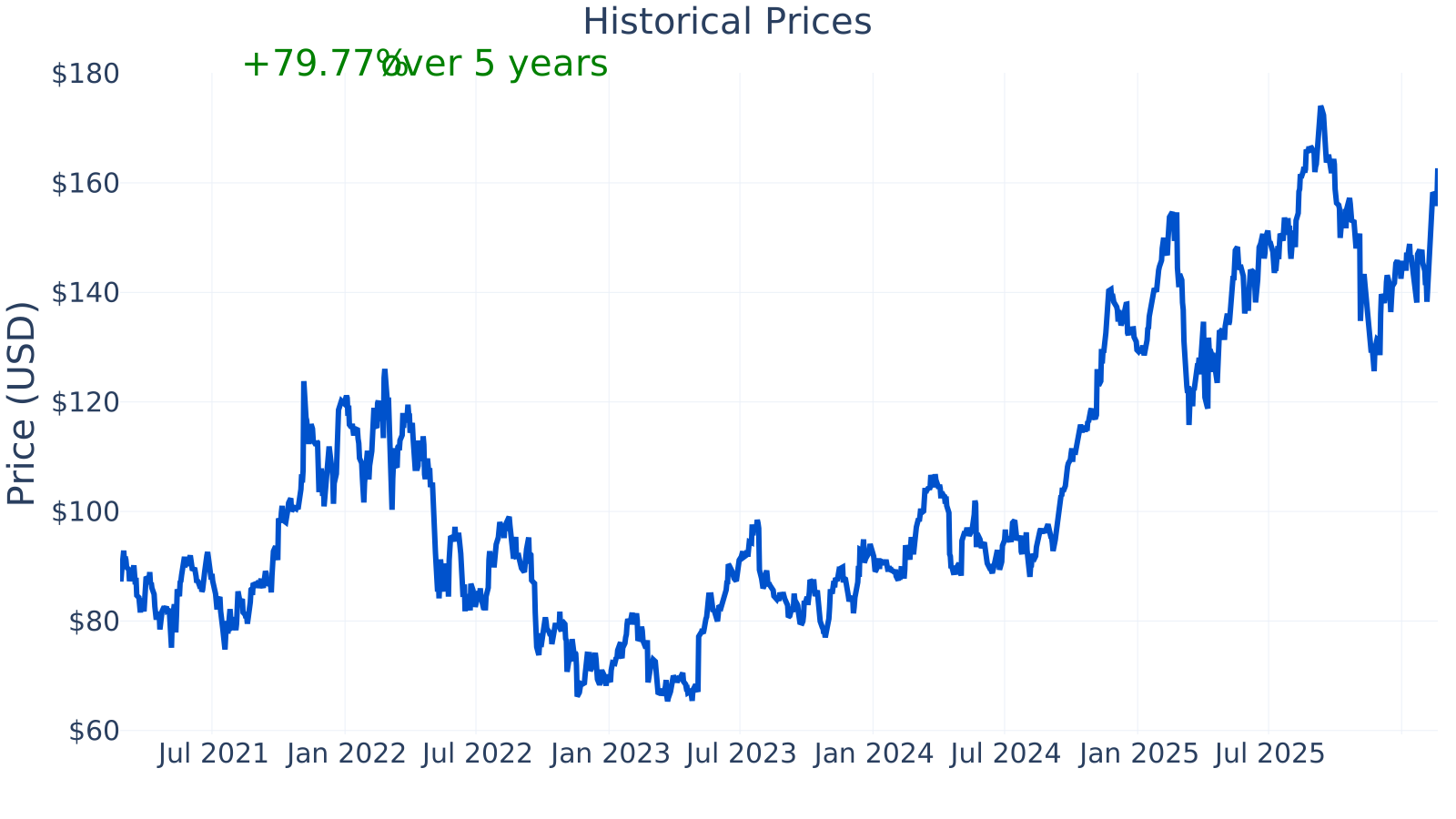
Live Nation’s market capitalization is about $37.8B, placing it among the larger publicly listed entertainment companies. The stock’s beta of ~1.14 suggests it has tended to move somewhat more than the overall market.
From a profitability perspective, the company’s profit margin is about 2.0%, below the industry median of about 4.4%. That gap matters because it implies that a relatively small change in costs, ticketing volumes, or event mix can have an outsized impact on bottom-line results.
On growth, Live Nation shows revenue growth of about 11.1% year over year, which is higher than the industry median of about 5.5%. Free cash flow over the trailing twelve months is about $334M, indicating the business generated cash overall, although cash generation has varied meaningfully over time.
The company’s valuation metrics stand out versus peers: the P/E ratio is about 117.9 compared with an industry median around 53.3, and the PEG ratio is about 9.27. These metrics can be sensitive to how earnings fluctuate year to year, and they also reflect that the market price embeds expectations that extend beyond a single year’s earnings.
Growth (medium)
Live Nation operates in live entertainment, where demand can benefit from long-term trends such as consumers prioritizing “experiences,” large-scale touring, and premium/VIP offerings. While the industry is cyclical (people may attend fewer events during economic stress), the overall category has demonstrated the ability to rebound strongly when conditions normalize.
Strategically, Live Nation’s integrated structure (concert promotion + ticketing + venue services + sponsorship) can support growth in multiple ways. For example, a strong concert slate can drive more tickets sold, and larger audiences can support higher sponsorship and advertising activity. This combination can also provide a large base of data and relationships across artists, venues, and fans that may reinforce scale over time.
The year-over-year revenue growth pattern shows very large swings during the post-pandemic reopening period (including extremely high growth rates when comparing against depressed periods), followed by more “normal” ranges later on. The most recent figure shown is about 11.1%, which is above the typical pace for the industry median shown alongside it in the table.
Cash generation has also moved in waves. Free cash flow was negative in 2021 (about -$1.8B), then turned strongly positive in 2022 (about $2.7B), and later moderated, with about $334M in the latest trailing twelve months figure shown in the table. For long-term business strength, consistent positive free cash flow generally matters because it can help fund investments, reduce debt, or withstand weaker periods without relying as heavily on outside financing.
Potential catalysts (in a factual, non-predictive sense) tend to be tied to tour volume and pricing, venue expansion and utilization, ongoing adoption of digital ticketing solutions, and the pace of brand sponsorship activity connected to events. However, the company’s results can be lumpy because event timing and tour schedules do not occur evenly throughout the year.
Risks (high)
This article is for informational purposes only and does not constitute financial advice. Some content is AI-generated. See Disclaimer