Stock Analysis · Littelfuse Inc (LFUS)
Overview
Littelfuse Inc. (LFUS) designs and manufactures components that help protect, connect, and control electrical and electronic circuits. In simple terms, many of its products are the “safety and reliability” parts inside equipment: they help prevent damage from power surges or overloads, help manage power safely, and help sense or switch electrical current. These components are used across a wide range of end markets, including automotive electronics, industrial equipment, data/communications infrastructure, and consumer and general electronics.
Because Littelfuse sells into many industries, results often move with broader manufacturing activity and customer inventory cycles. The company also grows through a mix of internal product development and acquisitions, which is common in electronic components.
Main sources of revenue are typically described by end-market segments in company filings (exact percentages can vary by year):
- Electronics (circuit protection and power control components used across electronics and infrastructure)
- Automotive (vehicle electrical protection, sensors, and related products)
- Industrial (protection, sensing, and switching for industrial equipment and automation)
Littelfuse’s recent income statement pattern shows that revenue has moved through a downcycle and then partially recovered, while profitability has been under pressure versus earlier years.
From 2021 to 2025, revenue rose from about $2.08B (2021) to about $2.39B (2025), but profits weakened materially over the same period: net income moved from about $284M (2021) to a loss of about $72M (2025). Operating expenses also rose meaningfully (roughly $386M in 2021 to roughly $869M in 2025), which helps explain why earnings did not track revenue in the later period.
Key Figures
| Metric | Value | Industry ⓘ |
|---|---|---|
| Date | Feb 07, 2026 | |
| Context | ||
| Sector | Technology | |
| Industry | Electronic Components | |
| Market Cap ⓘ | $8.71B | |
| Beta ⓘ | 1.42 | |
| Fundamental | ||
| P/E Ratio ⓘ | N/A | 41.23 |
| Profit Margin ⓘ | -3.01% | 6.11% |
| Revenue Growth ⓘ | 12.20% | 12.20% |
| Debt to Equity ⓘ | 39.00% | 39.00% |
| PEG ⓘ | 1.10 | |
| Free Cash Flow ⓘ | $366.13M | |
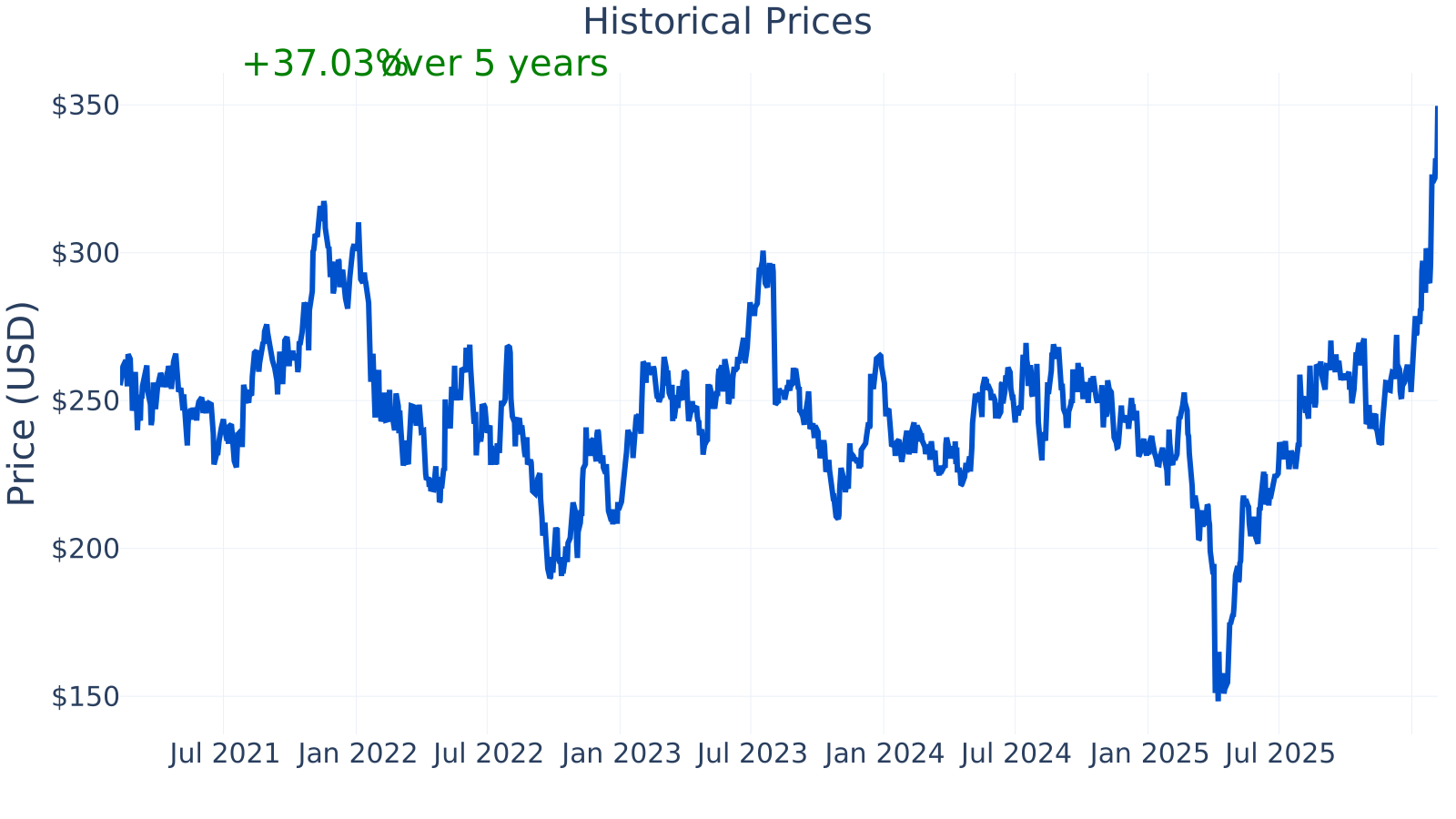
Littelfuse’s market capitalization is about $8.7B, and the stock’s beta of ~1.42 indicates it has tended to move more than the broader market. The latest year-over-year revenue growth is ~12.2%, matching the industry median shown here, while debt-to-equity is ~39% (also in line with the industry median), suggesting leverage is not unusually high versus peers. A key item to notice is the latest profit margin of about -3.0%, below the industry median of about +6.1%, meaning recent profitability has been weaker than many comparable electronic component companies. Free cash flow over the trailing twelve months is shown at about $366M.
Growth (Medium)
Littelfuse operates in electronic components—an area supported over time by long-running trends such as electrification, more electronics content in vehicles and industrial systems, and continued build-out/refresh of digital and electrical infrastructure. Demand, however, can be cyclical: customers often adjust inventories, and end markets like industrial and automotive can slow during weaker economic periods.
A practical way to view the company’s growth profile is that it can benefit from structural demand for safer, more reliable electronics, but reported results may still swing with manufacturing cycles and customer ordering patterns. Its strategy—broad exposure across automotive, industrial, and electronics; ongoing product development; and acquisitions—can make sense in a fragmented components landscape, where adding product lines and cross-selling can expand the addressable customer base.
The year-over-year revenue growth trend shows a clear cycle: very strong growth in 2021–2022, followed by declines across much of 2023–2024, and then a return to positive growth through 2025 (ending around +12%). This pattern is consistent with an inventory and demand cycle rather than a straight-line growth story.
Free cash flow (a cash-based measure after operating needs and capital spending) increased from about $209M (TTM as of 2021-03-31) to about $385M (TTM as of 2024-03-31), then fell to about $293M (TTM as of 2025-03-31). Even with the drop, the company has continued to generate meaningful cash, which can matter because cash generation helps fund investment, acquisitions, and balance-sheet flexibility.
Risks (Medium-High)
This article is for informational purposes only and does not constitute financial advice. Some content is AI-generated. See Disclaimer


