Stock Analysis · Lithia Motors Inc (LAD)
Overview
Lithia Motors, Inc. (LAD) is a U.S.-based automotive retailer. In practical terms, it sells new and used vehicles through a large network of dealerships, and it also earns money from related services such as vehicle financing, insurance products, maintenance, and parts. This “vehicle + services” model matters because the services side can help balance results when vehicle sales slow.
In its annual filings, Lithia describes revenue coming mainly from retail vehicle sales (new and used), plus aftersales and finance-related products that are typically attached to a vehicle purchase or ownership. A simplified view of common dealership revenue streams is:
- New vehicle sales (typically the largest revenue line for auto dealers)
- Used vehicle sales
- Finance and insurance (F&I) products arranged at the point of sale (for example, financing placement and certain protection products)
- Parts, service, and repair (maintenance, warranty work, collision-related services depending on the store)
At a high level, the company’s income statement shows that very large revenue dollars come with very large “cost of revenue,” which is typical in car retailing: vehicle sales bring high revenue but comparatively thin margins, while services and F&I often contribute more profit per dollar of revenue.
From 2021 to 2025, total revenue increased materially (about $22.8B to $37.6B), while net income declined from earlier highs (about $1.06B in 2021 to about $0.82B in 2025). Over the same period, interest expense rose notably (about $0.13B in 2021 to roughly $0.50B in 2025), which can pressure profitability when borrowing costs are higher or debt balances increase.
Key Figures
| Metric | Value | Industry ⓘ |
|---|---|---|
| Date | Feb 23, 2026 | |
| Context | ||
| Sector | Consumer Cyclical | |
| Industry | Auto & Truck Dealerships | |
| Market Cap ⓘ | $7.12B | |
| Beta ⓘ | 1.18 | |
| Fundamental | ||
| P/E Ratio ⓘ | 9.08 | 19.15 |
| Profit Margin ⓘ | 2.18% | 2.54% |
| Revenue Growth ⓘ | 0.30% | 3.90% |
| Debt to Equity ⓘ | 221.59% | 157.49% |
| PEG ⓘ | 0.58 | |
| Free Cash Flow ⓘ | $218.30M | |
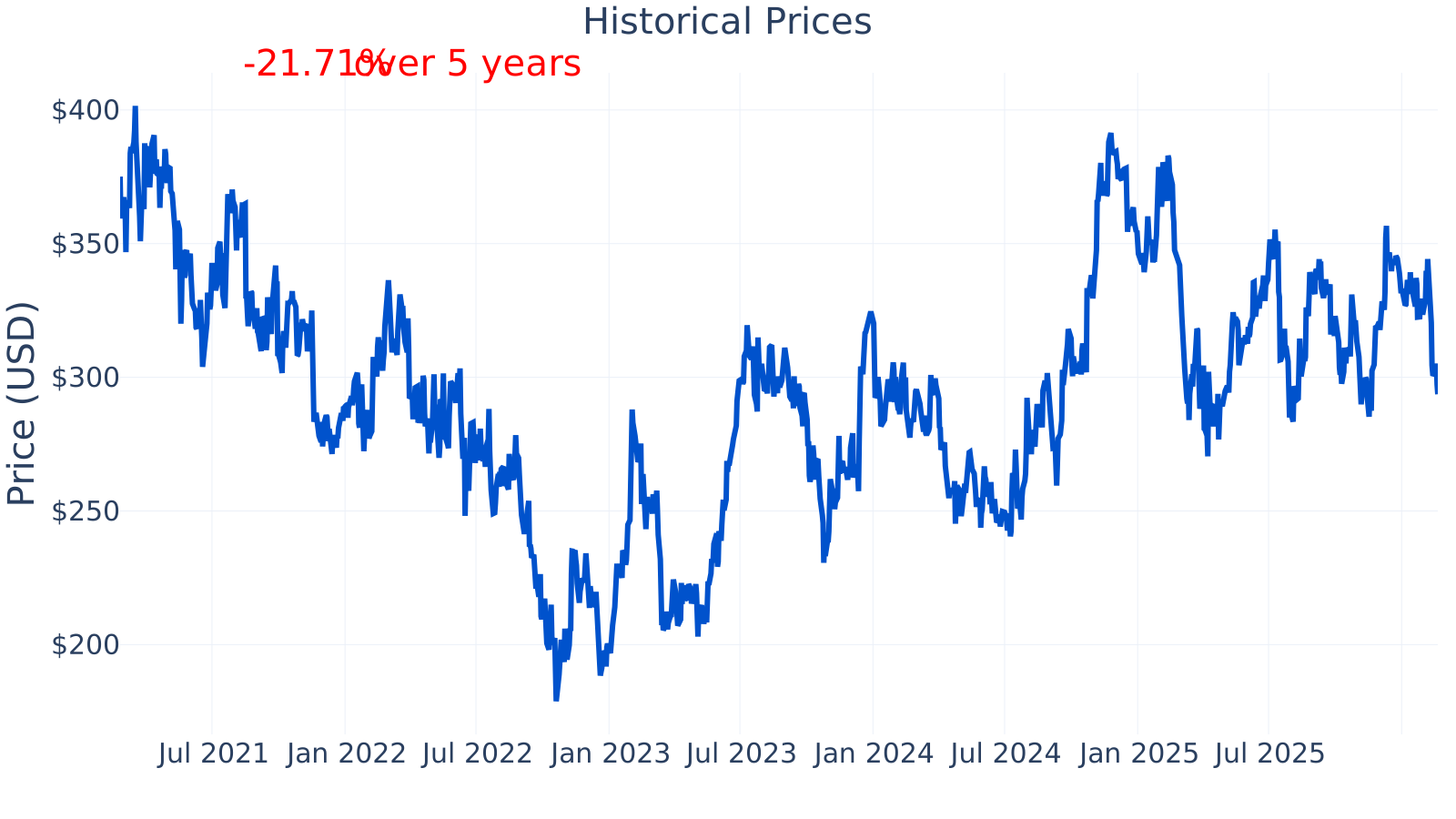
Lithia’s market capitalization is about $7.1B, and its beta of about 1.18 suggests the stock has tended to move somewhat more than the overall market. The company’s P/E ratio is ~9.1, which is below the auto dealer industry median shown here (~19.1). Profit margin is about 2.18% versus an industry median near 2.54%, reflecting the thin-margin nature of auto retail and recent profitability pressure compared with some peers. Year-over-year revenue growth is close to 0.3%, below the industry median shown (~3.9%), pointing to a slower recent growth rate. Debt-to-equity is about 222%, above the industry median (~157%), highlighting higher leverage than many peers. Trailing twelve-month free cash flow is about $218M, indicating the business has recently generated cash after operating needs and capital spending.
Growth (Medium)
Auto and truck dealership operations are tied to long-term drivers like population growth, vehicle parc (the number of cars on the road), and the ongoing need for maintenance and repairs. At the same time, the industry is cyclical: demand can weaken when interest rates rise, credit tightens, or consumer confidence falls. Over long periods, many dealership groups try to grow by acquiring additional stores, expanding used-vehicle capabilities, and increasing higher-margin streams such as service/parts and finance-related products.
One way to interpret Lithia’s recent growth pattern is that revenue expanded strongly earlier in the period shown and then normalized, with year-over-year growth approaching flat by late 2025. That can be consistent with a post-cycle slowdown after unusually strong dealership conditions in prior years.
Cash generation is another practical signal for long-term business flexibility, because it supports debt repayment, reinvestment, and potential shareholder returns (depending on management’s capital allocation decisions disclosed in filings). Lithia’s trailing free cash flow swung from strongly positive (2021–2022) to negative (2023–2024) and back to positive (2025). For dealership groups, these swings can be influenced by changes in working capital (especially vehicle inventory levels) as supply conditions and demand change.
Potential catalysts in this business model tend to be operational rather than “one-time events”: improving service absorption (how much fixed costs are covered by service gross profit), expanding finance and insurance contribution per vehicle, and integrating acquisitions efficiently. Another broad catalyst can be easing interest rates or improved vehicle affordability, which can support unit sales and financing volumes—though these are macro factors outside the company’s control.
Risks (High)
This article is for informational purposes only and does not constitute financial advice. Some content is AI-generated. See Disclaimer