Stock Analysis · Lindblad Expeditions Holdings Inc (LIND)
Overview
Lindblad Expeditions Holdings Inc is a travel company focused on expedition cruising and adventure travel. It is best known for operating small-ship voyages to nature- and wildlife-focused destinations (such as polar regions and other remote areas) and for offering guided land-based expeditions. The business model differs from mass-market cruising because trips typically involve smaller ships, specialist guides, and itineraries built around exploration, education, and access to hard-to-reach places.
The company’s revenue primarily comes from selling expedition travel experiences. Based on how the company describes its operations in its SEC filings, the main revenue drivers are generally:
- Passenger ticket revenue (expedition cruises and expeditions; typically the largest component)
- Onboard and trip-related revenue (for example, certain onboard services and items tied to the voyage experience)
- Other travel-related revenue (items that may vary by itinerary and offering)
In practice, results tend to be influenced by occupancy (how full ships are), pricing per guest (often linked to destination and cabin type), the mix of itineraries, and the cost structure of operating ships and expeditions.
Across recent years, total revenue has risen substantially (from about $147.1M in 2021 to about $644.7M in 2024), while operating income turned positive (about $20.6M in 2024). Net income remained negative in 2024 (about -$31.2M), and interest expense stayed material (about $45.7M in 2024), showing that financing costs continue to weigh on bottom-line profitability even as operations improved.
Key Figures
| Metric | Value | Industry ⓘ |
|---|---|---|
| Date | Feb 08, 2026 | |
| Context | ||
| Sector | Consumer Cyclical | |
| Industry | Travel Services | |
| Market Cap ⓘ | $1.11B | |
| Beta ⓘ | 2.24 | |
| Fundamental | ||
| P/E Ratio ⓘ | N/A | 21.78 |
| Profit Margin ⓘ | -4.24% | 10.37% |
| Revenue Growth ⓘ | 16.60% | 10.60% |
| Debt to Equity ⓘ | -380.51% | 96.47% |
| PEG ⓘ | N/A | |
| Free Cash Flow ⓘ | $52.17M | |
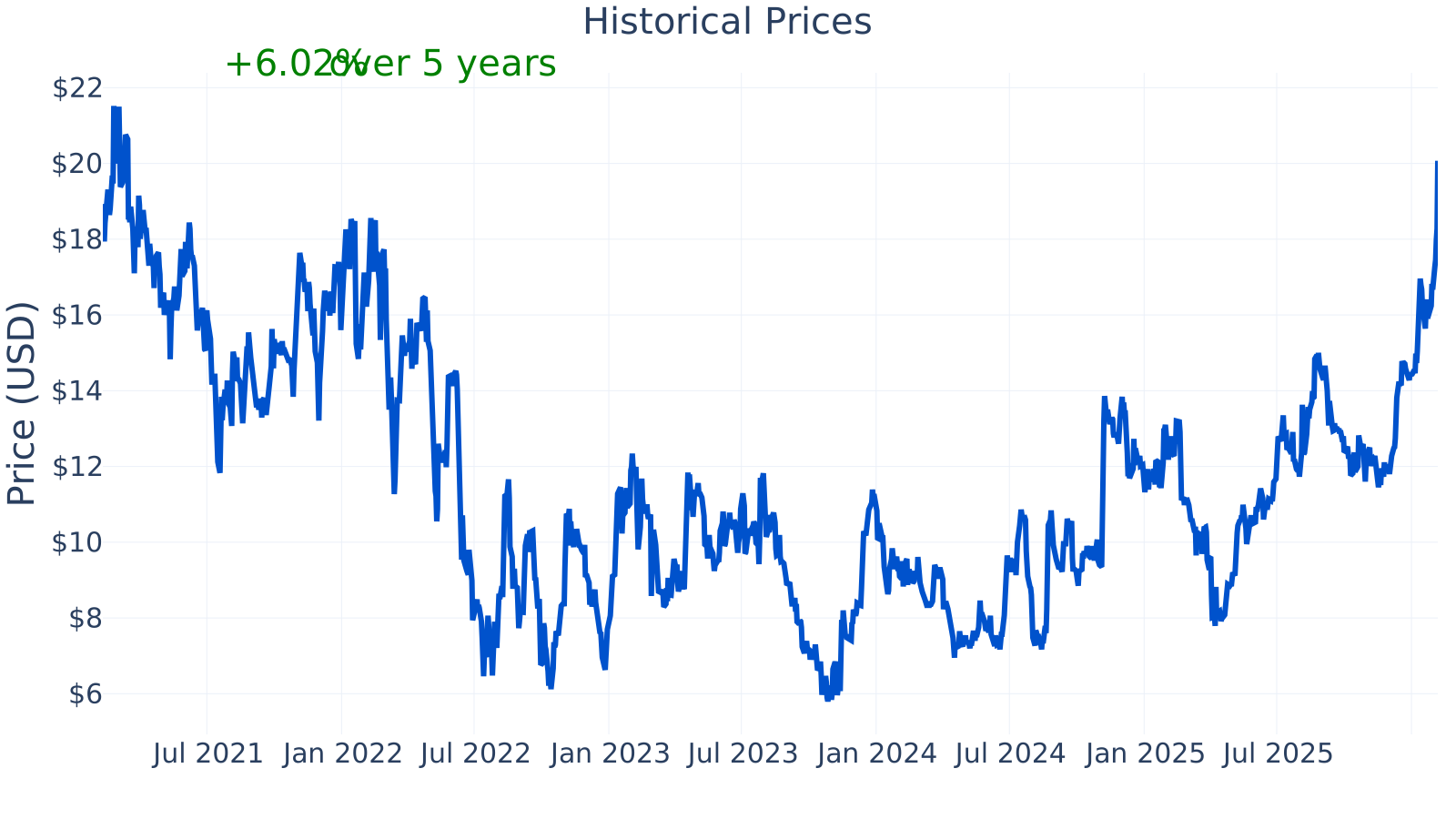
Lindblad’s market capitalization is about $1.11B. The stock’s beta of ~2.24 indicates it has historically moved more than the broader market, which can translate into larger swings in both directions. The company’s profit margin is about -4.24%, below the industry median of about 10.37%, meaning the company is still posting net losses recently even though operations have been improving. On growth, year-over-year revenue growth is about 16.6%, above the industry median of about 10.6%. Free cash flow (TTM) is about $52.2M, which signals that cash generation has recently turned positive. The P/E ratio is not meaningful here (not shown), which commonly happens when earnings are negative.
Growth (Medium)
Expedition and adventure travel is a niche within the broader travel industry that tends to rely on customers seeking experience-driven, destination-specific trips. This part of travel can benefit from long-term themes such as interest in “experiential” vacations, demand for guided nature and wildlife travel, and higher-income consumers allocating more spending to unique trips. At the same time, it is cyclical: demand can weaken when consumer confidence falls or when travel disruptions occur.
Lindblad’s strategy centers on being a specialist operator with a premium, education-forward experience and a focus on iconic destinations. For long-term growth, the key practical levers are (1) maintaining strong demand and pricing, (2) deploying capacity efficiently (ship utilization and itinerary planning), and (3) controlling costs so that revenue growth translates into sustainable profitability. A notable potential catalyst for longer-term performance is continued normalization of global travel patterns and the company’s ability to convert stronger bookings into consistent profits after interest costs.
Revenue growth has moderated from extreme post-disruption rebounds to more “normal” expansion. Most recently shown, year-over-year growth is around 16.6%, which is higher than the industry median (about 10.6%). This suggests the company has been growing faster than many peers in its industry grouping, at least in the latest period displayed.
Free cash flow has improved meaningfully over time, moving from negative levels (for example, about -$157.2M in 2021) to positive levels (about $37.3M in 2024 and about $56.4M by 2025). For a capital-intensive business (ships, maintenance, and upfront trip costs), sustained positive free cash flow can increase financial flexibility, though it may vary with working capital timing and investment cycles.
Risks (High)
This article is for informational purposes only and does not constitute financial advice. Some content is AI-generated. See Disclaimer