Stock Analysis · Life360 Inc (LIF)
Overview
Life360 Inc is a consumer software company best known for its Life360 mobile app, which helps families and close groups coordinate day-to-day life with features such as location sharing, driving safety insights, and alerts. The product is designed for ongoing use (not one-time purchases), which tends to align with recurring subscription-style revenue.
In its filings, Life360 describes a “freemium” model: many users start on a free version, and a smaller portion upgrades to paid plans for more advanced features. The company also generates revenue beyond subscriptions (for example, partnerships and other consumer-oriented revenue streams described in its reports).
Main revenue sources are typically described in company filings as being led by subscriptions, followed by other revenue lines. Percentages can vary by period and reporting categories, but the overall mix is generally:
- Subscription revenue (paid memberships and add-on services) — largest component
- Other revenue (including partnership-related and other non-subscription streams) — smaller component
From the multi-year income flow, a notable shift is visible: revenue has expanded substantially over several years, while operating losses narrowed and then moved into operating profit most recently. Research and development plus sales/marketing spending remain meaningful, which is typical for an app business focused on both product improvement and user growth.
Key Figures
| Metric | Value | Industry ⓘ |
|---|---|---|
| Date | Mar 06, 2026 | |
| Context | ||
| Sector | Technology | |
| Industry | Software - Application | |
| Market Cap ⓘ | $3.52B | |
| Beta ⓘ | 1.00 | |
| Fundamental | ||
| P/E Ratio ⓘ | 121.38 | 25.64 |
| Profit Margin ⓘ | 30.82% | 7.42% |
| Revenue Growth ⓘ | 26.40% | 16.65% |
| Debt to Equity ⓘ | 56.62% | 24.02% |
| PEG ⓘ | N/A | |
| Free Cash Flow ⓘ | $80.90M | |
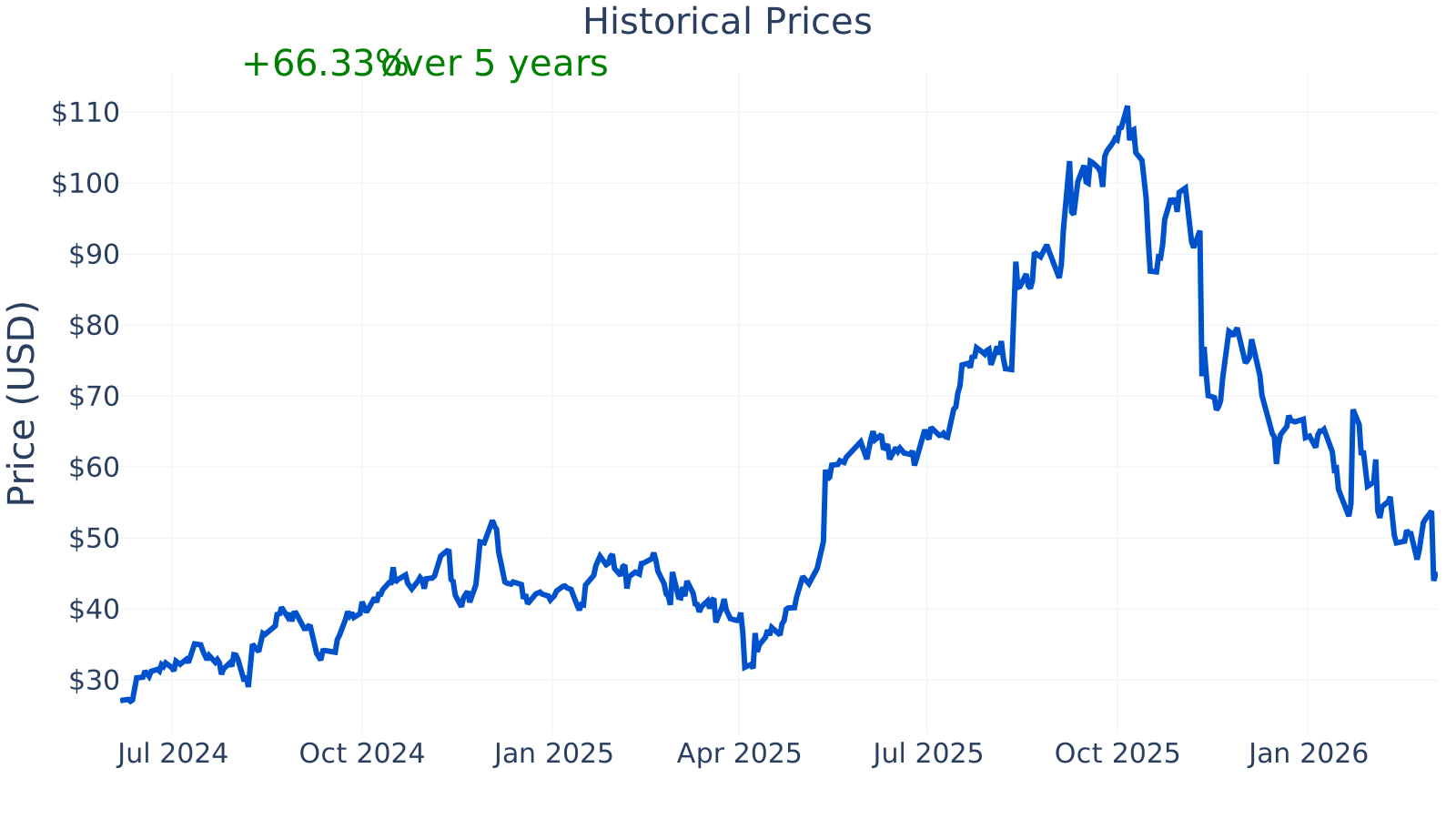
At the latest snapshot, Life360’s market capitalization is about $3.52B and the stock’s beta is about 1.00, which indicates price moves that have been broadly similar to the overall market historically. The company shows 30.82% profit margin versus an industry median of 7.43%, and 26.40% year-over-year revenue growth versus an industry median of 16.65%. Leverage is higher than the industry median with 56.62% debt-to-equity versus 24.02%. Free cash flow over the trailing twelve months is about $80.9M. The P/E ratio is about 121.38 versus an industry median of about 25.64, indicating the market price embeds high expectations relative to many software peers.
Growth (Medium)
Life360 operates in a part of consumer software that tends to benefit from long-term trends: smartphones are deeply embedded in daily life, families increasingly use apps for coordination and safety-related features, and subscription bundles have become a common way to monetize consumer apps. These patterns can support growth when a product has strong retention and a clear reason for users to keep paying month after month.
A core element of Life360’s strategy is expanding from a large free user base into more paid subscribers by offering additional services and features. In general terms, this model can scale efficiently when user acquisition is strong and the company can increase the percentage of users who convert to paid plans (or raise average revenue per paying user) without increasing costs at the same pace.
The year-over-year revenue growth trend shown remains solid (roughly the mid‑20% to mid‑30% range across recent quarters), though it has moderated from higher levels earlier in the year. For long-term fundamentals, the key question is whether Life360 can maintain healthy growth while improving efficiency (for example, controlling marketing and operating costs as a share of revenue).
Free cash flow has been positive in the periods shown, which matters because it reflects cash generation after operating costs and capital spending. Positive free cash flow can provide flexibility to reinvest in product development and marketing while limiting reliance on outside financing.
Risks (Medium-High)
A major business risk for any consumer subscription app is that growth and profitability depend on user retention and conversion. If fewer free users upgrade to paid plans, if churn rises, or if customer acquisition becomes more expensive (for example due to changes in mobile platform policies or advertising markets), financial performance can be pressured.
Competition is another central risk. Location sharing and family safety features can be offered by multiple types of players, including:
- Large mobile ecosystems that provide built-in location sharing features
- Consumer safety and tracking apps with overlapping functionality
- Telecom or device-linked services that bundle family safety features with existing subscriptions
Life360’s competitive positioning is often tied to brand recognition in family location sharing, a feature set designed specifically for families, and the advantages of a large user network (people invite other family members, which can reinforce adoption). However, large platform providers can be formidable because they can pre-install or deeply integrate similar tools into devices and operating systems.
Privacy, data security, and regulatory compliance are especially important for a product that handles sensitive location-related information. Any meaningful trust event (such as a security incident) or regulatory change could affect user growth, retention, and operating costs.
The debt-to-equity ratio rose sharply in 2025 compared with earlier periods and sits above the industry median in the latest reading (about 56.62% vs. 27.07%). Higher leverage can increase financial risk, particularly if operating results become more volatile or if cash generation weakens.
Profitability has improved materially over time: the profit margin moved from slightly negative to positive and then jumped to a much higher level in the latest period shown (about 30.81%, above the industry median). One risk to monitor is sustainability—profit margins in software can fluctuate due to marketing intensity, product investment cycles, and one-time items that can temporarily lift (or depress) reported earnings.
Valuation
The P/E ratio shown varies significantly over time and is currently reported around 121.38, which is far above the industry median (about 25.64). In plain terms, that typically means the market price reflects expectations for substantial future earnings growth and/or durability of profits. When a company trades at a higher multiple than peers, the valuation tends to be more sensitive to changes in growth rates, profit margins, and forward guidance.
Valuation cannot be assessed from one metric alone, especially for companies where profitability has recently improved. Still, a high earnings multiple generally leaves less room for disappointment if revenue growth slows, if margins normalize downward, or if competitive pressure increases customer acquisition costs.
Conclusion
Life360 is a consumer subscription software business centered on a family-focused mobile app, with revenue growth that has been strong in recent periods and evidence of improving profitability and cash generation. The business model can scale when user retention remains high and the company continues converting free users into paying subscribers.
At the same time, the company operates in a competitive environment where platform-level features and other apps can overlap with its offering, and it faces meaningful privacy and trust expectations due to its use of location data. Financially, leverage is higher than the industry median in the latest period, and the valuation (as reflected in the P/E ratio) indicates the market is pricing in ambitious expectations. Taken together, the long-term narrative hinges on execution: sustaining growth, maintaining user trust, and translating scale into consistently durable profits.
Sources:
- SEC EDGAR — Life360 Inc filings (Annual Reports on Form 10-K; Quarterly Reports on Form 10-Q)
- Life360 Inc Investor Relations — Shareholder letters / investor presentations (company-hosted, as available)
- Life360 Inc — Earnings call materials or transcripts hosted by the company (as available)
- Wikipedia — “Life360” (basic company background)
This article is for informational purposes only and does not constitute financial advice. Some content is AI-generated. See Disclaimer


