Stock Analysis · Liberty Media Corporation Liberty Formula One (FWONK)
Overview
Liberty Media Corporation Liberty Formula One (FWONK) is a tracking stock tied to Liberty Media’s Formula One Group. In practical terms, it gives exposure to the business behind the Formula 1 World Championship: organizing and promoting the race series, selling media rights to broadcasters and platforms, building sponsorship partnerships, and monetizing race-weekend demand through fees paid by event promoters and other commercial activities.
The business model is built around a global sports brand with a limited number of annual events, multi-year commercial contracts, and a mix of recurring revenue (especially media rights) plus event-driven income (race-related fees and trackside demand). Formula 1’s value is strongly linked to its ability to sustain fan interest, deliver strong TV/streaming audiences, and keep events commercially viable for promoters, teams, and partners.
In company reporting for the Formula One Group, the main revenue lines are typically described as:
- Media rights (fees paid by broadcasters/streaming partners to show races)
- Race promotion (fees paid by race promoters/hosts to stage a Grand Prix, plus some trackside and event-related revenue)
- Sponsorship (global partners and trackside advertising arrangements)
- Other (items such as licensing and other commercial income, depending on the period)
Percentages can vary year to year based on calendar changes, contract terms, and commercial mix. The company discloses detailed breakdowns in its annual report for the Formula One Group.
Over the periods shown, total revenue trends upward (from about $2.1B in 2021 to about $4.5B in 2025), but bottom-line profit is not smooth year to year. Operating income and net income can swing meaningfully due to costs, interest, and tax effects, which is common for businesses with significant long-term contracts, international operations, and financing structures.
Key Figures
| Metric | Value | Industry ⓘ |
|---|---|---|
| Date | Mar 09, 2026 | |
| Context | ||
| Sector | Communication Services | |
| Industry | Entertainment | |
| Market Cap ⓘ | $20.98B | |
| Beta ⓘ | 0.72 | |
| Fundamental | ||
| P/E Ratio ⓘ | 36.26 | 57.18 |
| Profit Margin ⓘ | 12.38% | 4.13% |
| Revenue Growth ⓘ | 19.10% | 9.80% |
| Debt to Equity ⓘ | 66.06% | 83.94% |
| PEG ⓘ | 3.97 | |
| Free Cash Flow ⓘ | $741.00M | |
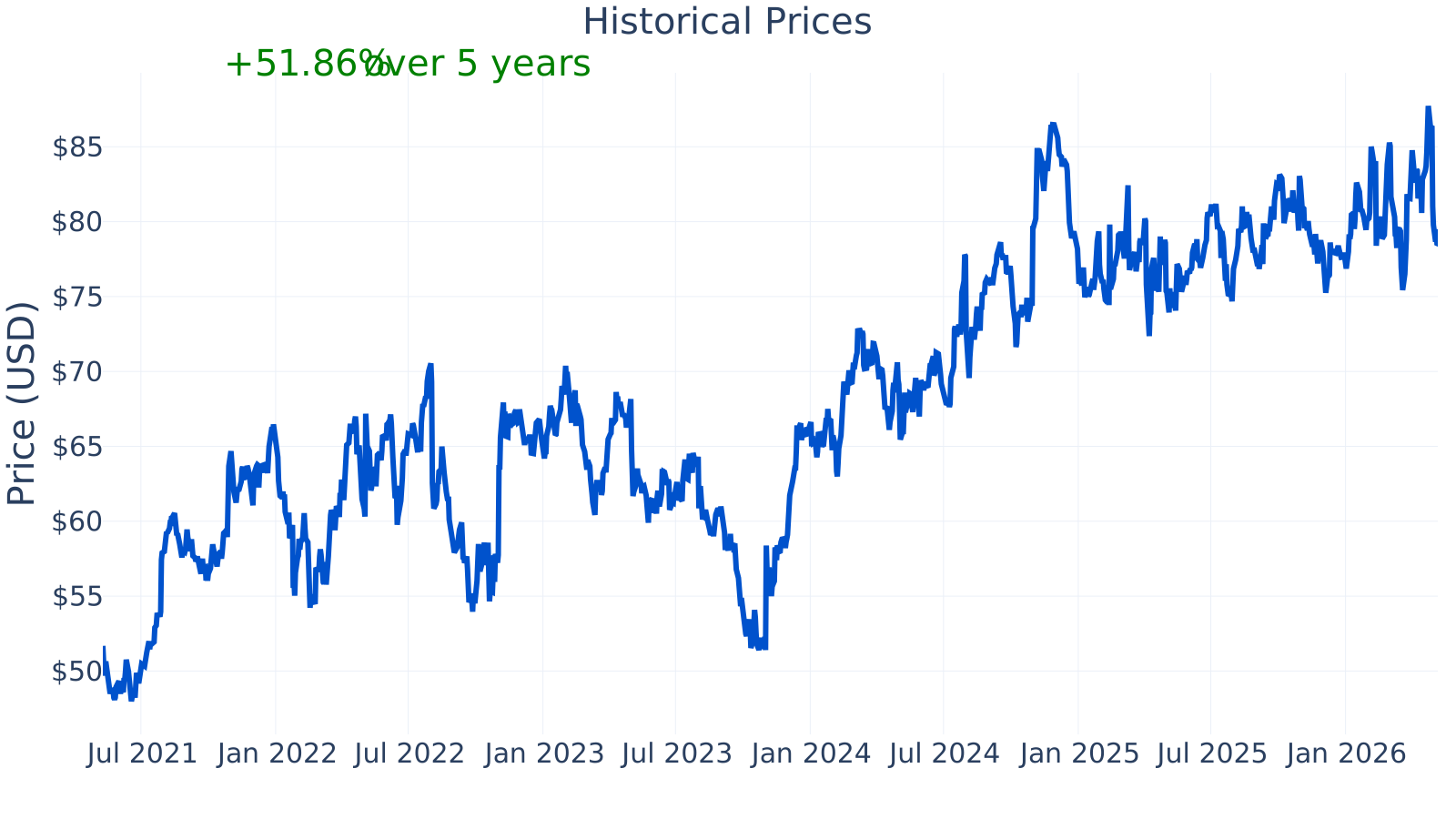
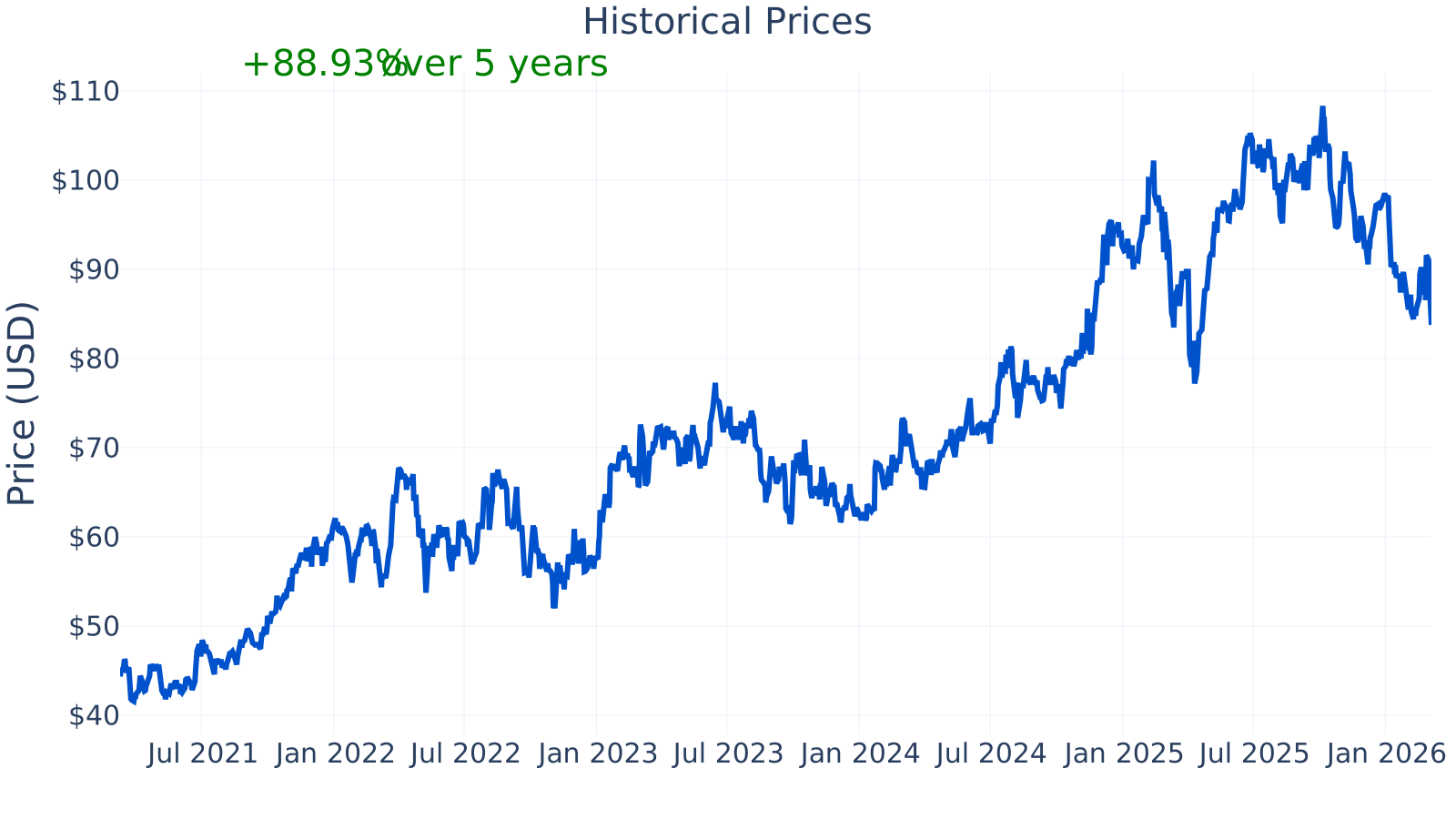
FWONK’s market capitalization is about $21.0B. The stock’s beta of 0.72 suggests it has historically moved less than the overall market on average (though that does not prevent meaningful price swings). The latest P/E ratio is ~36.3, below the industry median shown (~57.2). Profitability is currently stronger than the industry median on this measure, with a profit margin of ~12.4% versus an industry median of ~4.1%. Growth is also higher on the latest year-over-year metric: ~19.1% versus an industry median of ~9.8%. Leverage appears lower than the industry median on this measure, with debt-to-equity of ~66% versus ~84% for the median. Free cash flow (TTM) is shown at ~$741M, while the PEG ratio (~4.0) implies the valuation may be demanding relative to the growth rate assumptions embedded in that metric.
Growth (medium)
Formula 1 sits within the broader global sports, media, and entertainment ecosystem—an area supported by long-term demand for live content. Live sports can be especially valuable for broadcasters and streaming services because it tends to attract real-time audiences and recurring engagement, which can support advertising and subscriber retention.
For future expansion, the underlying logic of Formula 1’s strategy is often about increasing the value of its media rights (renewals and distribution reach), optimizing the race calendar and promoter economics, and expanding sponsorship and licensing. Because the number of races and the global footprint are constrained by logistics and governance, growth tends to come from improved monetization per event and per viewer rather than unlimited volume expansion.
Year-over-year revenue growth has been volatile, with some quarters showing strong expansion and some showing declines (including negative periods in late 2024 and early 2025 in the series shown). The latest metric table shows ~19.1% year-over-year revenue growth, which is higher than the industry median listed.
Free cash flow has also fluctuated over time, moving from negative levels (2021) to positive and then rising to ~$727M by early 2025, with the latest shown at ~$741M (TTM). For long-term business quality, sustained free cash flow matters because it can support debt service, reinvestment, and financial flexibility without relying on new financing.
Risks (medium)
Formula 1’s brand and global rights structure can be a competitive advantage: it controls a unique, scarce premium sports property with a defined season and global audience reach. However, that does not remove business risk, because monetization depends on renewing contracts, maintaining fan demand, and operating a complex international event calendar.
A key risk category is commercial concentration. Media-rights partners and major sponsors can represent meaningful portions of revenue, so renegotiations (pricing, distribution terms, or audience performance clauses) can affect results. Race promotion revenue can also be sensitive to calendar changes, geopolitical disruptions, and the economics of hosting events.
Another risk is cost inflation and operational complexity. Running a global championship involves freight, staffing, technology, and event support across many jurisdictions. Profitability can move around when costs rise faster than revenue, when the calendar changes, or when one-time items (including legal, tax, or restructuring effects) occur.
Leverage, measured here as debt-to-equity, has improved dramatically versus earlier periods in the chart (from well above 200% in 2021–2023 to under 50% through much of 2023–2025, then ~66% most recently). It is also below the industry median shown (~80%). Even so, debt levels still matter because higher interest rates or refinancing needs can affect net income and cash flow.
Profit margin has been uneven over time, including negative periods, but the latest point is ~12.4%, above the industry median (~4.4%). The variability highlights that earnings may not move in a straight line even when revenue trends upward.
Competition is less about “another Formula 1” and more about competition for attention and sports media budgets. Other global sports leagues and event properties compete for viewers, sponsors, and broadcaster/streaming dollars. In that sense, Formula 1 is a leader within its specific niche (top-tier open-wheel global motorsport), but it still competes in the broader market for premium live content.
Valuation
Valuation for a sports rights business is often discussed in terms of earnings, cash flow generation, growth durability, and contract quality (how long media rights, sponsorships, and hosting agreements last and how predictable they are). For FWONK, the latest P/E in the table is ~36.3, which is below the industry median shown (~57.2). At the same time, a P/E in the 30s still implies the market is placing meaningful value on continued earnings expansion and/or resilient long-term cash flows.
The P/E history shown is volatile, with some periods not displayed and others spiking well above typical industry levels. This kind of movement can happen when the share price changes quickly, when earnings temporarily dip, or when one-time items affect reported profits. Because of that, a single P/E snapshot may be less informative than understanding how stable earnings and free cash flow are across an entire cycle.
The PEG ratio (~4.0) shown in the table is one signal that the valuation may be high relative to the growth rate assumptions used by that metric. That does not determine valuation on its own, but it highlights the importance of execution (media renewals, sponsorship demand, and event economics) to support what the current price implies.
Conclusion
Liberty Media’s Formula One exposure reflects a business built around a scarce global sports asset with multiple monetization channels—media rights, race hosting fees, and sponsorship. The operational picture shown here includes rising revenue over several years and improved leverage versus earlier periods, alongside uneven profitability and variable year-over-year growth.
The long-term investment discussion typically centers on whether Formula 1 can maintain and grow its global audience and commercial pricing power over many contract cycles while managing costs and event complexity. The valuation signals are mixed: the latest P/E is below the industry median shown, but the historical P/E has been volatile and the PEG ratio suggests the market is embedding demanding expectations. The overall fact pattern points to a well-known sports franchise with meaningful scale and improving balance-sheet metrics, paired with earnings variability and execution-sensitive outcomes.
Sources:
- SEC EDGAR — Liberty Media Corporation filings (Formula One Group disclosures in Annual Report on Form 10-K and Quarterly Reports on Form 10-Q)
- Liberty Media — Investor Relations — Annual Report (Form 10-K): “Item 1. Business” and Formula One Group revenue disclosures
- Wikipedia — “Liberty Media” and “Formula One” (basic background only)
This article is for informational purposes only and does not constitute financial advice. Some content is AI-generated. See Disclaimer