Stock Analysis · Liberty Media Corporation Liberty Formula One (FWONK)
Overview
Liberty Media Corporation’s Liberty Formula One tracking stock (FWONK) is designed to reflect the performance of Liberty Media’s Formula 1 business. Formula 1 is a global motorsport series that owns and manages the F1 championship, including race promotion activities, media rights, and commercial relationships tied to the sport. In simple terms, the business earns money by selling the right to broadcast races, partnering with sponsors, and hosting events around the world.
In its SEC filings, Formula 1 describes its revenue as coming mainly from these areas (often referred to as “primary” revenue streams):
- Media rights (selling broadcasting and streaming rights to networks and platforms)
- Race promotion fees (fees paid by race organizers to host a Grand Prix)
- Sponsorship (global partners and trackside advertising arrangements)
Additional revenue is typically generated through other commercial activities (for example, hospitality, ticketing-related arrangements in certain cases, and other licensing/experiential items), but the three categories above are generally the core drivers described in filings.
Over the last few years, the business has shown a clear rise in total revenue, alongside fluctuating profitability (net income can move materially year to year due to costs, interest expense, and other accounting items).
Total revenue increased from about $2.1B (2021) to about $3.7B (2024). Over the same period, operating income moved from a small loss (2021) to a profit (2022–2024), while net income was more volatile (profit in 2022–2023 and a small loss in 2024). Interest expense has been a meaningful recurring cost each year, which can matter when rates are higher or if debt rises.
Key Figures
| Metric | Value | Industry ⓘ |
|---|---|---|
| Date | Feb 07, 2026 | |
| Context | ||
| Sector | Communication Services | |
| Industry | Entertainment | |
| Market Cap ⓘ | $21.32B | |
| Beta ⓘ | 0.71 | |
| Fundamental | ||
| P/E Ratio ⓘ | N/A | 50.96 |
| Profit Margin ⓘ | 5.50% | 4.93% |
| Revenue Growth ⓘ | 19.10% | 5.20% |
| Debt to Equity ⓘ | 95.40% | 80.15% |
| PEG ⓘ | 12.77 | |
| Free Cash Flow ⓘ | $674.00M | |
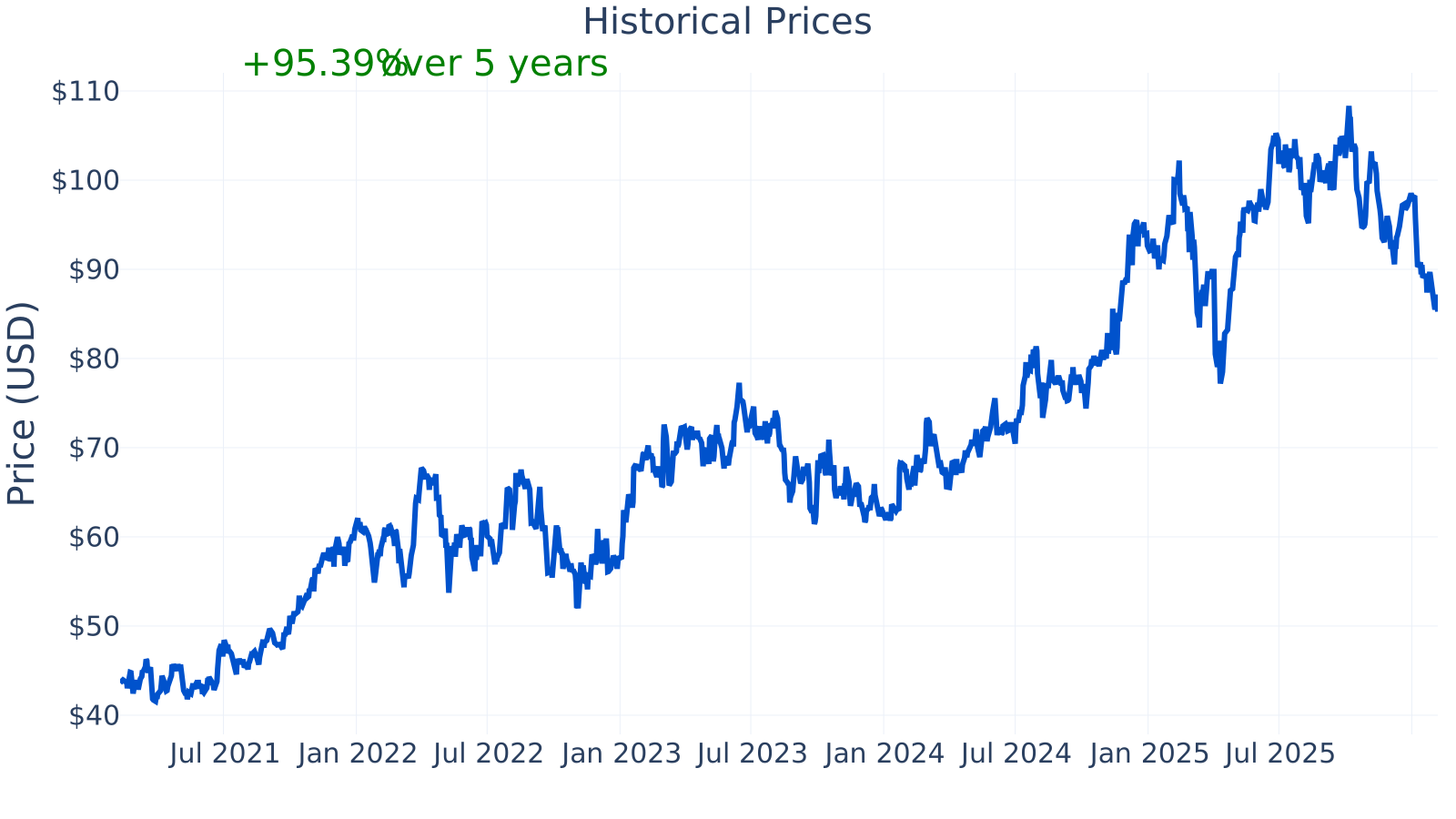
The company’s market capitalization is about $21.3B and the stock has shown sizable price appreciation across the period displayed. The beta of 0.71 suggests the shares have historically moved less than the broader market on average (though this is not a guarantee of future behavior).
On fundamentals, the latest profit margin is about 5.5%, slightly above the industry median shown (about 4.9%). Revenue growth (year over year) is about 19.1%, which is notably higher than the industry median shown (about 5.2%). Debt-to-equity is about 95.4%, above the industry median shown (about 80.1%), indicating somewhat higher leverage than peers on this measure. Trailing twelve-month free cash flow is about $674M, highlighting meaningful cash generation in the most recent period shown.
Growth (medium)
Formula 1 operates in live sports and entertainment, where the most valuable assets tend to be premium content and global audiences. A key structural support for long-term business economics is that live sports remain time-sensitive content, which can be valuable for distributors and advertisers compared with on-demand entertainment.
From an operating strategy standpoint, Formula 1’s model is built around monetizing a limited number of high-profile events globally while expanding commercial value through media distribution, sponsorship packages, and race-hosting arrangements. This approach can scale with audience growth and brand strength, but it also depends on maintaining the sport’s appeal, competitive racing, and successful relationships with broadcasters and host venues.
Revenue growth has been uneven quarter to quarter, which is common for event-driven businesses, but the most recent year-over-year figure shown (about 18.3%) is well above the industry median in the table. Some earlier quarters show very high growth rates (especially off smaller bases), while a few periods show declines, reflecting the variability that can come with scheduling, contract timing, and comparisons to prior-year events.
Free cash flow improved substantially over time in the period shown, reaching about $727M by 2025-03-31 (TTM), compared with much lower levels in earlier periods (including a negative figure in 2021-03-31). For long-term business durability, sustained free cash flow matters because it can help fund investments, reduce debt, or support other corporate priorities—though the direction can change as costs, working capital, and capital spending fluctuate.
Risks (medium)
This article is for informational purposes only and does not constitute financial advice. Some content is AI-generated. See Disclaimer