Stock Analysis · Liberty Broadband (LBRDK)
Overview
Liberty Broadband is a holding company. Instead of mainly selling services directly to consumers, it is structured to own major investments in other businesses—most importantly its stake in Charter Communications (the cable and broadband company that operates under the “Spectrum” brand). In practice, Liberty Broadband’s long-term results are largely tied to how Charter performs and how Charter’s U.S. cable and internet business evolves.
Liberty Broadband’s reported revenue can be different from what many people expect, because a large part of its economic value comes from investments whose results may be reflected through accounting items such as share of earnings/losses, changes in fair value, tax-related items, or gains/losses, rather than steady “sales” from a broad operating business. This can make the company’s net income and margins look unusually volatile from year to year.
Main sources of economic exposure (business drivers):
- Charter Communications ownership stake (the largest driver of value and performance)
- Other investments and corporate items (smaller, can still affect reported earnings through accounting and taxes)
From 2021 through 2024, total revenue shown here stayed around roughly $1.0B, while operating income was modest relative to revenue. In 2025, the pattern shifts sharply (revenue and operating income drop materially and net income turns negative), highlighting how reported results can change significantly due to investment/accounting effects and other non-linear items rather than only “business-as-usual” service revenue.
Key Figures
| Metric | Value | Industry ⓘ |
|---|---|---|
| Date | Feb 16, 2026 | |
| Context | ||
| Sector | Communication Services | |
| Industry | Telecom Services | |
| Market Cap ⓘ | $7.98B | |
| Beta ⓘ | 0.98 | |
| Fundamental | ||
| P/E Ratio ⓘ | N/A | 15.09 |
| Profit Margin ⓘ | N/A | 6.18% |
| Revenue Growth ⓘ | 6.10% | 2.10% |
| Debt to Equity ⓘ | 30.64% | 113.97% |
| PEG ⓘ | N/A | |
| Free Cash Flow ⓘ | -$80.00M | |
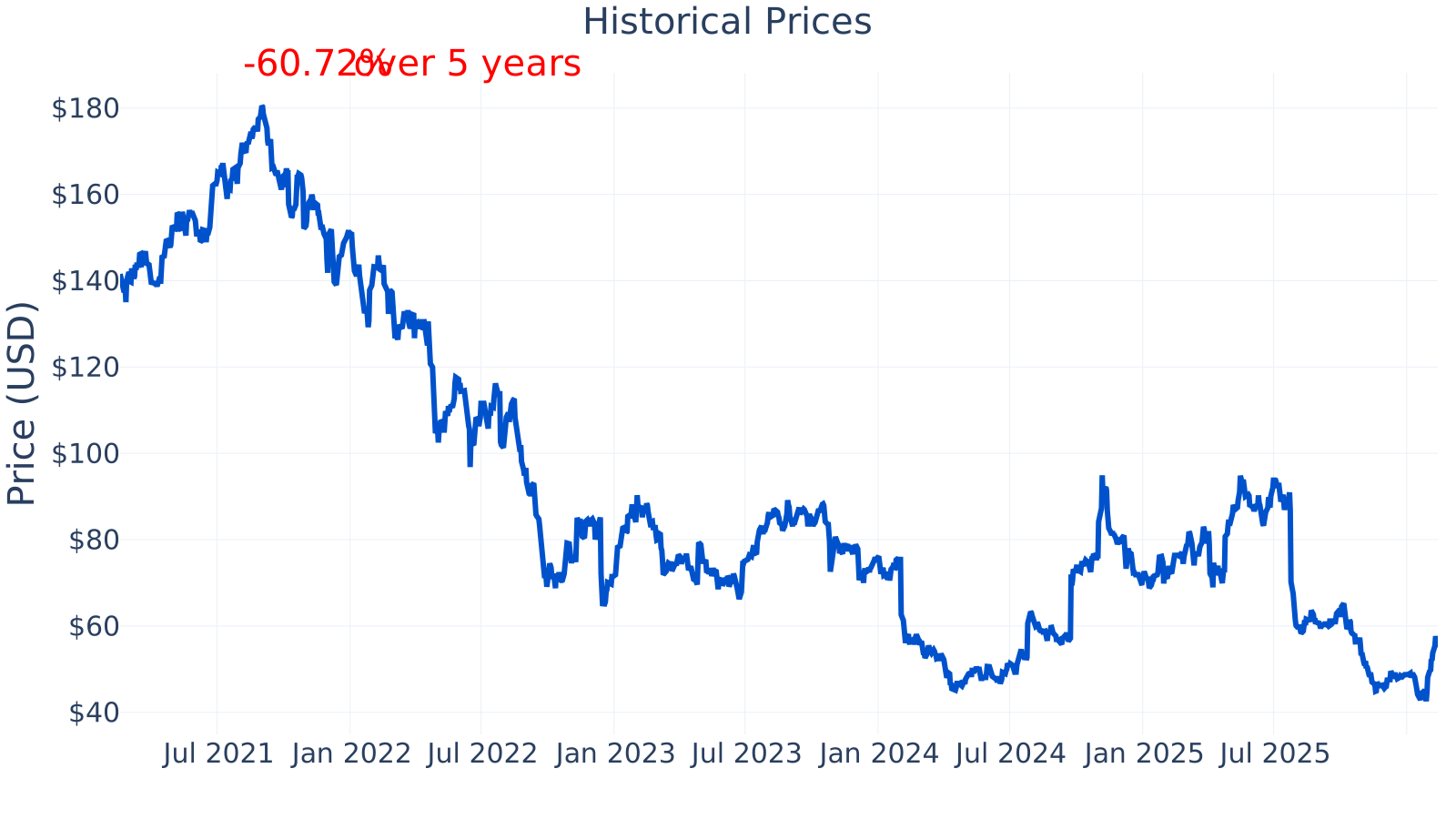
Liberty Broadband’s market capitalization is about $8.0B, and its beta is near 1.0, which suggests its share price has tended to move roughly in line with the broader market. The latest year-over-year revenue growth shown is about 6.1% versus an industry median near 2.1%, while the latest debt-to-equity is about 31%, notably below the industry median (about 114%). Free cash flow over the trailing twelve months is shown as -$80M, and the profit margin field is shown as 0% in the table (profitability can be difficult to interpret for a holding company because reported earnings can swing based on non-operating items).
Growth (Medium)
Liberty Broadband’s long-term growth profile is closely linked to the U.S. broadband and connectivity market through Charter. Demand for data and reliable home internet has been a durable theme for many years, but the cable industry is also mature in many regions, which often means growth is driven less by brand-new households and more by competition, pricing, product upgrades, and customer retention.
The year-over-year revenue growth rate has been uneven. After very high growth rates early in the timeline, growth slowed and hovered near flat for multiple periods, then improved again more recently into mid-single digits. For a holding-company structure, revenue trends alone may not tell the full story, but the pattern still suggests that growth is not consistently high and can change direction.
Free cash flow shown here is negative across multiple points in time (including about -$121M as of 2025-03-31). For long-term evaluation, this matters because negative free cash flow can reduce financial flexibility over time unless it is temporary, strategically driven (for example, timing-related), or supported by other sources of liquidity. For Liberty Broadband specifically, it is also important to understand how cash flows at the holding company relate to its investments and any uses of cash such as interest, taxes, or corporate expenses.
Potential catalysts tend to be tied to large corporate actions or changes at key assets (especially Charter), such as major strategic shifts, industry consolidation, changes in capital allocation, or large swings in operating performance at the underlying business.
Risks (High)
This article is for informational purposes only and does not constitute financial advice. Some content is AI-generated. See Disclaimer


