Stock Analysis · Levi Strauss & Co (LEVI)
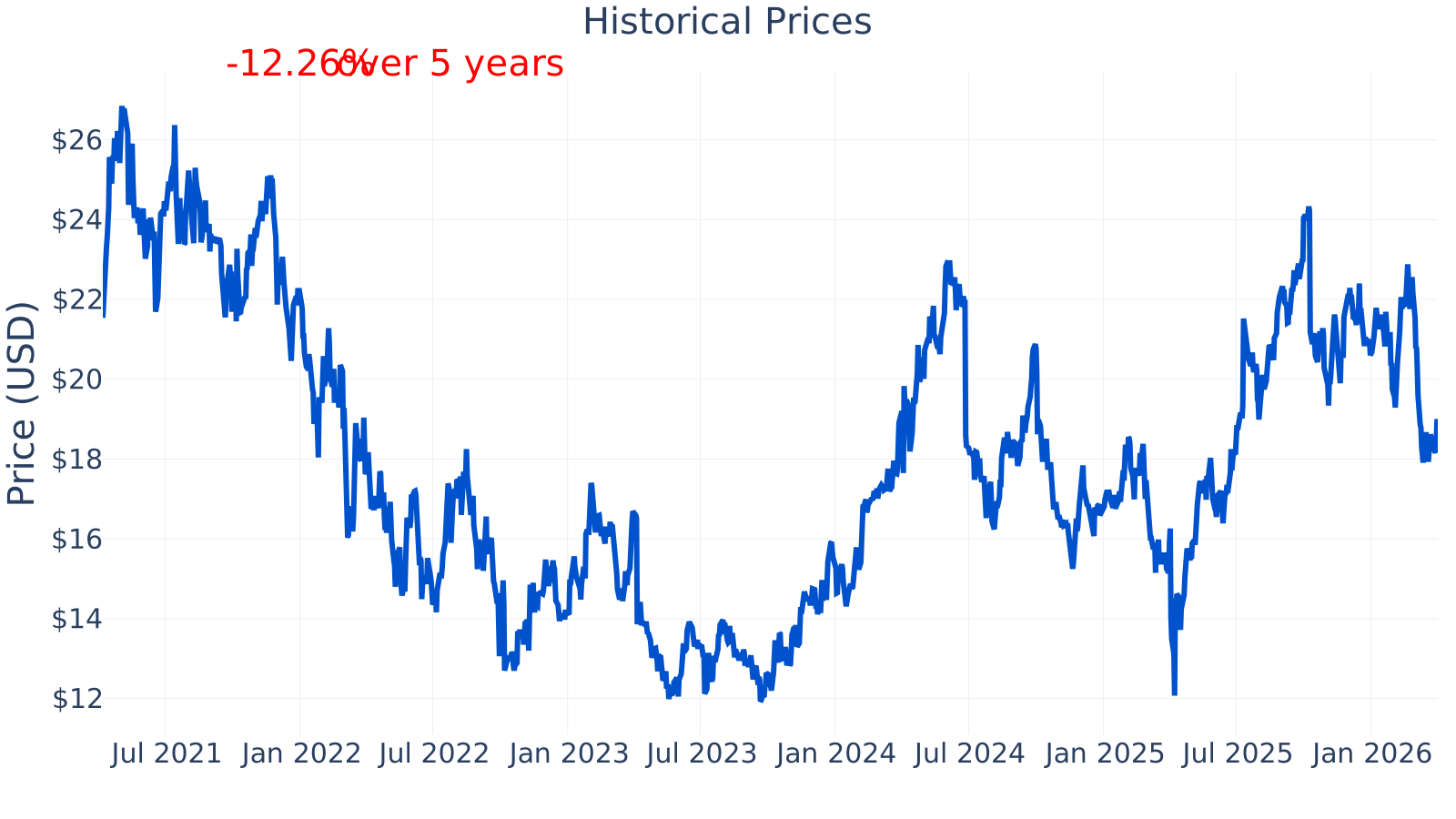
Overview
Levi Strauss & Co. designs, markets, and sells apparel and accessories, best known for denim products under the Levi’s brand. The company also operates other brands (including Dockers and Beyond Yoga) and sells through a mix of wholesale partners (such as department stores and other retailers) and its own channels (company-operated stores and e-commerce).
In simple terms, Levi Strauss makes money by selling clothing (especially jeans) globally, balancing scale in wholesale with higher-control, brand-led selling in its own stores and online.
Main sources of revenue are typically described along two angles in company reporting: (1) brands and (2) distribution channels (wholesale vs. direct-to-consumer). Percentages can vary by fiscal year and are detailed in the company’s annual report/10-K segment and channel disclosures.
Revenue mix (high level):
- Wholesale (selling to retailers)
- Direct-to-consumer (DTC) (company-operated stores and e-commerce)
- By brand: Levi’s (largest), followed by smaller brands such as Dockers and Beyond Yoga
Recent income flow snapshot: Over the last several fiscal years shown below, total revenue has been in the roughly $5.8B–$6.4B range, with profitability moving meaningfully year to year as operating costs and spending levels change.
From 2021 to 2025 in the visual above, revenue is relatively steady (about $5.8B in 2021 to about $6.3B in 2025). Net income, however, swings more widely (notably lower in 2023–2024 than in 2021–2022 and 2025), highlighting how changes in operating expenses can materially affect bottom-line results even when sales are fairly stable.
Key Figures
| Metric | Value | Industry ⓘ |
|---|---|---|
| Date | Apr 06, 2026 | |
| Context | ||
| Sector | Consumer Cyclical | |
| Industry | Apparel Manufacturing | |
| Market Cap ⓘ | $7.38B | |
| Beta ⓘ | 1.34 | |
| Fundamental | ||
| P/E Ratio ⓘ | 15.00 | 23.69 |
| Profit Margin ⓘ | 9.20% | 5.33% |
| Revenue Growth ⓘ | 0.90% | 3.55% |
| Debt to Equity ⓘ | 101.18% | 117.22% |
| PEG ⓘ | N/A | |
| Free Cash Flow ⓘ | $324.30M | |
Levi Strauss & Co. has a market capitalization of about $7.38B. The stock’s beta of ~1.34 indicates it has historically moved more than the broader market (up or down). The P/E ratio is ~15, below the industry median of about 23.7. Profit margin is about 9.2% versus an industry median near 5.3%. Year-over-year revenue growth is about 0.9%, below the industry median near 3.6%. Debt-to-equity is about 101%, modestly below the industry median near 117%. Trailing twelve-month free cash flow is about $324M.
Growth (Medium)
Apparel is a mature, highly competitive consumer industry where growth is typically driven less by overall category expansion and more by brand strength, product relevance, distribution, and execution. Denim in particular tends to be a long-lived category, but it is still exposed to fashion cycles and shifting consumer preferences.
Levi Strauss’ long-term growth logic generally relies on strengthening the Levi’s brand, expanding direct-to-consumer (which can improve brand control and economics), and growing internationally. In many apparel businesses, DTC and e-commerce expansion can be a meaningful lever because it can deepen customer relationships and reduce reliance on wholesale partners, though it also requires strong retail execution and investment.
The year-over-year revenue growth pattern is uneven. After very strong growth rates in 2021 (a period that included recovery effects), growth moderated substantially, with several periods of low or negative growth. The latest reading shown is around -4.0%, which indicates that near-term growth has not been steady.
Free cash flow also shows volatility: it moved from about +$550M (2022) to about -$323M (2023), then rebounded to about +$606M (2024) and about +$442M (2025). For a long-term view, this pattern suggests cash generation has been achievable but not consistent year to year, which can matter for reinvestment capacity and financial flexibility.
Risks (Medium)
Levi Strauss operates in a category with intense competition, frequent discounting pressure, and changing consumer demand. Sales can be impacted by macro conditions (consumer spending, inflation, and retailer inventory cycles), and by brand momentum (whether key fits, washes, and product lines resonate in a given season).
Competition is broad and includes global denim and casualwear brands, athletic/lifestyle brands that compete for wardrobe share, and private-label offerings from large retailers. Levi Strauss benefits from strong brand recognition and heritage in denim, which can be a durable advantage; however, it is not insulated from price competition or from shifts toward alternative styles and categories.
Cost and sourcing risks are also central in apparel. Many products are sourced through global supply chains, which can be exposed to disruptions, freight and input-cost swings, and tariff or trade-policy changes. In addition, wholesale partners can reduce orders when they are over-inventoried, creating short-term volatility for brands.
Debt-to-equity has trended down from higher levels earlier in the period shown (roughly 165% in 2021) toward about 101% most recently. This is slightly below the industry median (about 102% most recently) but still represents meaningful leverage, which can amplify results when operating conditions change.
Profitability has fluctuated significantly over time. The most recent profit margin shown is about 9.2%, above the industry median near 5.2%. That said, margins dipped notably in 2023–2024 before recovering, suggesting the company’s earnings power can be sensitive to cost structure, promotional intensity, and operating decisions.
Valuation
At around a 15x price-to-earnings ratio (P/E), Levi Strauss is currently below the industry median (about 23.7x). Historically in the period shown, Levi’s P/E has varied widely, including stretches above the industry median (notably around 2024) and more recent readings below it (2025–early 2026). This wide range often reflects a mix of changing profitability (the “E” in P/E) and changing market expectations.
Interpreting whether the current valuation is “expensive” or “cheap” depends heavily on forward fundamentals that are not captured by P/E alone—especially the durability of the recent profit recovery, the consistency of revenue growth, and the stability of cash generation. With recent revenue growth around flat to slightly negative in the latest period shown, the valuation level may be more dependent on maintaining margins and cash flow than on rapid top-line expansion.
Conclusion
Levi Strauss & Co. is a well-known global apparel company anchored by an iconic denim brand and a mix of wholesale and direct-to-consumer distribution. Financially, the company shows relatively steady revenue over multiple years, but with noticeable swings in net income, margins, and free cash flow, which indicates sensitivity to operating costs, promotions, and broader demand conditions.
The business outlook is tied to brand relevance and execution in a mature, competitive industry. The company’s current metrics show a profit margin above the industry median and a P/E ratio below the industry median, while recent revenue growth has been modest and uneven. Overall, the long-term profile combines recognizable brand strengths with industry and execution risks that can drive variability in results.
Sources:
- SEC EDGAR — Levi Strauss & Co. Form 10-K (Annual Report)
- SEC EDGAR — Levi Strauss & Co. Form 10-Q (Quarterly Reports)
- Levi Strauss & Co. Investor Relations — Annual Reports and SEC Filings
- Wikipedia — “Levi Strauss & Co.” (basic company background)
This article is for informational purposes only and does not constitute financial advice. Some content is AI-generated. See Disclaimer


