Stock Analysis · Lennar Corporation (LEN-B)
Overview
Lennar Corporation is a U.S. homebuilder. In simple terms, it buys (or controls) land, develops communities, builds homes, and sells them to homebuyers. Like most homebuilders, its results are closely linked to the health of the U.S. housing market, including mortgage rates, home affordability, and the overall supply of homes for sale.
Beyond building and selling homes, Lennar also operates related businesses that can support the homebuying process and generate additional income. These typically include financial services (such as mortgage origination and title services), and in some periods the company has also emphasized asset-light approaches to land and community development through partnerships and land strategies described in its filings.
In general, Lennar’s revenue is concentrated in home sales, with smaller contributions from complementary services. A typical breakdown (categories used in company filings) is:
- Home sales (homebuilding operations) — usually the large majority of revenue
- Financial services (mortgage and title-related services supporting buyers)
- Other / ancillary items (varies by reporting period)
The company’s income statement profile has historically been shaped by construction costs and land costs (which sit inside “cost of revenue”), plus operating expenses (selling, general, and administrative), interest expense, and income taxes.
Across the years shown, total revenue rose from about $27.1B (FY2021) to about $35.5B (FY2024), then held near $34.2B (FY2025). Over the same span, net income declined from roughly $4.43B (FY2021) to about $2.06B (FY2025), illustrating how profitability can change even when revenue stays high—often reflecting shifting margins, incentives, and cost pressure in housing cycles.
Key Figures
| Metric | Value | Industry ⓘ |
|---|---|---|
| Date | Mar 16, 2026 | |
| Context | ||
| Sector | Consumer Cyclical | |
| Industry | Residential Construction | |
| Market Cap ⓘ | $23.69B | |
| Beta ⓘ | 1.40 | |
| Fundamental | ||
| P/E Ratio ⓘ | 12.91 | 11.75 |
| Profit Margin ⓘ | 5.39% | 8.65% |
| Revenue Growth ⓘ | -13.30% | -7.90% |
| Debt to Equity ⓘ | 18.58% | 34.13% |
| PEG ⓘ | 2.95 | |
| Free Cash Flow ⓘ | $28.18M | |
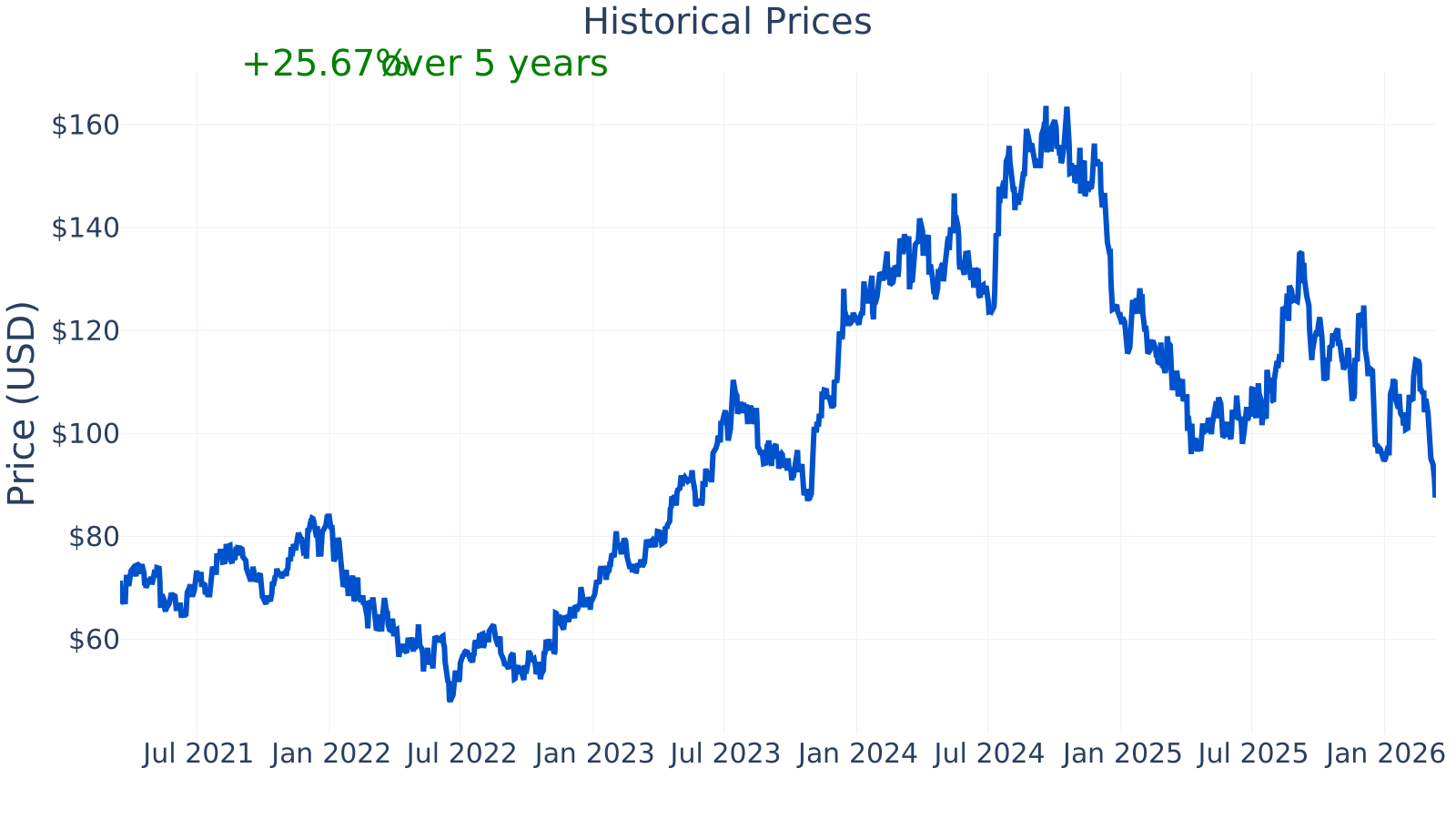
Lennar’s equity value is about $23.7B, and the stock’s beta (~1.40) indicates it has tended to move more than the broader market (higher ups and downs). The company’s P/E ratio (~12.9) is slightly above the industry median (~11.8) in Residential Construction. Reported profit margin (~5.39%) is below the industry median (~8.65%), while year-over-year revenue growth (about -13.3%) is also weaker than the industry median (about -7.9%) at this point in time. On balance sheet leverage, debt-to-equity (~18.6%) is below the industry median (~34.1%), suggesting comparatively lower reliance on debt versus peers. The PEG ratio (~2.95) implies that, relative to expected growth, the valuation is not “cheap” by that specific measure. Free cash flow over the trailing period shown is positive but modest in the latest table compared with prior peaks visible later in the cash flow section.
Growth (medium)
Homebuilding is a large, long-running U.S. industry, but it is not a smooth, steady-growth business. Demand is heavily influenced by mortgage rates, consumer confidence, employment, and the supply of existing homes for sale. Over long periods, housing demand is supported by population growth, household formation, and the need to replace aging housing stock. Over shorter periods, volumes and pricing can swing meaningfully.
Lennar’s strategy (as typically described in filings) focuses on scale, community count, land strategy discipline, and operational efficiency—important because cost control and cycle management often matter as much as top-line growth. In housing, catalysts are usually macro-driven rather than product-driven: changes in interest rates, affordability, and inventory levels can quickly affect orders and margins across the industry.
The year-over-year revenue growth pattern shown highlights this cyclicality. Growth was strong in 2021–2022 (often above +16% to +29% in the periods shown), then slowed and turned negative in several later periods, with recent readings around -5% to -6% and the latest summary metric around -13%. That “up then down” shape is common in homebuilding and underscores that long-term narratives often need to account for multi-year housing cycles rather than single-year results.
Free cash flow (cash left after operating needs and investments) also tends to swing for homebuilders, largely because land purchases, development spending, and changes in inventory can consume or release cash. The chart shows Lennar generating substantial free cash flow in earlier periods (about $2.0B in 2022, rising to around $4.3B–$4.4B in 2023–2024), followed by a drop to about $1.6B in 2025. That decline can be consistent with either softer operating conditions, working-capital changes, or strategic reinvestment—items typically explained in the company’s Management’s Discussion and Analysis section in filings.
Risks (high)
The main risk for Lennar is that homebuilding is highly sensitive to the broader economy and financing conditions. When mortgage rates rise or credit tightens, affordability can fall and demand can slow. This can lead to fewer home deliveries, more buyer incentives, and pressure on margins. The business also faces execution risks: construction labor availability, materials costs, land acquisition discipline, local regulatory and permitting complexity, and the possibility of carrying too much inventory into a downturn.
Competitive positioning in homebuilding is typically less about a single “winner-takes-all” advantage and more about scale, land access, local market execution, cost control, and the ability to manage cycles. Lennar is one of the largest U.S. homebuilders by volume, which can provide purchasing power and operating leverage. However, it still competes market-by-market against other large public builders and many private/regional builders. Major publicly traded competitors commonly include D.R. Horton, PulteGroup, NVR, Toll Brothers, and KB Home (among others), with each having different geographic mixes and product focus (entry-level, move-up, luxury, etc.).
Lennar’s debt-to-equity has generally been below the industry median across the timeline shown, reaching low points near 11%–17% in 2023–2024 and rising toward roughly 29% by late 2025. Even after that increase, it remains below the peer median shown (roughly low-30% range). Lower leverage can reduce financial stress during housing downturns, though it does not remove demand and pricing risk.
Profitability has also softened over time. The profit margin trend declines from the mid-teens (about 14%–16% in 2021) toward single digits by 2025 (around 6%–9% in the later points shown). In the most recent periods, Lennar’s margin sits below the industry median shown, which can reflect mix, incentive levels, cost pressure, or timing effects. For a homebuilder, margin compression is an important risk because small changes in pricing, incentives, or costs can have outsized effects on earnings.
Valuation
Homebuilders are often discussed using earnings-based multiples because earnings can rise sharply in strong housing markets and fall materially in weaker ones. Lennar’s latest P/E (~12.9) is close to the industry median (~11.8), which suggests the market is valuing it broadly in line with peers on that simple yardstick. At the same time, the PEG ratio (~2.95) indicates that when the valuation is compared to expected growth, the pricing can look less favorable—though PEG ratios can be hard to interpret in cyclical industries where “growth” is not steady.
The historical P/E pattern shown moved from very low single digits in 2021–2022 (roughly 3–7x) to higher levels more recently, reaching around 12x by late 2025. This rise can happen even if a stock price does not surge, because earnings may come down from cycle highs—P/E increases when “E” falls. In other words, valuation signals in homebuilding can reflect both market sentiment and where the company is in the earnings cycle.
Conclusion
Lennar is a large, established U.S. homebuilder whose results are primarily driven by home sales, with additional contributions from homebuying-related services. The business benefits from scale and has shown comparatively lower leverage than the industry median in the periods shown, which can matter during downturns.
At the same time, the recent picture shows the typical cyclicality of housing: revenue growth has turned negative in several recent periods, free cash flow has declined from prior highs, and profit margins have compressed meaningfully compared with earlier years. The valuation multiples have moved up versus the very low levels seen in 2021–2022, which can be consistent with earnings normalizing from cycle peaks. Overall, the long-term case depends less on a single product innovation and more on Lennar’s execution, land and inventory discipline, and how U.S. housing demand and mortgage-rate conditions evolve over time.
Sources:
- SEC EDGAR — Lennar Corporation Form 10-K (Annual Report)
- SEC EDGAR — Lennar Corporation Form 10-Q (Quarterly Report)
- Lennar Corporation Investor Relations — SEC Filings & Reports
- Wikipedia — “Lennar” (basic company background)
This article is for informational purposes only and does not constitute financial advice. Some content is AI-generated. See Disclaimer