Stock Analysis · Lear Corporation (LEA)
Overview
Lear Corporation is a global auto supplier. It mainly designs and manufactures (1) complete vehicle seating systems and components, and (2) electrical and electronic distribution systems that help power and connect a vehicle (such as wiring systems and related components). Its customers are primarily major vehicle manufacturers, and its results tend to move with global vehicle production volumes and model launches.
In its reporting, Lear organizes the business into two main segments, which also reflect the company’s core revenue drivers:
- Seating: complete seats and seat components (frames, mechanisms, foam, covers), plus engineering and program management tied to automaker platforms.
- E-Systems: electrical distribution and connection systems (including wiring architectures and related products) used across vehicle platforms.
Because Lear sells largely to automakers and works on multi-year vehicle programs, revenue typically depends on (a) how many vehicles are built, (b) Lear’s content per vehicle (how much Lear equipment is used in each car), and (c) pricing and contract terms (including how the company recovers raw-material and labor cost changes).
Across the years shown, total revenue rose from about $19.3B (2021) to roughly $23.3B (2025). Cost of revenue remains the dominant expense line, which is common in manufacturing. Operating income fluctuated but reached about $1.0B (2025), while net income varied year to year, reflecting a business that can be sensitive to production schedules, launch timing, and input costs.
Key Figures
| Metric | Value | Industry ⓘ |
|---|---|---|
| Date | May 05, 2026 | |
| Context | ||
| Sector | Consumer Cyclical | |
| Industry | Auto Parts | |
| Market Cap ⓘ | $6.57B | |
| Beta ⓘ | 1.22 | |
| Fundamental | ||
| P/E Ratio ⓘ | 13.25 | 24.76 |
| Profit Margin ⓘ | 2.25% | 3.56% |
| Revenue Growth ⓘ | 4.70% | 5.40% |
| Debt to Equity ⓘ | 69.29% | 69.29% |
| PEG ⓘ | 0.36 | |
| Free Cash Flow ⓘ | $732.40M | |
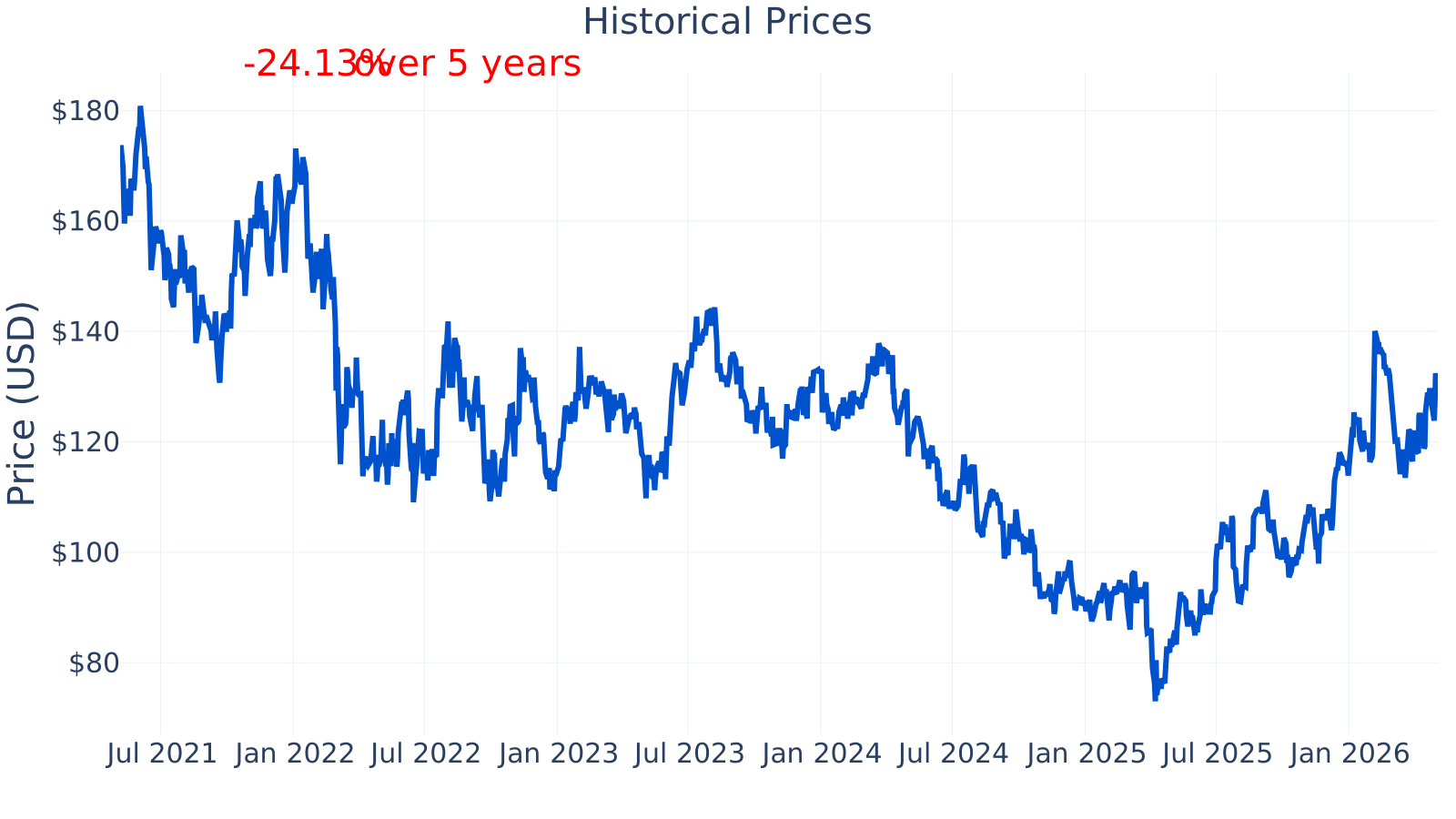
Lear’s market capitalization is about $6.6B, and the stock’s beta of ~1.22 indicates it has tended to move more than the broader market. The latest P/E ratio is about 13.25 versus an industry median near 24.76. Profit margin is around 2.25% compared with an industry median near 3.57%, highlighting the thin-margin nature of auto supply. Year-over-year revenue growth is about 4.7% (industry median ~5.4%). Debt-to-equity is about 69%, in line with the industry median shown. Trailing twelve-month free cash flow is approximately $732M, and the PEG ratio shown (~0.36) implies the current earnings multiple is low relative to the growth rate assumption embedded in that metric (noting that PEG can vary significantly depending on how growth is estimated).
Growth (Medium)
Lear operates in the automotive supply chain, which is mature in unit terms in many regions but is undergoing major product and technology shifts. Long-run growth drivers for suppliers typically come less from overall car volume growth and more from content per vehicle (more electronics, more comfort features, more complexity) and from gaining share on new vehicle platforms.
Strategically, Lear’s positioning maps to two themes that can matter over multi-year cycles:
- Vehicle electrification and increasing electrical content: as vehicles add more advanced electronics and new electrical architectures, demand for sophisticated electrical distribution and connection solutions can rise.
- Interior comfort, safety, and design differentiation: seating is a major area where automakers try to differentiate through comfort, weight reduction, features, and perceived quality.
The year-over-year revenue growth pattern has been uneven. After strong rebounds earlier in the period, growth cooled and turned slightly negative in parts of 2024–2025, then returned to modestly positive levels by late 2025 into early 2026 (around the mid-single digits in the latest point shown). This type of pattern is consistent with a supplier exposed to model cycles and production volatility.
Free cash flow shows a notable improvement over time in the values displayed, rising from about $41M (2022) to approximately $732M (2026), despite interim fluctuations. For long-term business quality assessment, sustained free cash flow can matter because it is the resource used for reinvestment, debt reduction, and shareholder returns, but it can also be cyclical for auto suppliers due to working-capital swings and program timing.
Risks (High)
The biggest risk factor is that Lear is closely tied to the health of global auto production. When automakers cut output, delay launches, or face supply-chain disruptions, a supplier’s volumes and profitability can be affected quickly. In addition, pricing in auto supply is competitive, and contracts can include mechanisms that limit how fast cost increases can be passed through, which can compress margins.
Lear’s debt-to-equity ratio sits around 69% at the latest point shown, broadly in line with the industry median displayed, but it has moved around over the period (including a spike above 90% at one point). For a cyclical business, leverage can amplify outcomes: it may help returns in strong periods but can reduce flexibility if volumes weaken.
Profit margins have been relatively thin, with the latest value around 2.25%. The chart shows margins dipping very low around 2022 and improving afterward, yet still generally below the industry median levels displayed for much of the period. Thin margins leave less room for error when there are launch issues, warranty costs, commodity moves, or abrupt changes in production schedules.
On competitive advantages, Lear’s scale, global manufacturing footprint, and long-standing relationships with major automakers can be meaningful. Auto interiors and electrical systems also require deep integration into vehicle platforms, which can create switching frictions once a supplier is designed into a program. However, the industry remains highly competitive, and program wins are regularly contested across model cycles.
Key competitors typically include other large global automotive suppliers with seating and/or electrical architecture capabilities. In seating, major peers include companies such as Adient (seating) and diversified suppliers with interior exposure. In electrical distribution/architectures and broader vehicle electronics, peers can include large diversified suppliers such as Aptiv, Forvia, Magna, and Valeo (exact overlap varies by product line). Lear’s competitive standing is generally tied to its ability to win new platforms, execute launches without disruption, and maintain cost and quality performance over multi-year awards.
Valuation
The P/E ratio shown for Lear is currently around 13.25, which is below the industry median listed in the table (~24.76). Historically in the period shown, Lear’s P/E moved widely—rising into much higher levels at certain points and then spending extended time below the industry median from late 2023 through much of 2026. A lower P/E can reflect market expectations of slower growth, higher cyclicality, or higher uncertainty in future earnings, rather than indicating anything definitive by itself.
Given Lear’s fundamentals in the other sections, a valuation discussion typically comes down to balancing:
- Cyclicality and margin structure (thin margins, earnings sensitivity to volumes and costs), which can justify lower multiples in downturns or uncertain periods.
- Free cash flow generation (the recent improvement shown), which can support valuation if it proves durable across a full auto cycle.
- Industry and technology transitions (especially electrical content growth), which can influence longer-run growth expectations.
Conclusion
Lear is a large, global automotive supplier focused on seating and vehicle electrical distribution systems. The company’s revenue scale is substantial (low-$20B range in the years shown), and recent free cash flow has improved markedly in the period displayed. At the same time, profitability has remained relatively thin versus the industry median shown, and the business is inherently cyclical due to dependence on automaker production and platform timing.
From a long-term perspective, the key points to monitor are whether Lear can (a) sustain improved cash generation through weaker production environments, (b) protect margins through launches and cost swings, and (c) translate long-term vehicle electrification and increasing electrical complexity into durable content growth. The current earnings multiple shown is below the industry median, which may reflect the market’s view of these risks and the cycle-sensitive nature of auto supply.
Sources:
- SEC EDGAR — Lear Corporation Form 10-K (Annual Report)
- SEC EDGAR — Lear Corporation Form 10-Q (Quarterly Report)
- Lear Corporation — Investor Relations materials and press releases (company website)
- Wikipedia — “Lear Corporation” (basic company background)
This article is for informational purposes only and does not constitute financial advice. Some content is AI-generated. See Disclaimer


