Stock Analysis · Lear Corporation (LEA)
Overview
Lear Corporation is a global auto parts supplier focused on two areas that sit inside almost every vehicle: seating (complete seats and seat components) and electrical distribution systems (wiring, connectors, and related electronics that route power and data throughout the car). In practice, Lear’s business is closely tied to how many vehicles its customers produce and how much content (features, comfort, electronics) those vehicles include.
The company sells primarily to major automakers (often called OEMs). Its revenue tends to move with global vehicle production volumes, model launches, and shifts in what automakers prioritize—such as lighter seats, more comfort features, and more complex electrical systems to support driver-assistance and electrification.
Based on company reporting, Lear’s revenue is mainly split between two operating segments:
- Seating (largest share)
- E-Systems (Electrical Distribution Systems) (second-largest share)
Because customer programs are multi-year and integrated into vehicle designs, relationships and execution (quality, cost, delivery) matter heavily, and switching suppliers mid-program can be difficult for automakers.
Across the years shown, total revenue is relatively steady around the low-to-mid $20B range, while net income fluctuates meaningfully. That pattern is common in auto supply chains where pricing pressure, input costs, and launch timing can move profitability more than sales do.
Key Figures
| Metric | Value | Industry ⓘ |
|---|---|---|
| Date | Feb 07, 2026 | |
| Context | ||
| Sector | Consumer Cyclical | |
| Industry | Auto Parts | |
| Market Cap ⓘ | $7.50B | |
| Beta ⓘ | 1.29 | |
| Fundamental | ||
| P/E Ratio ⓘ | 17.29 | 25.56 |
| Profit Margin ⓘ | 1.88% | 3.38% |
| Revenue Growth ⓘ | 4.80% | 4.95% |
| Debt to Equity ⓘ | 52.74% | 66.87% |
| PEG ⓘ | 0.36 | |
| Free Cash Flow ⓘ | $734.80M | |
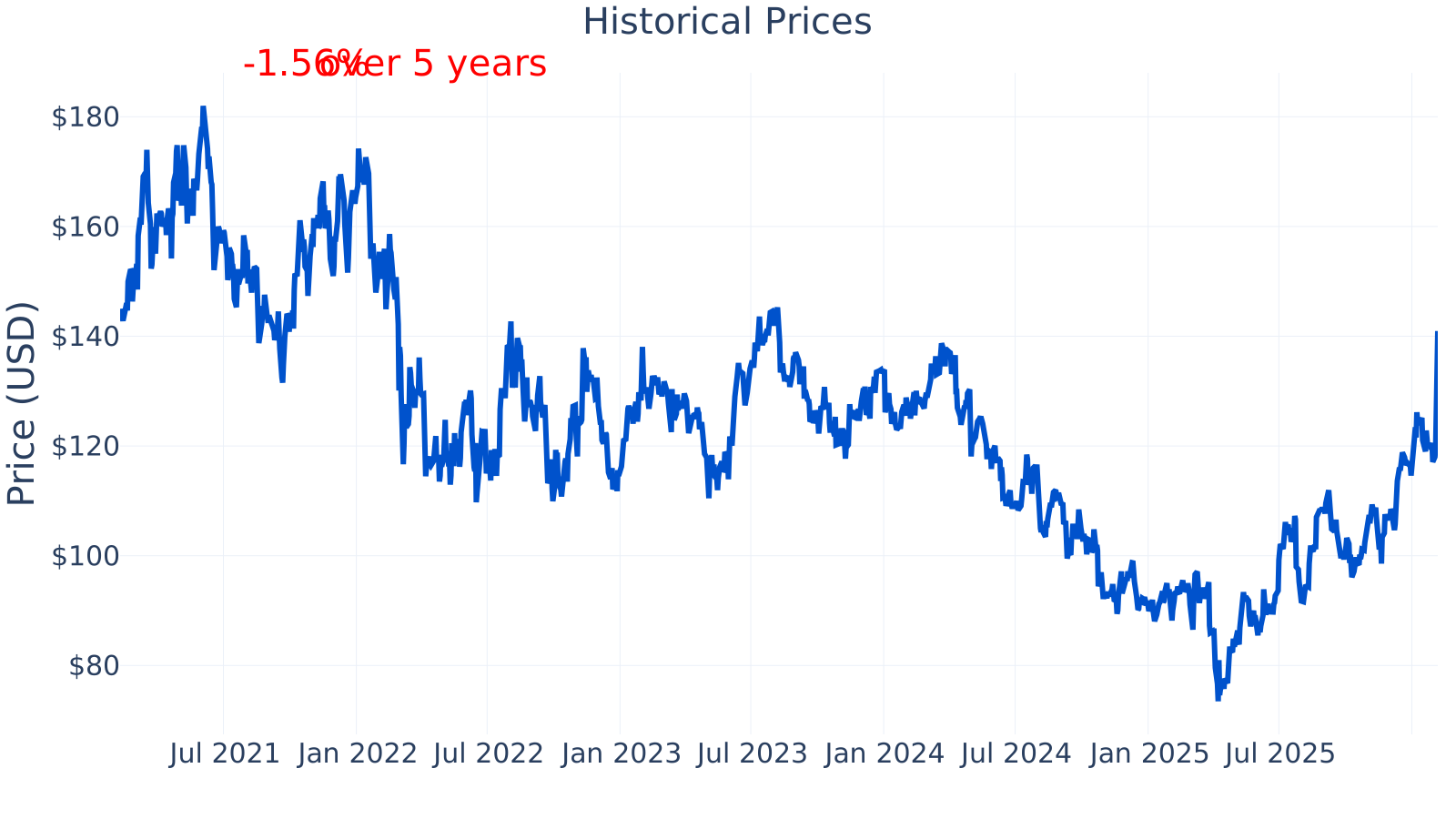
Lear’s market capitalization is about $7.5B. The stock’s beta (~1.30) suggests it has tended to move more than the overall market, which is typical for companies tied to the economic cycle and vehicle production. The P/E ratio (~17.3) is below the industry median (~25.6), while the profit margin (~1.9%) is also below the industry median (~3.4%), reflecting how competitive and cost-sensitive auto supply can be. Year-over-year revenue growth is around 4.8%, roughly in line with the industry median. Debt-to-equity is about 53%, lower than the industry median (~67%). Trailing twelve-month free cash flow is about $735M, a meaningful cash generation level relative to the company’s size.
Growth (Medium)
The auto parts industry is mature, but it is changing in ways that can create pockets of growth. Two long-term forces are especially relevant to Lear’s mix:
- More electronics per vehicle: Advanced driver-assistance features, infotainment, connectivity, and electrification generally increase wiring and power/data routing complexity.
- Product differentiation inside the cabin: Automakers often compete on comfort, design, and user experience, which can support demand for more sophisticated seating architectures and features.
Lear’s strategy is positioned around these themes: seating content and electrical architectures that support increasingly complex vehicles. However, because Lear sells into automakers’ production programs, the pace of growth is often constrained by overall vehicle builds and customer sourcing decisions rather than purely by end-consumer demand.
The year-over-year revenue growth trend shows significant variability across quarters, including periods of negative growth and periods of stronger rebounds. Most recently, growth is back to a modest positive level (around 4.8%), which is close to the industry median. This “ups and downs” pattern is consistent with an industry affected by production cycles, launches, and supply chain conditions.
Free cash flow has improved substantially compared with earlier periods shown, reaching about $735M on a trailing basis (with recent years showing a much higher level than 2021–2023). For long-term business resilience, consistent cash generation can matter because it supports investment in engineering and manufacturing footprints and provides flexibility across downturns.
Risks (High)
This article is for informational purposes only and does not constitute financial advice. Some content is AI-generated. See Disclaimer