Stock Analysis · Las Vegas Sands Corp (LVS)
Overview
Las Vegas Sands Corp (LVS) is a large resort and casino operator focused on “integrated resorts,” meaning it combines gaming with hotels, restaurants, retail, convention space, and entertainment. The company’s business is concentrated in Asia through major properties in Macau (under the Sands China subsidiary) and Singapore (Marina Bay Sands). In recent years, Las Vegas Sands has emphasized large-scale destinations that attract both leisure travelers and convention/business visitors, aiming to diversify demand beyond purely casino traffic.
In its financial reporting, Las Vegas Sands typically describes revenue by property and by categories within each property. At a high level, the main sources of revenue come from the activities inside these resorts:
- Casino / gaming (table games and slot machines)
- Lodging (hotel rooms and suites)
- Retail, food & beverage, and other (restaurants, shopping malls, entertainment, and other resort services)
- Meetings, conventions, and exhibitions (important especially for large destination resorts)
Because LVS’s operations are heavily property-based, the mix can shift with travel flows, customer segments (tourists vs. high-end gaming), and event/convention activity.
One notable point from recent years is the scale of the company’s rebound after pandemic-era disruptions: total revenue rose from about $4.1–$4.2B in 2021–2022 to about $10.4B in 2023 and $11.3B in 2024, based on the company’s consolidated financial statements.
The income statement flow over time shows a large step-up in revenue and operating income from 2023 onward versus 2021–2022, alongside consistently meaningful interest expense (hundreds of millions of dollars per year), which highlights how financing costs remain an important recurring item for this business.
Key Figures
| Metric | Value | Industry ⓘ |
|---|---|---|
| Date | Feb 07, 2026 | |
| Context | ||
| Sector | Consumer Cyclical | |
| Industry | Resorts & Casinos | |
| Market Cap ⓘ | $39.68B | |
| Beta ⓘ | 0.89 | |
| Fundamental | ||
| P/E Ratio ⓘ | 24.60 | 21.67 |
| Profit Margin ⓘ | 12.50% | 6.12% |
| Revenue Growth ⓘ | 26.00% | 4.30% |
| Debt to Equity ⓘ | N/A | 525.78% |
| PEG ⓘ | 0.81 | |
| Free Cash Flow ⓘ | $1.29B | |
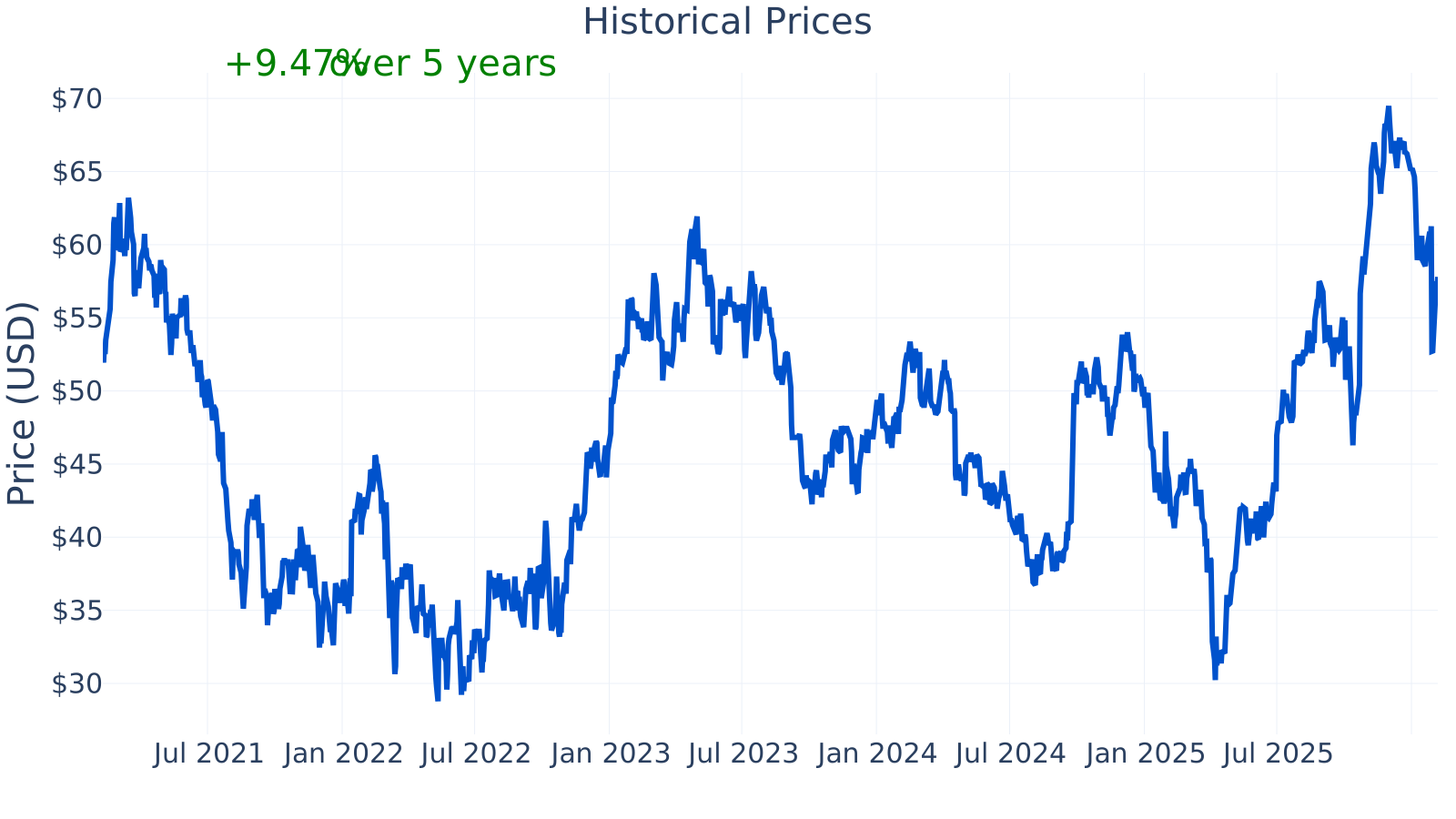
Las Vegas Sands has a market capitalization of about $39.7B and a beta of ~0.89, which describes how the stock has historically moved relative to the broader market (below 1.0 suggests somewhat less volatility than the market on average, though individual periods can differ).
On profitability, the company’s profit margin is about 12.5%, which is above the industry median shown (about 6.1%). On growth, its year-over-year revenue growth is about 26%, substantially above the industry median shown (about 4.3%), though this can be influenced by recovery dynamics and comparison periods.
For cash generation, trailing twelve-month free cash flow is about $1.29B. The table also shows a P/E ratio of ~24.6 versus an industry median around 21.7, and a PEG ratio of ~0.81 (a metric that relates valuation to expected earnings growth; it depends heavily on the growth assumptions used).
Growth (Medium)
The resorts and casinos industry is closely tied to travel, tourism, entertainment spending, and (in certain markets) premium gaming demand. For Las Vegas Sands, growth is especially linked to visitation trends in Macau and ongoing demand at Marina Bay Sands in Singapore. These are large destination markets where performance can change meaningfully with airline capacity, regional economic conditions, and regulatory policies.
LVS’s strategy focuses on operating a small number of flagship properties with strong brands and large-scale amenities. This approach can support growth if travel and consumer demand expand, because integrated resorts can monetize visitors in multiple ways (hotel stays, dining, retail, entertainment, and gaming) rather than relying on one revenue stream.
The year-over-year revenue growth pattern shows a sharp rebound in 2023 (very high growth rates coming off depressed comparisons), followed by more normalized results later. Recent readings include a return to positive growth, reaching about 26% in the latest period shown, which suggests momentum improved again after softer quarters.
Free cash flow moved from negative territory in 2021–2023 to clearly positive in 2024 (about $2.22B) and remained positive in 2025 (about $1.18B as of the period shown). For long-term business quality, this shift matters because positive free cash flow can help fund reinvestment in properties, reduce debt, or support shareholder returns—though the level can fluctuate with capital spending cycles and working-capital swings.
Risks (High)
This article is for informational purposes only and does not constitute financial advice. Some content is AI-generated. See Disclaimer