Stock Analysis · Lam Research Corp (LRCX)
Overview
Lam Research Corp (LRCX) designs and sells equipment used to manufacture semiconductors (computer chips). Its tools are typically used in the “front-end” of chipmaking—key steps such as etching (removing material with extreme precision) and deposition (adding thin layers of material). These steps are repeated many times to build modern chips, which is why leading chipmakers tend to invest heavily in this type of equipment when they expand capacity or move to more advanced manufacturing processes.
Beyond selling new systems, Lam also generates recurring revenue from supporting an installed base of tools already operating at customer factories. This includes spare parts, upgrades, and services that help customers maintain uptime and performance. In practice, this mix matters to long-term business stability because service-related revenue often holds up better than new tool demand during slower parts of the semiconductor cycle.
From company reporting, Lam generally describes its revenue in two primary categories:
- Systems (new semiconductor manufacturing equipment)
- Customer Support Business (spares, upgrades, and services)
Percentages by category vary by period and are disclosed in company filings.
Over the multi-year period shown, total revenue fluctuates (reflecting the cyclical nature of semiconductor equipment), while operating profitability remains significant. Research and development spending also rises over time in absolute dollars, indicating continued investment in new product capabilities even as revenue cycles up and down.
Key Figures
| Metric | Value | Industry ⓘ |
|---|---|---|
| Date | Apr 27, 2026 | |
| Context | ||
| Sector | Technology | |
| Industry | Semiconductor Equipment & Materials | |
| Market Cap ⓘ | $334.88B | |
| Beta ⓘ | 1.79 | |
| Fundamental | ||
| P/E Ratio ⓘ | 50.52 | 56.18 |
| Profit Margin ⓘ | 30.94% | 7.37% |
| Revenue Growth ⓘ | 23.80% | 9.20% |
| Debt to Equity ⓘ | 35.28% | 25.99% |
| PEG ⓘ | 1.59 | |
| Free Cash Flow ⓘ | $6.45B | |
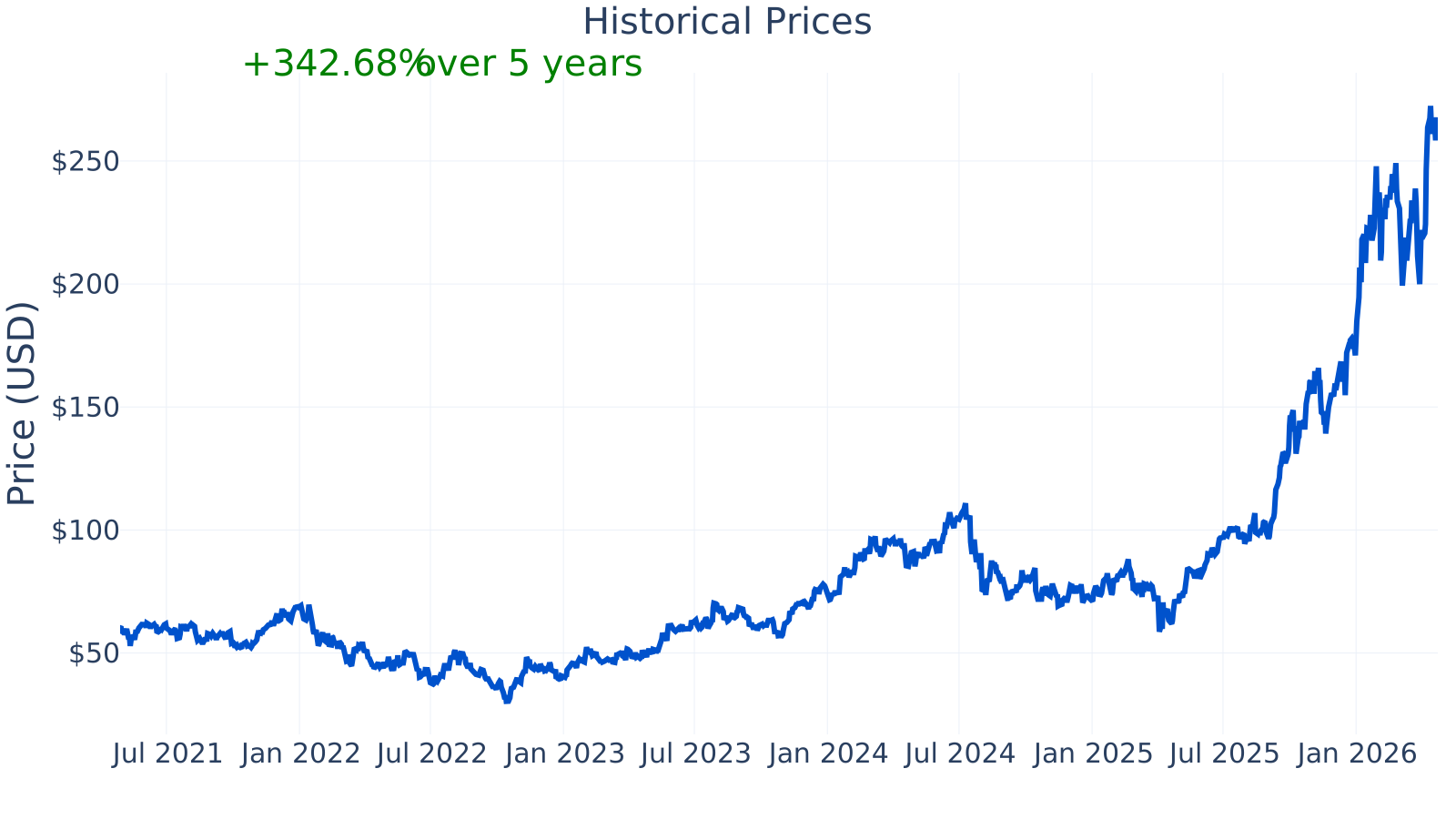
Lam Research’s market capitalization is about $334.9B, placing it among the largest companies in semiconductor equipment. The stock’s beta of 1.79 indicates it has historically moved more than the overall market, which is common for businesses tied to semiconductor capital spending cycles. The current P/E ratio is 50.5, slightly below the industry median of 56.2 in this peer set.
Profitability stands out: the profit margin is 30.9%, far above the industry median of 7.4%. Recent top-line momentum is also stronger than the peer median, with year-over-year revenue growth of 23.8% versus an industry median of 9.2%. Balance-sheet leverage appears moderate in absolute terms (debt-to-equity of 35.3%), though it is above the industry median of 26.0%. Free cash flow over the last twelve months is about $6.45B, highlighting substantial cash generation.
Growth (Medium)
Lam operates in the semiconductor equipment industry, which tends to grow over long periods as chips become more essential across the economy (data centers, smartphones, industrial automation, and many other applications). However, the path is uneven: chipmakers place large equipment orders in waves, often followed by digestion periods. This creates cycles in revenue and profitability for equipment suppliers even when the long-term trend is upward.
The revenue growth pattern illustrates this cyclicality clearly. After periods of negative year-over-year growth (notably around 2023), growth turns positive again and reaches roughly the low-to-mid 20% range most recently (about 23.8%). For a long-term view, the key takeaway is not that growth is steady, but that demand can rebound sharply when customers resume capacity expansion or adopt new manufacturing steps that require more process intensity.
Lam’s strategy for durable growth is closely tied to maintaining leadership in process-critical steps (especially etch and deposition) and expanding the value it provides after tools are installed (spares, upgrades, and productivity services). As chip structures become more complex, customers often need more process steps and tighter control—an environment that can support continued demand for advanced equipment and ongoing service revenue.
Free cash flow trends are important for long-term business quality because they reflect how much cash remains after operating costs and capital investments. Over the periods shown, trailing twelve-month free cash flow grows from roughly $3.57B (2022) to about $6.45B most recently, despite an intervening dip. That suggests the business can generate meaningful cash through different points in the cycle, although results can still vary year to year.
Risks (High)
The largest structural risk is cyclicality. Lam’s customers are primarily chip manufacturers, and their spending on new equipment can change quickly based on chip supply/demand, end-market conditions, and capacity utilization. This can lead to sharp swings in orders, revenue growth, and margins across economic cycles.
Another meaningful risk category is customer concentration and project timing. In semiconductor equipment, a relatively small number of very large chipmakers account for a significant share of industry spending. If one or two major customers delay build-outs or change technology roadmaps, quarterly and annual results can be affected.
Geopolitical and regulatory constraints are also important. Semiconductor tools are subject to export controls and other restrictions that can limit sales into certain regions or to certain entities. Changes in regulations can affect the addressable market, product mix, serviceability, and long-term growth opportunities.
On financial risk, Lam’s debt-to-equity declines materially over time in the series shown—falling from roughly the 80%–85% range in 2021 to about 35% most recently. Even so, it remains above the peer median (~26%). This does not inherently indicate distress, but it does mean Lam uses more leverage than the median peer in this comparison set, which can amplify outcomes (positive or negative) across cycles.
Profitability appears to be a competitive strength. Lam’s profit margin rises over time in the series shown, reaching about 30.9% most recently, while the industry median trends much lower (around 6.9%–15% across the period, ending near 6.9%). Sustained outperformance can signal advantages such as differentiated process capability, strong service economics, scale, or effective cost control—though margins in this industry can still compress if demand weakens.
Competition is intense and technology-driven. Key competitors in semiconductor equipment include Applied Materials and Tokyo Electron, among others, with different strengths across process steps and product lines. Lam is widely regarded as a leading player in etch and also competes in deposition and related process areas. Competitive positioning can shift if a rival achieves a process breakthrough, if customer technology requirements change, or if customers develop more in-house process capabilities.
Valuation
Lam’s valuation (as expressed by the P/E ratio) changes meaningfully over time. In the period shown, the P/E ranges from low double-digits during weaker market phases (for example, around 10–15 in parts of 2022) to much higher levels more recently (about 47.1 at the latest point on the chart). The latest table shows a current P/E of 50.5 versus an industry median of 56.2, which places Lam slightly below the peer median on this single measure.
Interpreting this requires context. Higher P/E ratios can reflect expectations of stronger future earnings, unusually strong current market demand, or simply higher investor willingness to pay for quality and profitability. For a cyclical business, P/E can also be misleading at turning points because earnings can be temporarily depressed or elevated. Additional valuation context often comes from pairing the P/E with profitability and growth: Lam’s high margins and above-median recent revenue growth provide fundamental support for a higher multiple relative to weaker peers, while the industry’s cyclical and regulatory risks can cap how far valuations expand.
Conclusion
Lam Research is a large semiconductor equipment company focused on process-critical tools used in chip manufacturing, supported by an ongoing service and spares business tied to its installed base. The company shows strong profitability relative to the peer median and meaningful free cash flow generation, while revenue growth demonstrates the industry’s recurring cycle of downturns and recoveries.
The main considerations for a long-term perspective are the balance between durable semiconductor demand over decades and the reality of short- to medium-term volatility driven by customer capital spending, competition, and export/regulatory constraints. Valuation metrics like the P/E ratio have varied widely across the cycle and are currently elevated compared with some historical points, even if they are slightly below the peer median today.
Sources:
- U.S. Securities and Exchange Commission (SEC) EDGAR — Lam Research Corp filings (Form 10-K, Form 10-Q)
- Lam Research — Investor Relations materials (Annual Report and other publicly released financial reporting)
- Wikipedia — “Lam Research” (basic company background)
This article is for informational purposes only and does not constitute financial advice. Some content is AI-generated. See Disclaimer


