Stock Analysis · Lam Research Corp (LRCX)
Overview
Lam Research Corp is a U.S.-based supplier of equipment and services used to manufacture semiconductors (computer chips). Chipmakers use Lam’s tools during key steps of production—such as adding, removing, and modifying extremely thin layers of material on silicon wafers—to build the tiny structures that become processors and memory chips. Because chip production is capital-intensive and highly specialized, Lam’s products are generally sold to a relatively small number of large global semiconductor manufacturers.
In its financial reporting, Lam’s business is commonly described through two main revenue streams:
- Systems revenue: sales of new semiconductor manufacturing equipment (typically the larger portion of revenue).
- Customer support-related revenue: spares, upgrades, services, and support tied to the installed base of Lam tools (often more recurring in nature).
Percentages can vary by year and cycle; the company’s annual report is the best place to confirm the exact mix for the latest fiscal year.
Over the last several years, the business has shown the typical profile of a mature, profitable industrial technology company: large revenue, substantial gross profit, meaningful ongoing operating expenses (including research and development), and significant net income. Research and development spending has also risen over time, reflecting continued investment to keep tools competitive as chipmaking becomes more complex.
Key Figures
| Metric | Value | Industry ⓘ |
|---|---|---|
| Date | Feb 07, 2026 | |
| Context | ||
| Sector | Technology | |
| Industry | Semiconductor Equipment & Materials | |
| Market Cap ⓘ | $290.16B | |
| Beta ⓘ | 1.78 | |
| Fundamental | ||
| P/E Ratio ⓘ | 47.44 | 47.44 |
| Profit Margin ⓘ | 30.22% | 9.40% |
| Revenue Growth ⓘ | 22.10% | 9.90% |
| Debt to Equity ⓘ | 44.19% | 20.73% |
| PEG ⓘ | 2.01 | |
| Free Cash Flow ⓘ | $6.66B | |
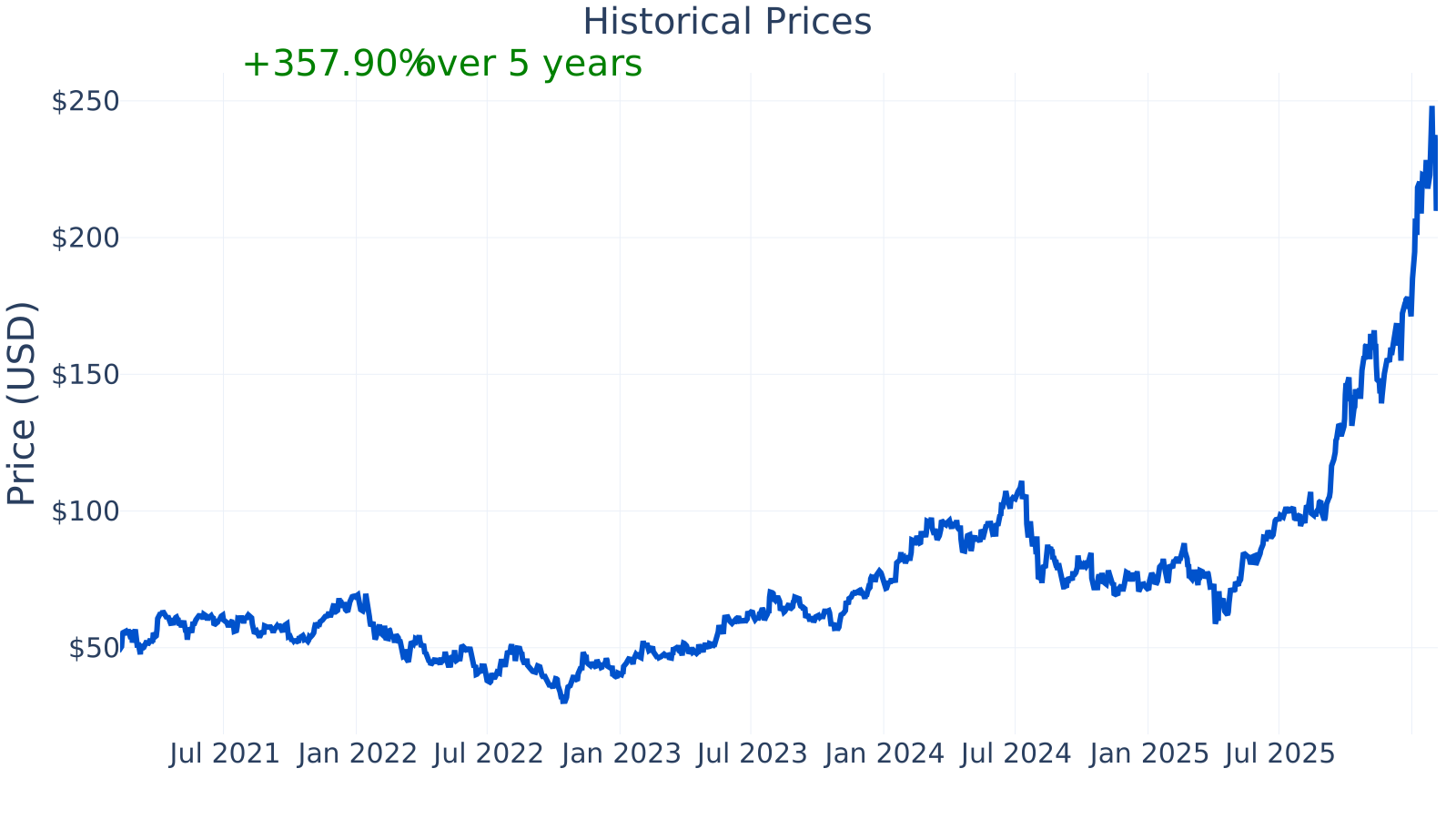
Lam Research’s market capitalization is about $290B, placing it among the largest publicly traded companies in semiconductor manufacturing equipment. The stock’s beta of ~1.78 suggests it has historically moved more than the broader market (higher volatility).
Profitability stands out: the latest profit margin is ~30% versus an industry median near 9%, indicating Lam has been converting a much larger share of sales into profit than the typical peer. Growth has also been strong recently, with year-over-year revenue growth of ~22% versus an industry median around 10%. On leverage, debt-to-equity is ~44%, above the industry median (~21%), meaning the company uses more debt relative to equity than the typical competitor, though the trend has been down compared with earlier years.
Growth (medium)
Lam operates in the semiconductor equipment industry, which is closely linked to long-term chip demand drivers such as data centers, cloud computing, smartphones, automotive electronics, industrial automation, and AI workloads. Over time, chips tend to require more manufacturing steps and more advanced processes, which can increase the need for leading-edge equipment and services.
The revenue growth pattern has been cyclical. The chart shows very strong growth in parts of 2021, a downturn through much of 2023 (negative year-over-year comparisons), and then a return to positive growth across 2024 and into 2025. This “ups and downs” behavior is common in semiconductor capital spending, where customers expand capacity in waves rather than steadily every year.
Free cash flow (cash generated after operating needs and capital spending) has been substantial, reaching roughly $6.7B on a trailing twelve-month basis. The multi-year trend shows meaningful cash generation through different parts of the cycle, with some variability—an important characteristic for a company whose customers’ spending can swing from year to year.
Potential catalysts for future growth generally relate to (1) technology transitions that require new process steps and more advanced equipment, and (2) expansion of semiconductor manufacturing capacity over time. Lam’s strategy of combining equipment sales with a large service and support business can also help it participate in both new tool demand and ongoing needs from its installed base.
Risks (high)
This article is for informational purposes only and does not constitute financial advice. Some content is AI-generated. See Disclaimer