Stock Analysis · La-Z-Boy Incorporated (LZB)
Overview
La-Z-Boy Incorporated (LZB) is a U.S.-based furniture company best known for upholstered seating, including recliners, sofas, and sectionals. The business designs, manufactures, and sells furniture through a mix of wholesale distribution (selling to independent retailers and dealers) and a company-owned retail network (La-Z-Boy Furniture Galleries stores and related formats). It also sells directly to consumers through e-commerce and in-store design services, with a focus on custom orders and home furnishing solutions.
In simple terms, La-Z-Boy makes furniture, builds recognizable brands around comfort and upholstery, and uses both retail stores and wholesale channels to reach customers. This mix can help balance the business: wholesale expands reach through partners, while company-owned retail can provide more control over customer experience and brand presentation.
Main revenue streams are typically organized around the company’s operating segments as disclosed in its annual filings (exact percentages vary by year):
- Wholesale (largest): selling La-Z-Boy and other branded furniture to dealers, independent retailers, and other trade customers.
- Retail: sales through company-owned stores (including the La-Z-Boy Furniture Galleries network).
- Joybird (smaller): online-focused upholstered furniture brand (direct-to-consumer).
From FY2021 to FY2025, total revenue rose to a peak around FY2022, then moderated, while profitability tightened more noticeably by FY2025. Over the same period, selling, general and administrative expenses increased materially, which is important because it can pressure operating income when industry demand slows.
Key Figures
| Metric | Value | Industry ⓘ |
|---|---|---|
| Date | Feb 08, 2026 | |
| Context | ||
| Sector | Consumer Cyclical | |
| Industry | Furnishings, Fixtures & Appliances | |
| Market Cap ⓘ | $1.60B | |
| Beta ⓘ | 1.27 | |
| Fundamental | ||
| P/E Ratio ⓘ | 17.96 | 18.82 |
| Profit Margin ⓘ | 4.29% | 4.29% |
| Revenue Growth ⓘ | 0.30% | 0.30% |
| Debt to Equity ⓘ | 48.38% | 77.79% |
| PEG ⓘ | 2.01 | |
| Free Cash Flow ⓘ | $124.12M | |
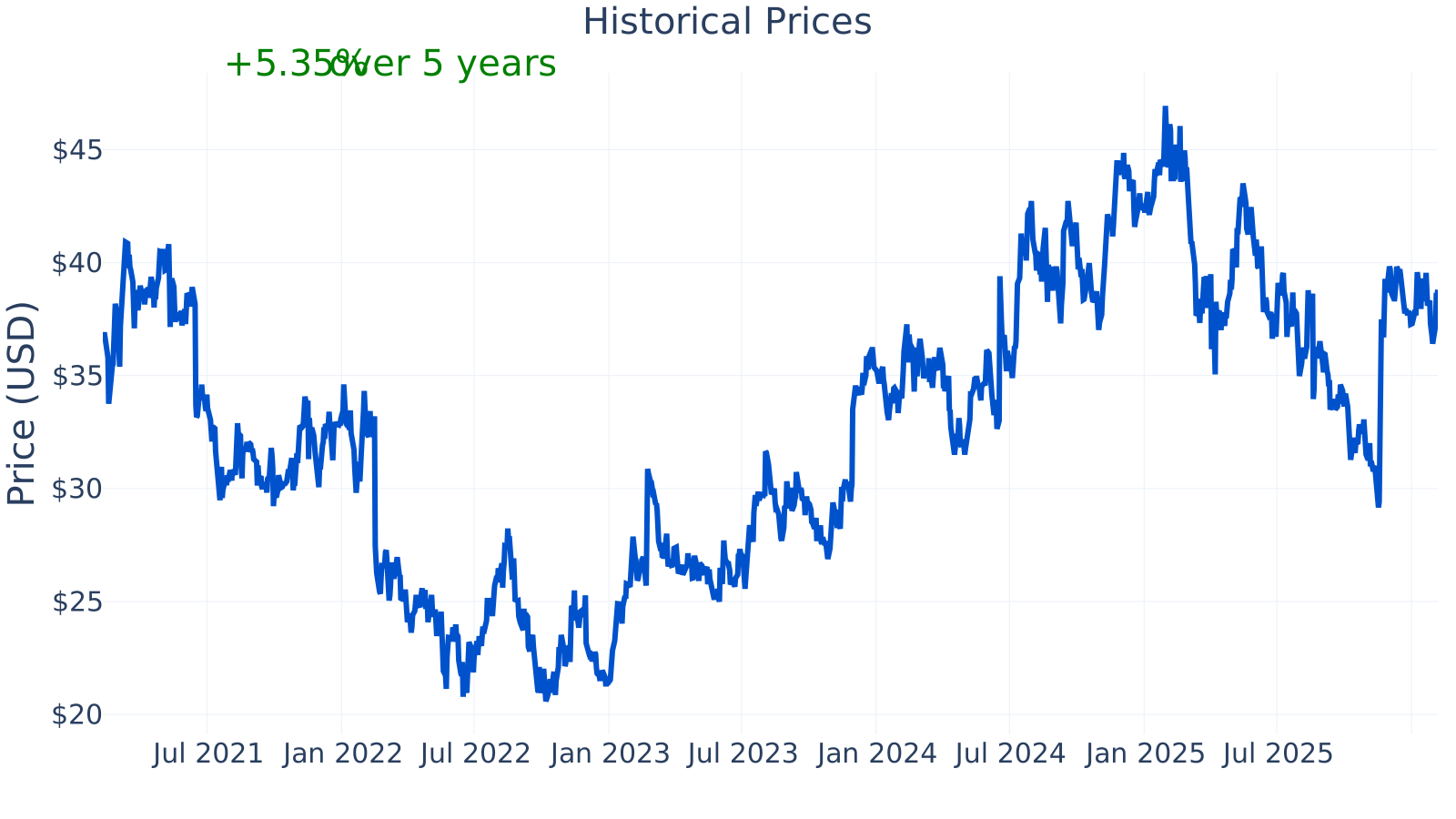
La-Z-Boy’s market capitalization is about $1.6B, placing it in the small-to-mid cap range. The stock’s beta of ~1.27 suggests it has tended to move more than the overall market. The current P/E ratio is ~18.0, close to the industry median (~18.8).
On operating performance, the latest profit margin is ~4.29%, in line with the industry median (~4.29%). Year-over-year revenue growth is currently close to flat at about 0.3%, also similar to the industry median. The balance sheet shows debt-to-equity of ~48%, lower than the industry median (~78%). Trailing twelve-month free cash flow is about $124.1M, a key indicator of cash generation after operating needs and capital spending.
Growth (Medium)
La-Z-Boy operates in the home furnishings market, which tends to be mature and highly cyclical. Demand often rises and falls with housing turnover, consumer confidence, interest rates, and big-ticket discretionary spending. That means growth is usually not smooth: strong periods can be followed by digestion phases as households delay replacing or upgrading furniture.
A practical long-term growth angle for a furniture company like La-Z-Boy typically comes from execution rather than a rapidly expanding end market: increasing retail penetration, improving store productivity, expanding direct-to-consumer capabilities, strengthening upholstery mix (where customization can support pricing), and running a reliable supply chain that protects service levels and costs.
The year-over-year revenue growth trend shows a surge in FY2021–FY2022, followed by a notable slowdown and negative comparisons through parts of FY2023–FY2024, and then a return toward roughly flat to modest growth more recently. This pattern is consistent with a cyclical industry that experienced unusually strong post-pandemic demand and then normalized.
Free cash flow improved meaningfully from FY2022 to FY2024 (roughly $35M → $134M), then eased in FY2025 (to about $111M). For long-term business resilience, the key question is whether cash generation remains durable during slower demand periods, since furniture manufacturing and retailing can require working capital and inventory management discipline.
Risks (High)
This article is for informational purposes only and does not constitute financial advice. Some content is AI-generated. See Disclaimer