Stock Analysis · LKQ Corporation (LKQ)
Overview
LKQ Corporation is a global distributor of alternative and specialty parts used to repair and maintain vehicles. In simple terms, it helps body shops, mechanics, dealerships, and do-it-yourself customers find the parts they need after accidents, normal wear and tear, or upgrades. A major part of the business is “alternative” replacement parts, including recycled parts taken from end-of-life vehicles, remanufactured parts (rebuilt to be reused), and aftermarket parts (made by non-original manufacturers). The company also operates in Europe and supplies specialty aftermarket parts and accessories, serving enthusiasts and repair channels.
Across its operations, LKQ’s revenue is largely tied to miles driven, the number of vehicles on the road, collision repair activity, and the affordability/availability of replacement parts. The company’s scale matters: distribution networks, procurement, inventory management, and the ability to source parts efficiently can influence service levels and profitability.
Main sources of revenue are typically discussed by operating segment in company filings. Based on LKQ’s segment reporting structure, the business is commonly described in three main areas (exact percentages can vary by year and are detailed in annual filings):
- North America (salvage/recycled parts, aftermarket collision and mechanical parts, and related services)
- Europe (aftermarket parts distribution across multiple countries)
- Specialty (specialty aftermarket products and accessories, largely serving enthusiast and performance markets)
Overall profitability is influenced by the spread between parts procurement costs and selling prices, logistics and warehouse efficiency, and operating expenses such as labor, transportation, and facility costs.
Looking at the recent multi-year income flow (revenue down to net income), revenue expanded from about $13.1B (2021) to $14.4B (2024), while net income declined from about $1.09B (2021) to $0.69B (2024). Interest expense also rose meaningfully over the period (from roughly $71M in 2021 to about $262M in 2024), which can reduce earnings even when sales are growing.
Key Figures
| Metric | Value | Industry ⓘ |
|---|---|---|
| Date | Feb 23, 2026 | |
| Context | ||
| Sector | Consumer Cyclical | |
| Industry | Auto Parts | |
| Market Cap ⓘ | $8.77B | |
| Beta ⓘ | 0.89 | |
| Fundamental | ||
| P/E Ratio ⓘ | 12.63 | 24.32 |
| Profit Margin ⓘ | 4.45% | 3.40% |
| Revenue Growth ⓘ | 2.70% | 5.00% |
| Debt to Equity ⓘ | 77.42% | 71.77% |
| PEG ⓘ | 1.06 | |
| Free Cash Flow ⓘ | $847.00M | |
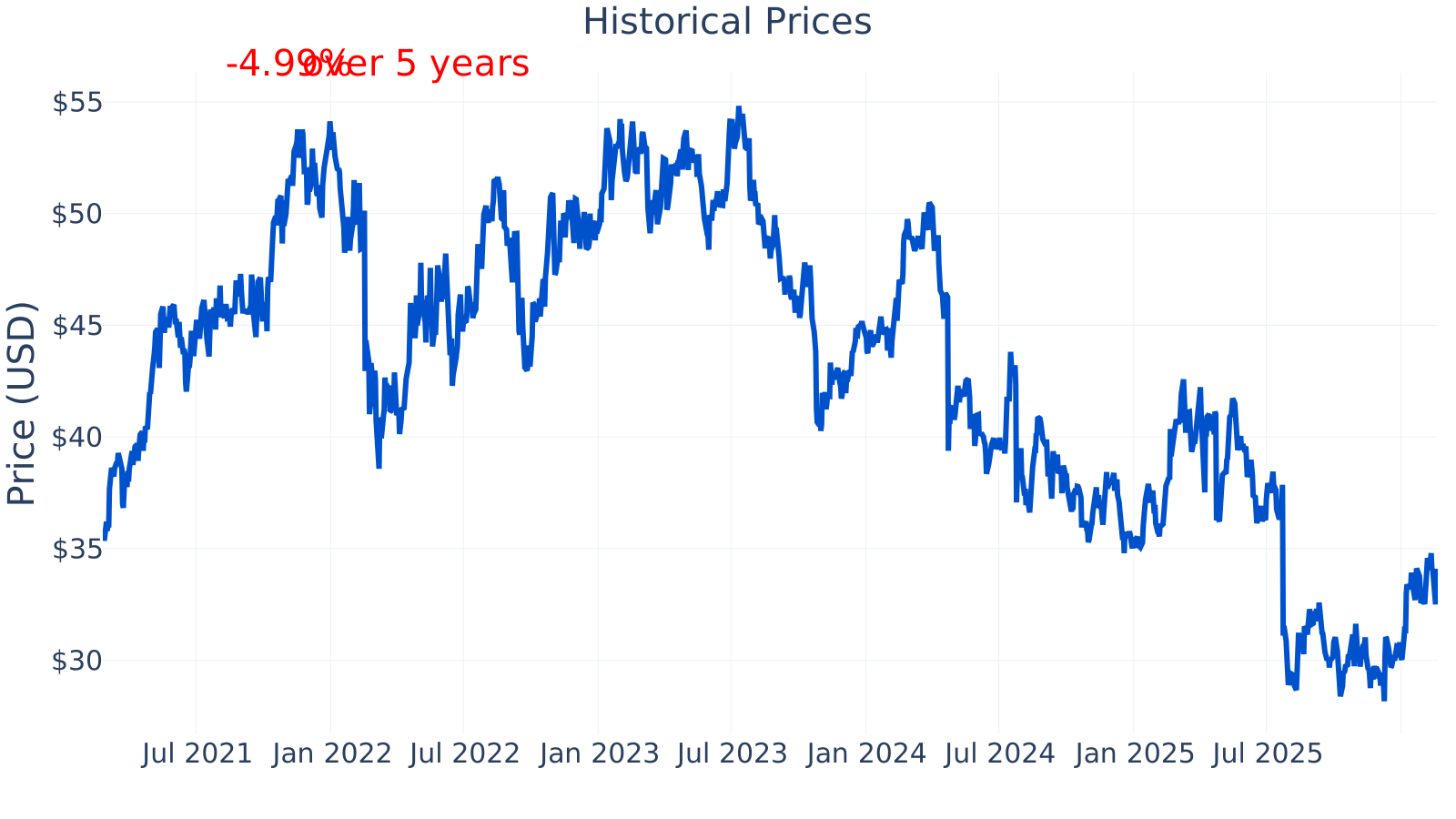
LKQ’s market capitalization is about $8.8B. The stock’s beta of ~0.89 suggests it has historically moved somewhat less than the broader market, though it can still be volatile. Profitability (profit margin of about 4.45%) is above the industry median shown (about 3.40%), while year-over-year revenue growth (about 2.7%) is below the industry median shown (about 5.0%). Leverage is moderately higher than the industry median in the table (debt-to-equity about 77% vs. 72%). The company also generated about $847M in trailing twelve-month free cash flow, which is a key resource for reinvestment, debt reduction, or returning capital to shareholders (depending on management decisions and constraints).
Growth (medium)
LKQ operates in the automotive aftermarket, which tends to be supported by long-running structural demand: vehicles stay on the road for many years, they need ongoing maintenance, and collisions continue to happen regardless of new-car sales cycles. This backdrop can be relatively resilient compared with industries that depend mainly on discretionary new purchases. In addition, the availability and price of new OEM parts can make alternative parts (aftermarket, recycled, remanufactured) more relevant for cost-conscious repairs.
That said, growth can be uneven because demand drivers differ by category. Collision repair volume, insurer repair practices, used-vehicle values, total loss rates, and repair complexity all affect parts demand and mix. LKQ’s strategy—scale distribution, broaden product availability, and serve multiple customer channels—aims to capture repeat demand in a fragmented market where service levels and inventory breadth can matter.
Recent revenue growth has been inconsistent, moving from strong positive periods to flat or negative comparisons more recently. In the most recent quarters shown, year-over-year revenue growth trends modestly negative (roughly low single-digit declines), which suggests that near-term topline momentum has softened relative to earlier post-pandemic periods.
Free cash flow remains substantial, but it has also trended down from earlier highs (about $1.6B in 2021 to roughly $0.57B by 2025 in the series shown, with the latest TTM at about $0.85B in the table). For a distribution-heavy business, durable free cash flow can be an important long-term support, but the direction of travel matters because it can limit flexibility if weaker periods persist.
Risks (medium)
This article is for informational purposes only and does not constitute financial advice. Some content is AI-generated. See Disclaimer