Stock Analysis · LGI Homes (LGIH)
Overview
LGI Homes (LGIH) is a U.S. homebuilder focused on constructing and selling primarily entry-level and first-time move-up single-family homes. The company typically operates by acquiring land (or controlling lots through options), building homes in planned communities, and selling completed or near-completion homes to homebuyers. This “build and sell” model ties performance closely to housing demand, mortgage rates, construction costs, and local market conditions.
Revenue is largely generated from home sales, with smaller contributions from related services that support those transactions.
Typical revenue sources (from largest to smallest) are:
- Home sales (the clear majority of revenue)
- Financial services and other (smaller, supporting contribution; exact mix varies by year)
In recent years, the business has experienced a notable downsizing in overall revenue and profit dollars compared with earlier periods, reflecting a more challenging housing environment (including affordability pressure and interest-rate sensitivity) and a reset in industry demand from the unusually strong conditions seen earlier in the decade.
Across 2021 to 2025, total revenue declines from about $3.05B to about $1.71B, and net income declines from about $430M to about $73M. This highlights how cyclical profitability can be for homebuilders when volumes, pricing, incentives, and financing costs shift.
Key Figures
| Metric | Value | Industry ⓘ |
|---|---|---|
| Date | Feb 23, 2026 | |
| Context | ||
| Sector | Consumer Cyclical | |
| Industry | Residential Construction | |
| Market Cap ⓘ | $1.28B | |
| Beta ⓘ | 1.90 | |
| Fundamental | ||
| P/E Ratio ⓘ | 12.27 | 12.43 |
| Profit Margin ⓘ | 4.25% | 8.48% |
| Revenue Growth ⓘ | -15.00% | -5.40% |
| Debt to Equity ⓘ | 79.04% | 33.34% |
| PEG ⓘ | 0.69 | |
| Free Cash Flow ⓘ | -$171.27M | |
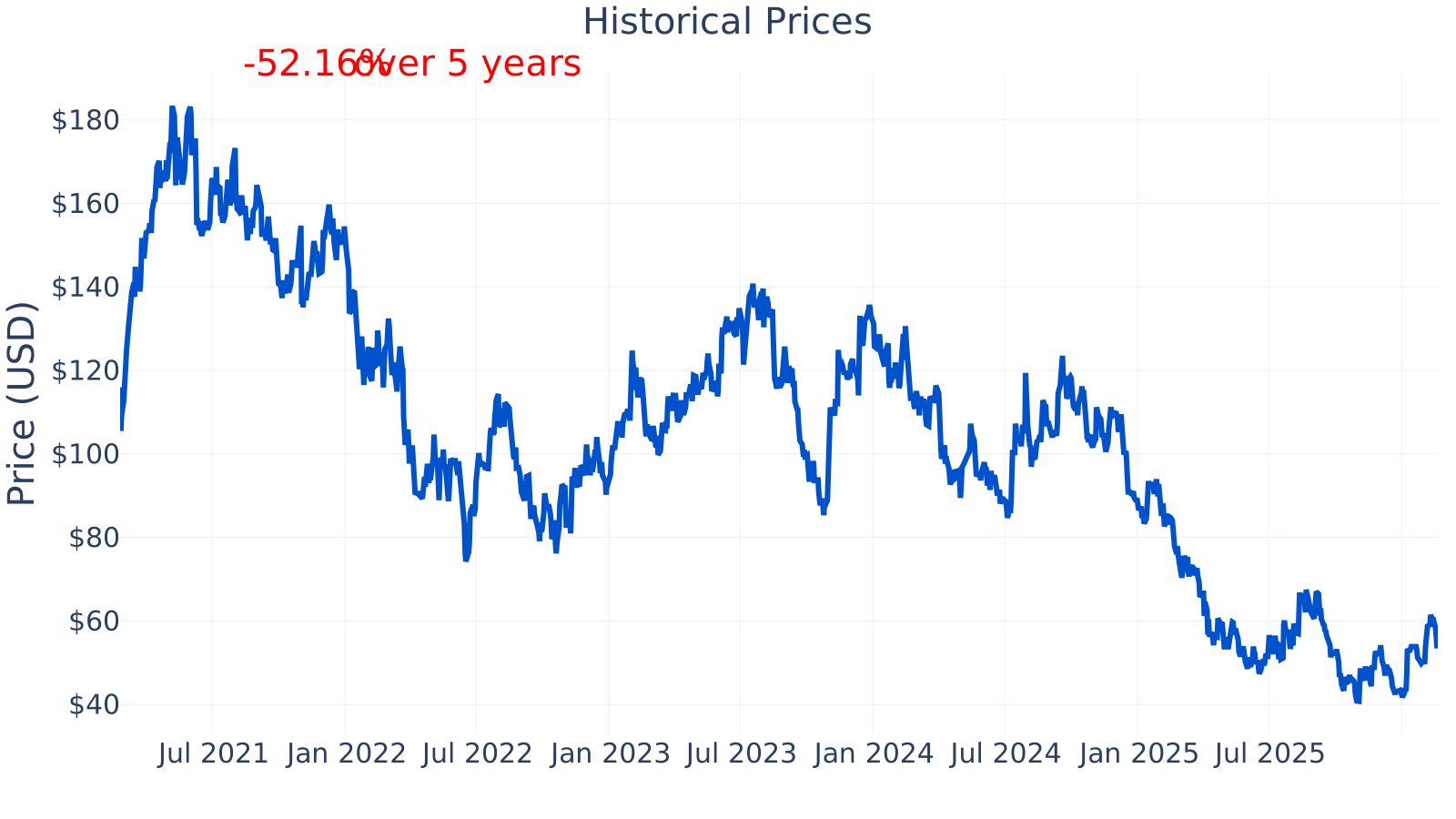
LGI Homes has a market capitalization of about $1.28B and a relatively high beta of ~1.90, meaning the stock has tended to move more than the broader market. The latest P/E ratio is ~12.27, close to the residential construction industry median (~12.43). Profit margin is about 4.25%, below the industry median (~8.49%). Year-over-year revenue growth is about -15%, weaker than the industry median (~-5.4%). Debt-to-equity is about 79%, above the industry median (~33%). The company’s trailing twelve-month free cash flow is about -$171M.
Growth (Medium)
Homebuilding is a large, long-lived industry tied to population growth, household formation, and the need to replace aging housing stock. Over time, demand can be supported by structural factors (such as long-term housing supply constraints in many U.S. markets), but results tend to move in cycles because affordability and mortgage rates strongly influence near-term demand.
LGI Homes’ strategy—building homes aimed at affordability-focused buyers—can align with long-term housing needs. However, in the shorter run, affordability is heavily affected by mortgage rates and home prices. In periods where monthly payments rise quickly, many entry-level buyers become payment-constrained, and builders often respond with incentives, pricing actions, or product changes that can pressure margins.
The year-over-year revenue growth pattern shows significant volatility, with multiple negative periods and the most recent reading around -15%. This indicates that, recently, the company has been operating in a contraction phase rather than a growth phase.
Free cash flow has also been negative in several recent periods (around -$171M most recently). For homebuilders, negative free cash flow can happen when the company is investing in land and inventory (homes under construction), but sustained negative levels may increase reliance on external financing and reduce flexibility during weaker demand environments.
Potential catalysts for improved growth typically include better affordability conditions (for example, lower mortgage rates or income growth outpacing home-price growth), stabilization or reductions in build costs, and improved community count/closings if demand supports it. These are largely macro-driven rather than fully under the company’s control.
Risks (High)
LGI Homes operates in a cyclical, interest-rate-sensitive business. Changes in mortgage rates can quickly affect buyer purchasing power, sales pace, cancellations, and the level of incentives needed to close sales. This can flow through to revenue and profitability in a relatively short time compared with many other industries.
Debt-to-equity is about 79%, well above the industry median (~33%). The historical trend shown indicates leverage increased meaningfully from earlier levels and has remained elevated relative to peers. Higher leverage can amplify outcomes: it may support growth when conditions are favorable, but it can also raise financial risk and constrain options during downturns.
Profit margins have compressed substantially from earlier highs (mid-teens percentages in 2021–2022) to about 4.25% most recently, and they are now below the industry median. This can reflect a combination of pricing pressure, higher interest expense, incentives, and cost dynamics. If margins remain compressed, profitability and internal funding capacity can be more limited.
Competitive dynamics are also important. The company competes with other publicly traded homebuilders and numerous private/regional builders in the markets where it operates. Large peers typically benefit from scale purchasing, broader geographic diversification, and deep land pipelines, while smaller builders may be very nimble locally. In that context, LGI Homes is not the largest builder by national scale; its position is better described as a specialized competitor with a focus on attainable homes in selected markets rather than an overall industry leader.
Commonly cited peer groups in residential construction include large diversified builders and other builders with entry-level exposure. Competitive standing tends to vary by local market based on land availability, product fit, and execution (construction cycle times, sales pace, and incentive discipline).
Other key risks include land and inventory management (paying too much for lots, or holding inventory through a downturn), construction-cost volatility, labor constraints, and regulatory/frictional costs (permitting and development timelines). Because a meaningful portion of costs are incurred before a home sale closes, forecasting errors can impact results.
Valuation
LGI Homes’ current P/E ratio (~12.27) is close to the industry median (~12.43) based on the latest available comparison. Historically, the company’s P/E has moved through a wide range (from mid-single digits at points to mid-teens at others), reflecting how investor expectations and earnings volatility change across the housing cycle.
Interpreting valuation for a homebuilder often requires context beyond a single multiple. The recent backdrop includes declining revenue, compressed margins, negative free cash flow, and higher-than-median leverage versus peers. At the same time, the multiple is not obviously out of line with the industry median, suggesting the market may be weighing cyclical risks alongside the possibility of a future normalization if housing conditions improve.
Conclusion
LGI Homes is a U.S. homebuilder primarily driven by home sales, with results that tend to rise and fall with housing affordability and broader economic conditions. Recent fundamentals show a period of contraction: revenue is lower than earlier years, margins have compressed to below the industry median, leverage is higher than many peers, and free cash flow has been negative.
From a long-term perspective, the business participates in an essential industry with enduring housing demand drivers, and the company’s focus on more affordable homes aligns with a large segment of the market. At the same time, the company’s recent financial profile indicates elevated sensitivity to the housing cycle and financing conditions. The current valuation (as reflected by P/E relative to peers) appears broadly in line with the industry, which places more weight on how earnings, margins, and balance-sheet leverage evolve through the next phase of the cycle.
Sources:
- SEC EDGAR — LGI Homes, Inc. filings (Form 10-K, Form 10-Q)
- LGI Homes — Investor Relations materials and press releases
- Wikipedia — “LGI Homes” (basic company background)
This article is for informational purposes only and does not constitute financial advice. Some content is AI-generated. See Disclaimer