Stock Analysis · LGI Homes (LGIH)
Overview
LGI Homes (LGIH) is a U.S. homebuilder focused on constructing and selling primarily entry-level and first-time move-up single-family homes. The company typically operates by acquiring land (or controlling lots through options), building homes in planned communities, and selling completed or near-completion homes to homebuyers. This “build and sell” model ties performance closely to housing demand, mortgage rates, construction costs, and local market conditions.
Revenue is largely generated from home sales, with smaller contributions from related services that support those transactions.
Typical revenue sources (from largest to smallest) are:
- Home sales (the clear majority of revenue)
- Financial services and other (smaller, supporting contribution; exact mix varies by year)
In recent years, the business has experienced a notable downsizing in overall revenue and profit dollars compared with earlier periods, reflecting a more challenging housing environment (including affordability pressure and interest-rate sensitivity) and a reset in industry demand from the unusually strong conditions seen earlier in the decade.
Across 2021 to 2025, total revenue declines from about $3.05B to about $1.71B, and net income declines from about $430M to about $73M. This highlights how cyclical profitability can be for homebuilders when volumes, pricing, incentives, and financing costs shift.
Key Figures
| Metric | Value | Industry ⓘ |
|---|---|---|
| Date | Feb 23, 2026 | |
| Context | ||
| Sector | Consumer Cyclical | |
| Industry | Residential Construction | |
| Market Cap ⓘ | $1.28B | |
| Beta ⓘ | 1.90 | |
| Fundamental | ||
| P/E Ratio ⓘ | 12.27 | 12.43 |
| Profit Margin ⓘ | 4.25% | 8.48% |
| Revenue Growth ⓘ | -15.00% | -5.40% |
| Debt to Equity ⓘ | 79.04% | 33.34% |
| PEG ⓘ | 0.69 | |
| Free Cash Flow ⓘ | -$171.27M | |
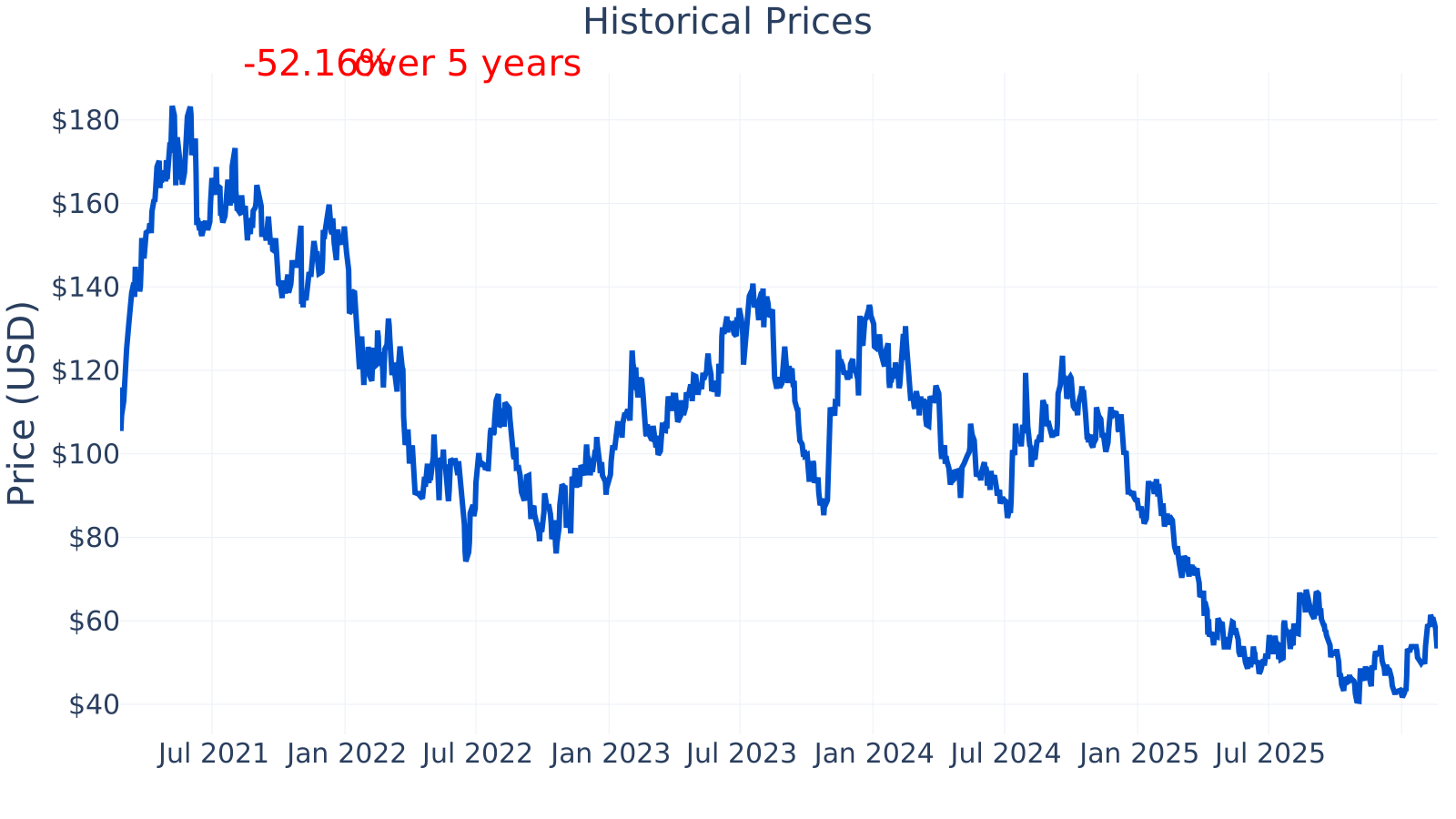
LGI Homes has a market capitalization of about $1.28B and a relatively high beta of ~1.90, meaning the stock has tended to move more than the broader market. The latest P/E ratio is ~12.27, close to the residential construction industry median (~12.43). Profit margin is about 4.25%, below the industry median (~8.49%). Year-over-year revenue growth is about -15%, weaker than the industry median (~-5.4%). Debt-to-equity is about 79%, above the industry median (~33%). The company’s trailing twelve-month free cash flow is about -$171M.
Growth (Medium)
Homebuilding is a large, long-lived industry tied to population growth, household formation, and the need to replace aging housing stock. Over time, demand can be supported by structural factors (such as long-term housing supply constraints in many U.S. markets), but results tend to move in cycles because affordability and mortgage rates strongly influence near-term demand.
LGI Homes’ strategy—building homes aimed at affordability-focused buyers—can align with long-term housing needs. However, in the shorter run, affordability is heavily affected by mortgage rates and home prices. In periods where monthly payments rise quickly, many entry-level buyers become payment-constrained, and builders often respond with incentives, pricing actions, or product changes that can pressure margins.
The year-over-year revenue growth pattern shows significant volatility, with multiple negative periods and the most recent reading around -15%. This indicates that, recently, the company has been operating in a contraction phase rather than a growth phase.
Free cash flow has also been negative in several recent periods (around -$171M most recently). For homebuilders, negative free cash flow can happen when the company is investing in land and inventory (homes under construction), but sustained negative levels may increase reliance on external financing and reduce flexibility during weaker demand environments.
Potential catalysts for improved growth typically include better affordability conditions (for example, lower mortgage rates or income growth outpacing home-price growth), stabilization or reductions in build costs, and improved community count/closings if demand supports it. These are largely macro-driven rather than fully under the company’s control.
Risks (High)
This article is for informational purposes only and does not constitute financial advice. Some content is AI-generated. See Disclaimer