Stock Analysis · Kulicke and Soffa Industries Inc (KLIC)
Overview
Kulicke and Soffa Industries, Inc. (KLIC) is a semiconductor equipment company. In simple terms, it builds specialized machines used in the “back-end” of chip manufacturing—steps such as assembling, connecting, and packaging chips so they can be installed into products like smartphones, data-center hardware, cars, and industrial electronics. The company sells equipment and also provides related services and support for installed machines.
Its revenue is primarily tied to semiconductor production investment cycles: when chipmakers and outsourced assembly/packaging firms expand capacity, demand for KLIC’s tools tends to rise; when customers reduce capital spending, demand can fall quickly.
Based on the company’s reporting, the business is generally organized around semiconductor assembly solutions (equipment) and a recurring stream from after-sales parts/service. Percentages can vary by year with the cycle, but the typical revenue mix is:
- Equipment systems (largest): sales of assembly/packaging tools
- Aftermarket products and services (smaller, more recurring): spare parts, service, support, and upgrades
The profit picture shown here highlights how sensitive results can be to the industry cycle: total revenue fell substantially from the 2021–2022 period to 2023–2025, while operating expenses (notably R&D and selling/general costs) declined less sharply. That combination can compress profits quickly when demand slows.
Key Figures
| Metric | Value | Industry ⓘ |
|---|---|---|
| Date | Feb 08, 2026 | |
| Context | ||
| Sector | Technology | |
| Industry | Semiconductor Equipment & Materials | |
| Market Cap ⓘ | $3.71B | |
| Beta ⓘ | 1.62 | |
| Fundamental | ||
| P/E Ratio ⓘ | N/A | 47.44 |
| Profit Margin ⓘ | -9.40% | 9.40% |
| Revenue Growth ⓘ | 20.20% | 9.90% |
| Debt to Equity ⓘ | 8.25% | 20.73% |
| PEG ⓘ | 1.31 | |
| Free Cash Flow ⓘ | $76.05M | |
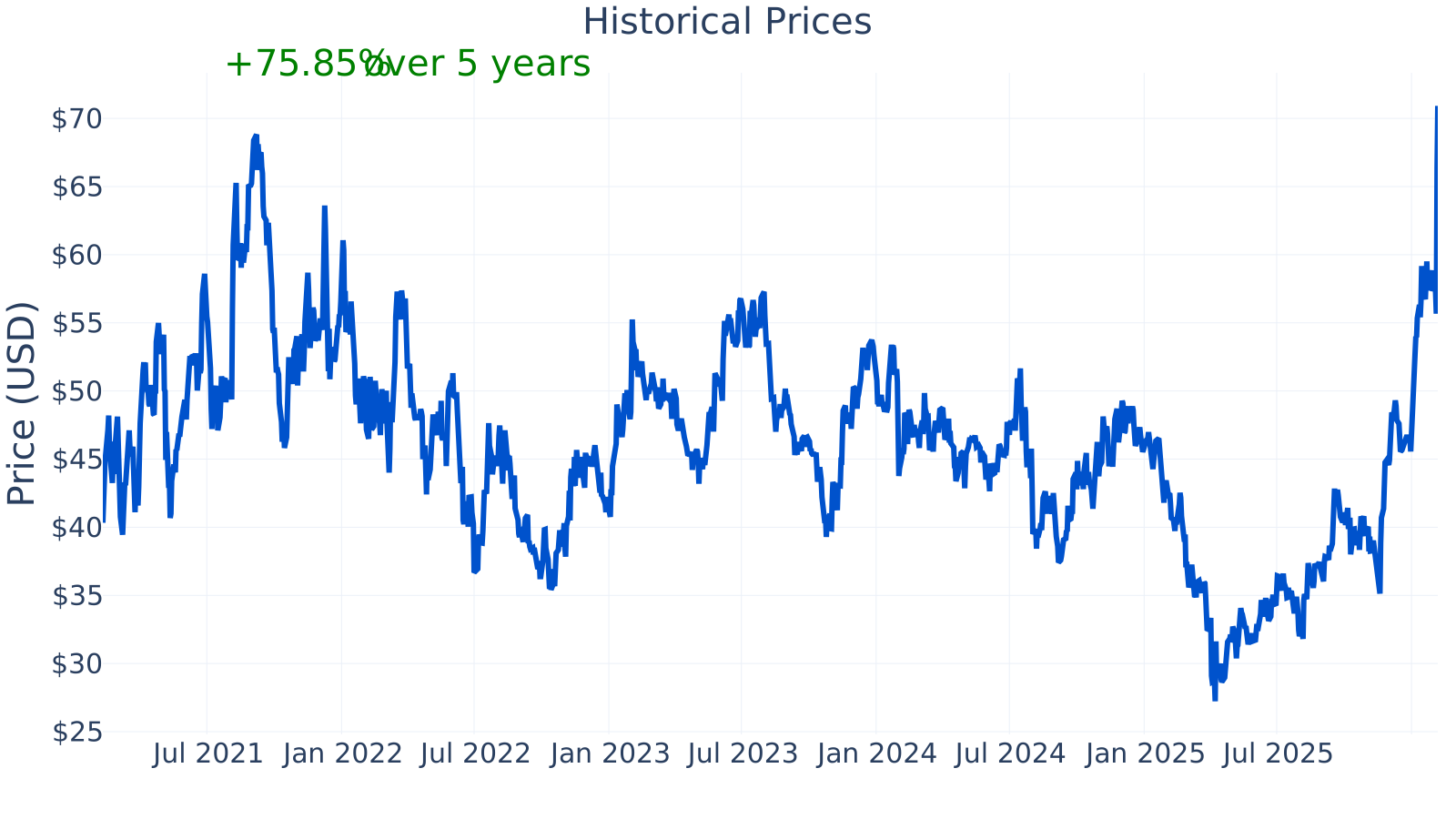
KLIC’s market capitalization is about $3.7B and its beta of 1.62 indicates the share price has tended to move more than the broader market. The latest profit margin is about -9.4%, below the industry median (about +9.4%), reflecting a period of weak profitability. Revenue growth year-over-year is about +20.2%, above the industry median (about +9.9%), suggesting a recent rebound. Leverage is relatively low with debt-to-equity around 8.3% versus an industry median near 20.7%. Trailing twelve-month free cash flow is about $76M, which indicates the business still generated cash overall despite pressured profitability.
Growth (Medium)
KLIC operates in the semiconductor equipment industry, which is supported over the long run by broad trends like increased computing demand, electrification in vehicles, automation in industry, and continued growth in data centers. However, the path is not smooth: spending on chip equipment is historically cyclical, with periods of rapid expansion followed by corrections.
This chart shows that year-over-year revenue growth has swung widely over time—moving from very strong growth in 2021 to sharp declines in 2022–2023, and then improving again most recently (around +20%). That pattern is consistent with a cyclical end market where customer orders can accelerate and slow down quickly.
Free cash flow (cash generated after operating costs and capital spending) has also varied significantly, from strong levels earlier in the period to a much weaker phase, and then a partial recovery. For long-term context, this matters because it shows how much financial flexibility the company may have to fund R&D and navigate downturns without relying heavily on debt.
Potential catalysts typically come from (1) an upturn in semiconductor assembly/packaging investment, (2) product cycle wins where new tools gain adoption, and (3) structural packaging complexity (more advanced packaging approaches often require more sophisticated assembly steps). The company’s strategy—continuing to invest in R&D through the cycle—can support competitiveness, but it also pressures near-term profits when revenue is soft.
Risks (High)
This article is for informational purposes only and does not constitute financial advice. Some content is AI-generated. See Disclaimer


