Stock Analysis · Kontoor Brands Inc (KTB)
Overview
Kontoor Brands Inc. is a global apparel company focused on denim and casual clothing. It designs, sources, markets, and sells products primarily under two long-standing brands: Wrangler and Lee. The company sells through a mix of wholesale channels (selling to retailers) and direct-to-consumer channels (such as brand websites and owned stores), depending on the market and brand strategy.
In simple terms, Kontoor’s business model is built around brand-driven clothing staples—especially denim—where demand tends to be steadier than highly seasonal fashion, but still sensitive to consumer spending, retailer inventory levels, and competition.
Main revenue sources are typically described by brand and by sales channel in company filings. The two biggest brand contributors are:
- Wrangler (largest brand contributor)
- Lee (second-largest brand contributor)
Percentages by brand and by channel can vary by year and geography; the company details these splits in its annual report (Form 10-K).
Over the 2021–2025 period shown, total revenue increased overall (from about $2.48B in 2021 to about $3.15B in 2025). Operating income rose as well, but the path from operating income to net income shows interest expense becoming more meaningful in 2025, which aligns with leverage being an important part of the company’s financial profile.
Key Figures
| Metric | Value | Industry ⓘ |
|---|---|---|
| Date | May 04, 2026 | |
| Context | ||
| Sector | Consumer Cyclical | |
| Industry | Apparel Manufacturing | |
| Market Cap ⓘ | $4.01B | |
| Beta ⓘ | 1.07 | |
| Fundamental | ||
| P/E Ratio ⓘ | 17.83 | 27.55 |
| Profit Margin ⓘ | 7.22% | 5.29% |
| Revenue Growth ⓘ | 45.60% | 8.90% |
| Debt to Equity ⓘ | 229.06% | 114.05% |
| PEG ⓘ | N/A | |
| Free Cash Flow ⓘ | $433.26M | |
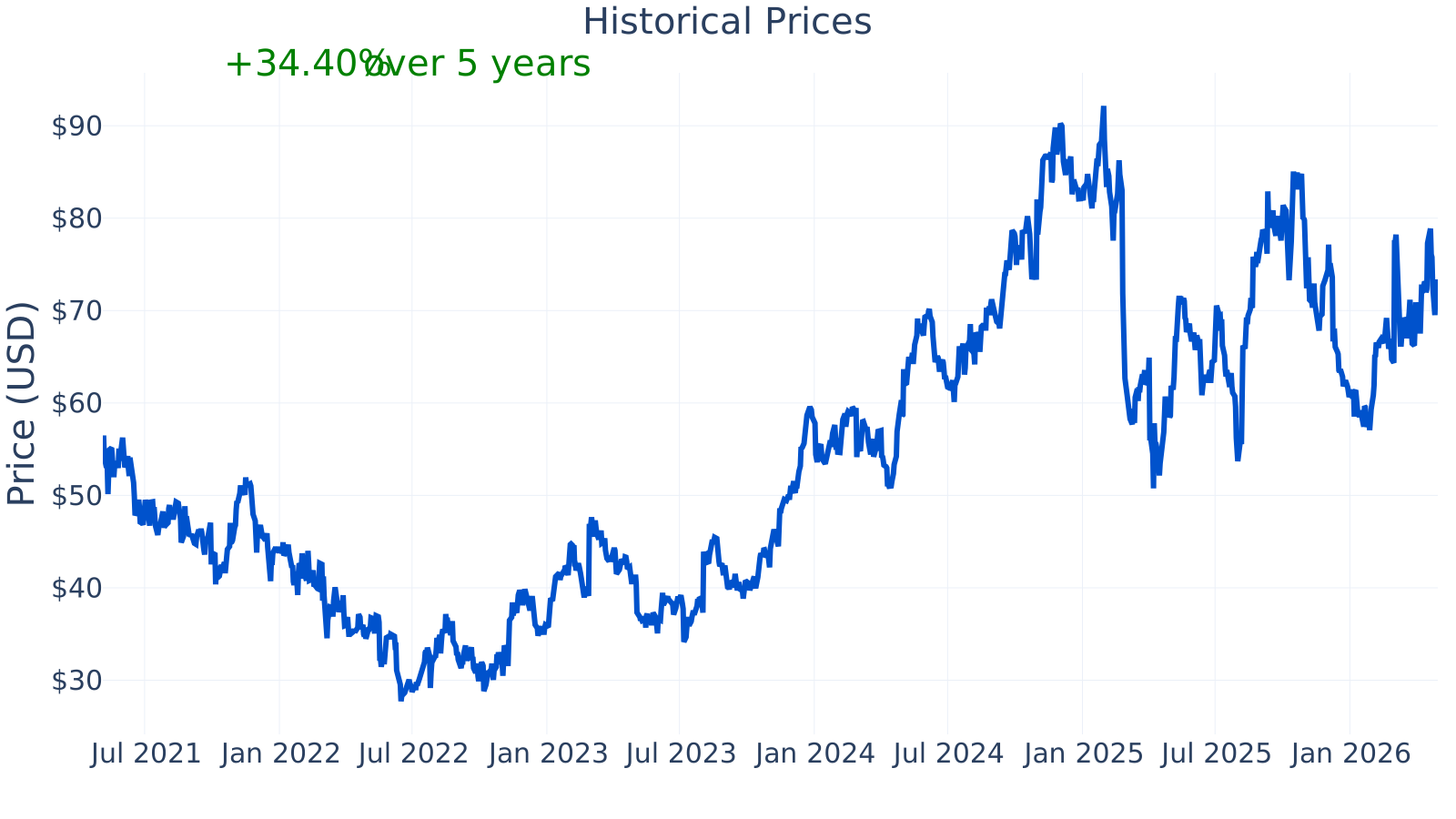
Kontoor Brands’ market capitalization is about $4.0B, placing it in the small-to-mid range of publicly traded apparel names. The stock’s beta of ~1.07 suggests it has tended to move roughly in line with the broader market (slightly more volatile). On profitability, the company’s net profit margin is ~7.2%, which is higher than the industry median (~5.3%) shown here. Recent year-over-year revenue growth is ~45.6%, well above the industry median (~8.9%), but this metric can be unusually strong in certain periods due to comparisons against weaker prior periods, pricing actions, channel inventory changes, or other timing effects. Leverage stands out: debt-to-equity is ~229% versus an industry median of ~114%, indicating a heavier reliance on debt than many peers.
Growth (Medium)
Kontoor operates in the apparel market, which is mature overall, with growth typically coming less from “industry expansion” and more from brand strength, product innovation, pricing discipline, distribution choices, and international expansion. Denim and casualwear can be relatively resilient categories because they are repeat-purchase basics for many consumers, but they still follow economic cycles and changing preferences.
A core growth question for a company like Kontoor is whether its brands can maintain relevance while expanding beyond their historical strongholds. Strategies often described in filings include building direct-to-consumer capabilities, improving product assortments, and increasing presence in selected international markets. When these efforts work, they can lift both revenue and profitability; when they don’t, growth tends to revert closer to the overall apparel market.
The year-over-year revenue growth pattern has been uneven over time, with several quarters of low or negative growth followed by a sharp acceleration most recently (reaching about 45.6%). For long-term context, this kind of swing often reflects a combination of demand, retailer ordering behavior, and the timing of shipments and promotions, rather than a smooth “straight-line” trajectory.
Free cash flow (cash left after operating needs and capital spending) has also been volatile. The chart shows a negative period (around -$39M in 2023) followed by stronger cash generation (around $397M in 2024 and about $370M in 2025). For an apparel company, working capital (especially inventory and retailer receivables) can materially affect free cash flow from year to year, so multi-year patterns often matter more than a single quarter or single year.
Risks (High)
Kontoor faces typical consumer apparel risks: demand can weaken during economic slowdowns, input costs can change quickly (materials, freight, labor), and retailer ordering patterns can amplify volatility (for example, when retailers reduce inventory levels). Fashion risk exists as well, even for staple categories like denim—fits and styling trends can shift, and marketing execution matters.
Competition is intense. Kontoor competes with other denim and casualwear brands, as well as large vertically integrated apparel companies and private-label offerings from major retailers. Key competitor groups include:
- Global denim and casual brands (brand-led competitors in jeanswear and casual apparel)
- Large diversified apparel companies that can invest heavily in marketing and distribution
- Retailer private labels, which often compete on price and shelf space
Kontoor’s competitive advantages are primarily tied to brand recognition (especially in denim), established retailer relationships, and scale in sourcing and distribution. It is not the only major player in denim, but its brands have long histories and broad distribution, which can help sustain demand over time if brand equity remains strong.
Financial risk is a central consideration. Debt-to-equity has improved materially from very high levels earlier in the chart (well above 400%–500%) but remains elevated at about 229% versus an industry median around 114%. Higher leverage can increase sensitivity to interest rates, refinancing conditions, and downturns in consumer demand. It can also reduce flexibility if margins compress or if the company needs to invest heavily to defend market position.
Profitability has generally been above the industry median through much of the period shown. However, the company’s net profit margin declined to about 7.2% most recently, down from higher levels seen in several prior periods (often around the high-single-digits to near 9–10%). Margin pressure can come from promotions, unfavorable product mix, higher costs, or foreign exchange and distribution shifts. For branded apparel, protecting margin while staying competitive on price is a recurring challenge.
Valuation
Valuation is often discussed using the price-to-earnings (P/E) ratio, which compares the stock price to earnings. Kontoor’s latest P/E is about 17.8, below the industry median (~27.5) shown in the table. A lower P/E can reflect lower expected growth, higher perceived risk (including leverage), or simply different market positioning versus peers.
Historically, Kontoor’s P/E ratio has moved across a wide range (roughly from the high single digits to the high teens in the period shown). In several periods it traded below the industry median, while in some periods it moved closer to it. Interpreting the current multiple depends on whether recent growth and cash flow are sustainable and how the market weighs the company’s above-median margins against its higher leverage and the cyclicality of apparel demand.
Conclusion
Kontoor Brands is a denim-focused apparel company built around two established brands, with results that reflect both brand strength and the realities of a competitive, economically sensitive industry. Financially, the company shows a mix of positives and constraints: profitability has been higher than the industry median in many periods, and free cash flow has recently been strong after a weaker phase.
At the same time, leverage is a major feature of the story, with debt-to-equity still above the industry median despite improvement from earlier highs. For long-term analysis, the key questions tend to be whether brand momentum can persist across cycles, whether margins can be defended in competitive environments, and whether cash generation remains consistent enough to support balance-sheet resilience.
Sources:
- U.S. Securities and Exchange Commission (SEC) EDGAR — Kontoor Brands Inc. Form 10-K (Annual Report)
- U.S. Securities and Exchange Commission (SEC) EDGAR — Kontoor Brands Inc. Form 10-Q (Quarterly Reports)
- Kontoor Brands — Investor Relations materials (company-hosted filings and releases)
- Wikipedia — “Kontoor Brands” (basic company background)
This article is for informational purposes only and does not constitute financial advice. Some content is AI-generated. See Disclaimer


