Stock Analysis · Kohl's Corporation (KSS)
Overview
Kohl’s Corporation is a U.S. omnichannel retailer best known for its Kohl’s department stores and its online shop. It sells a broad mix of apparel, footwear, accessories, beauty, and home products, with a value-focused positioning that relies heavily on promotions and loyalty programs. The company also operates a private-label portfolio (store brands) alongside national brands, and it uses partnerships and “store-within-a-store” concepts to expand key categories and drive store traffic.
From a business model perspective, Kohl’s is primarily a merchandise retailer: it buys inventory from vendors, sells to customers through stores and digital channels, and aims to manage margin through pricing, promotions, and inventory discipline. In recent years, the company has emphasized improving the customer experience (including digital), strengthening product assortment (especially in categories like beauty), and managing costs and working capital.
Main sources of revenue are typically described in plain terms as retail merchandise sales across channels (the company generally reports as a single operating segment in filings, rather than publishing a detailed revenue split by category). In simple terms, revenue comes from:
- Retail merchandise sales (stores + e-commerce) (the dominant source; detailed category percentages are not typically broken out as revenue shares in a simple public segment table)
- Other revenue (smaller items such as certain service/ancillary revenues as described in filings)
The recent multi-year shape of the income statement shows a company dealing with lower revenue than a few years ago, while working to stabilize profitability through cost actions and operating discipline.
Across the fiscal years shown, total revenue trends downward (from about $19.4B to about $15.5B). Operating income and net income fluctuate meaningfully over the period, including a low-profit/loss year, followed by a return to positive earnings. This pattern highlights how sensitive results can be to sales levels, promotions/markdowns, and expense control in department-store retail.
Key Figures
| Metric | Value | Industry ⓘ |
|---|---|---|
| Date | Mar 16, 2026 | |
| Context | ||
| Sector | Consumer Cyclical | |
| Industry | Department Stores | |
| Market Cap ⓘ | $1.48B | |
| Beta ⓘ | 1.43 | |
| Fundamental | ||
| P/E Ratio ⓘ | 7.62 | |
| Profit Margin ⓘ | 1.75% | |
| Revenue Growth ⓘ | -4.20% | |
| Debt to Equity ⓘ | 49.62% | |
| PEG ⓘ | 0.47 | |
| Free Cash Flow ⓘ | $1.16B | |
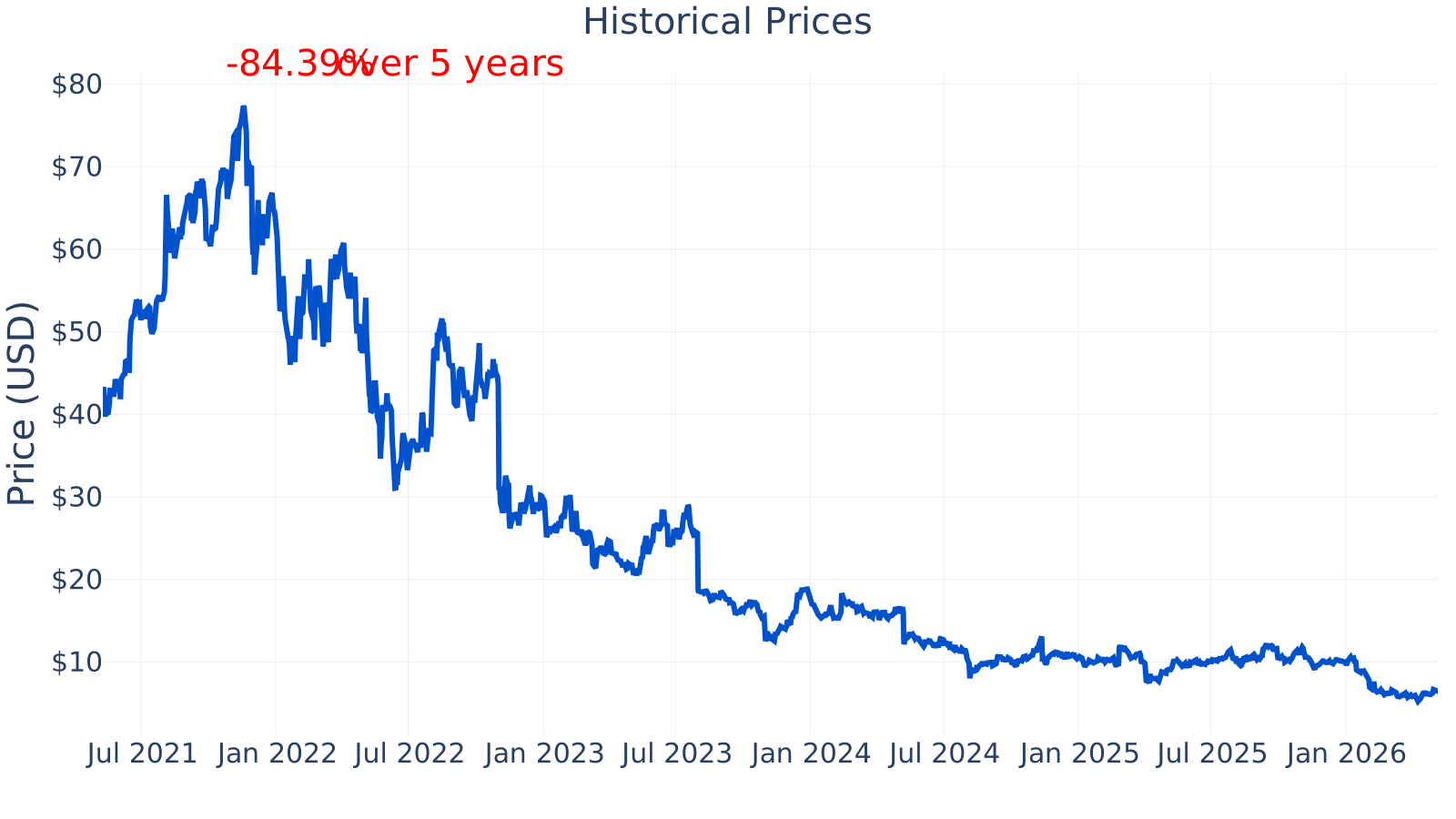
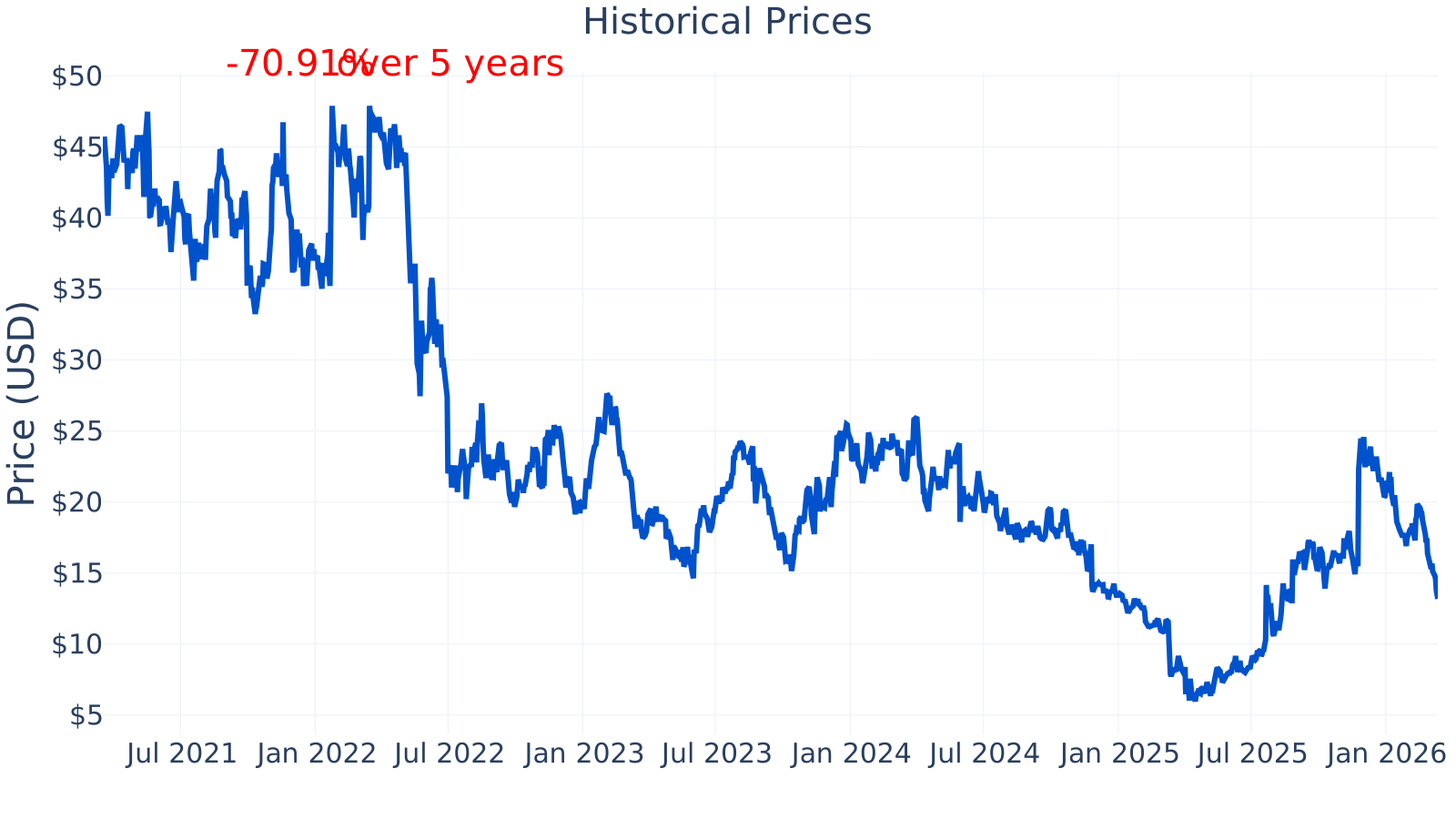
Kohl’s is a mid-to-small cap public retailer (market cap about $1.48B) with a relatively high sensitivity to market moves (beta ~1.43). Profitability is thin at the net level (profit margin ~1.75%), and recent year-over-year revenue change is negative (about -4.2%), reflecting a challenging sales environment. Leverage, as measured by debt-to-equity, is shown around 49.6% at the latest point, while trailing free cash flow is positive (about $1.16B), which can be influenced by working-capital swings (for retailers, inventory and payables changes can materially move cash flow). The P/E ratio is shown around 7.6, which is numerically low versus many industries, but that figure should be interpreted carefully because retail earnings can be cyclical and sensitive to short-term margin changes.
Growth (Low)
Kohl’s operates in the U.S. department store segment, a mature area of retail that has faced long-running pressure from e-commerce specialists, off-price retailers, and big-box chains. In a mature category, growth tends to come more from taking share, improving merchandising, expanding higher-performing categories, and driving better customer frequency—rather than from broad industry expansion.
A practical way to view growth here is whether initiatives can stabilize sales and protect margins. Kohl’s has discussed strategies in filings and investor materials that typically include: strengthening assortment (including national brands and private brands), expanding categories intended to increase repeat visits (such as beauty through partnerships), improving the digital experience, and continuing cost and inventory discipline. These levers can matter, but they are competing against structural headwinds in traditional department stores.
The year-over-year revenue growth pattern is mostly negative in the more recent periods shown, often in the mid-single-digit decline range, which suggests the company has been working against a shrinking top line rather than compounding growth.
Free cash flow shows large swings over time, including a negative period and then a substantial rebound to about $1.16B at the latest point. For a retailer, this can be affected not only by profitability but also by inventory levels and the timing of payments to suppliers. Sustained cash generation over multiple periods generally requires both stable operating performance and disciplined inventory management.
Risks (High)
Kohl’s faces meaningful business risk because department-store retail is highly competitive and sensitive to consumer spending, promotions, and fashion/assortment execution. If traffic weakens, the company may rely more on discounts, which can pressure gross margin. Inventory missteps can lead to markdowns, and fixed store costs can limit flexibility when sales decline.
Competitive positioning is another key risk area. Kohl’s competes with other department stores, off-price retailers, mass merchants, specialty apparel chains, and large e-commerce platforms. In many of these categories, competitors may have structural advantages such as faster inventory turnover, stronger price perception, broader ecosystems, or higher traffic frequency. Kohl’s advantages are often more situational: a large store footprint, established brand awareness, loyalty programs, and the ability to use partnerships to improve category relevance. These are useful strengths, but they do not necessarily create a durable “winner-takes-most” position in a mature and fragmented market.
Debt-to-equity trends high for much of the period shown (often above 170% and at times above 200%), before dropping sharply to about 49.6% at the latest point. A step-change like this can happen due to balance-sheet movements (for example, changes in equity, debt levels, or accounting-driven items). Regardless of the cause, leverage matters in retail because weaker sales and margins can quickly reduce coverage for interest and fixed obligations.
Net profit margin is thin and has been volatile: it was solidly positive earlier in the period, dipped into slightly negative territory, and later returned to low-single-digit positive levels (about 1.75% most recently). Thin margins mean small changes in sales, markdowns, shrink, freight, or wages can have an outsized impact on net income.
Valuation
Valuation for a retailer like Kohl’s is often discussed using simple multiples such as the price-to-earnings (P/E) ratio, while keeping in mind that “E” (earnings) can move significantly from year to year. The company’s current P/E (about 7.6) is low in absolute terms, which can reflect market expectations of limited growth, elevated risk, and uncertainty about the durability of earnings in a pressured retail segment.
Historically, the P/E ratio shown has moved across a wide range, with periods where it is not meaningful (often when earnings are very low or negative). More recently, it trends from mid-single digits up into double digits. In practice, a rising P/E can come from improving confidence and/or falling earnings; a low P/E can come from depressed sentiment and/or temporarily high earnings. For Kohl’s, interpreting the multiple requires pairing it with the company’s sales trend, margin stability, and balance-sheet resilience.
Conclusion
Kohl’s is a long-established U.S. retailer operating in a mature, intensely competitive segment. Recent years show declining revenue versus earlier levels, with profitability and cash generation that can swing meaningfully depending on merchandising, promotions, and inventory execution. The company appears capable of generating substantial cash in some periods, but thin and volatile margins highlight how quickly results can change in a challenging demand environment.
Overall, the facts discussed point to a business with meaningful operating leverage (both upside and downside), limited industry tailwinds, and competitive pressures that require consistent execution. Any long-term assessment typically hinges on whether sales can stabilize, margins can remain consistently positive, and the balance sheet stays flexible through retail cycles.
Sources:
- SEC EDGAR — Kohl’s Corporation Form 10-K (Annual Report)
- SEC EDGAR — Kohl’s Corporation Form 10-Q (Quarterly Report)
- Kohl’s Corporation Investor Relations — SEC Filings & Annual Reports (company-hosted)
- Wikipedia — “Kohl’s” (basic company background)
This article is for informational purposes only and does not constitute financial advice. Some content is AI-generated. See Disclaimer