Stock Analysis · Kohl's Corporation (KSS)
Overview
Kohl’s Corporation is a U.S. retail company in the department store category. It sells a broad mix of apparel, footwear, beauty, accessories, and home products through its physical stores and its digital channels (website and app). The business model is built around offering recognizable national brands and private brands, supported by promotions and a loyalty program, with fulfillment coming from stores and distribution facilities.
In its financial reporting, Kohl’s generally presents revenue primarily as net sales (sales of merchandise to customers), with a smaller contribution from other revenue (for example, certain services and other items). The exact split can vary by year and is detailed in the company’s annual report; the core driver remains merchandise sales across its product categories rather than separate business lines with materially different revenue streams.
Over the last four fiscal years shown, total revenue declined from about $19.4B (FY2021) to about $16.2B (FY2024). During the same period, operating income and net income also moved lower overall, reflecting both lower sales volume and pressure from operating costs and retail markdown dynamics.
Key Figures
| Metric | Value | Industry ⓘ |
|---|---|---|
| Date | Feb 08, 2026 | |
| Context | ||
| Sector | Consumer Cyclical | |
| Industry | Department Stores | |
| Market Cap ⓘ | $2.08B | |
| Beta ⓘ | 1.44 | |
| Fundamental | ||
| P/E Ratio ⓘ | 10.69 | |
| Profit Margin ⓘ | 1.24% | |
| Revenue Growth ⓘ | -3.60% | |
| Debt to Equity ⓘ | 173.08% | |
| PEG ⓘ | 1.07 | |
| Free Cash Flow ⓘ | $1.02B | |
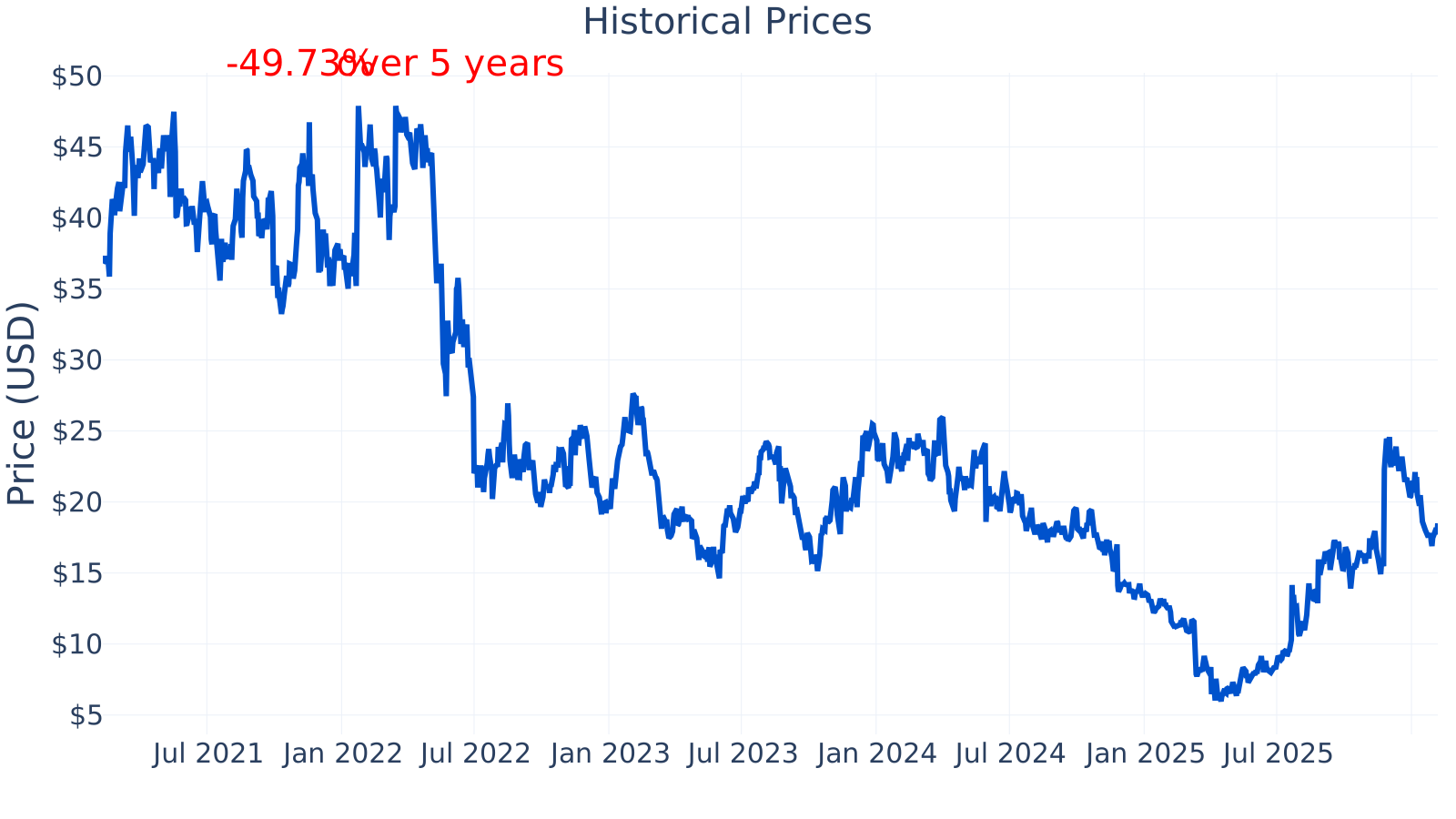
Kohl’s latest snapshot shows a market capitalization of about $2.08B and a beta of ~1.44, which indicates the stock has historically tended to move more than the overall market. Profitability is currently thin with a net profit margin of ~1.24%. Recent growth is negative with year-over-year revenue growth of about -3.6%. Leverage is significant with debt-to-equity of ~173%. The business produced positive trailing twelve-month free cash flow of about $1.02B, which can be influenced by working-capital swings (such as inventory changes) in retail.
Growth (medium)
The U.S. department store segment is generally a mature part of retail, and many customers have shifted more spending online and toward off-price and specialty retailers. In that context, long-run growth often depends less on industry expansion and more on execution: keeping products relevant, managing inventory tightly, improving the digital experience, and making stores productive.
The year-over-year revenue trend shown is mostly negative from 2022 onward, with declines frequently in the mid-single digits and reaching roughly -9% in some periods. That pattern suggests the company has been working through demand softness and competitive pressure, rather than operating in a consistently expanding sales environment.
Free cash flow has been volatile. It was strongly positive in one period (about $1.67B), turned negative (about -$544M), and later returned to positive territory (about $591M and then about $182M). The most recent trailing figure is shown at about $1.02B. For retailers, swings like these can occur when inventory, payables, and capital spending change meaningfully year to year, so it is useful to interpret cash generation alongside operating performance and balance-sheet needs.
Potential catalysts typically come from internal improvements—better merchandising, fewer markdowns, stronger customer retention, and tighter expense control—rather than from a rapidly expanding end market. Whether these efforts translate into sustained growth depends on consistency across multiple quarters and retail seasons.
Risks (high)
This article is for informational purposes only and does not constitute financial advice. Some content is AI-generated. See Disclaimer


