Stock Analysis · Bitfarms Ltd (KEEL)
Overview
Bitfarms Ltd is a digital asset company best known for operating large-scale computing facilities that validate transactions on the Bitcoin network (often called “Bitcoin mining”). In simple terms, the company runs specialized computers in data centers; when those computers successfully perform the required work for the network, Bitfarms earns bitcoin. The company can then either keep the bitcoin on its balance sheet or sell it to fund operations and expansion.
Its day-to-day economics are heavily influenced by (1) the price of Bitcoin, (2) the network’s mining difficulty (how competitive it is to earn bitcoin), (3) electricity prices and energy availability, and (4) the efficiency and uptime of its mining equipment and facilities.
Based on the company’s business model and typical disclosures for Bitcoin miners, revenue is generally concentrated in one main stream:
- Bitcoin mining revenue (the value of bitcoin earned from validating blocks and related network rewards) — typically the large majority of revenue
- Other items (when applicable, and usually much smaller): hosting/colocation services, equipment-related items, or other ancillary activities depending on the period and disclosures
From an income-statement perspective, a key point is that electricity and facility operating costs often make up a large share of total costs. The company’s operating results can swing materially from year to year because Bitcoin price cycles and changes in mining difficulty can move faster than costs can be adjusted.
Over the last several years shown, total revenue rose from about $169.5M (2021) to $229.3M (2025). However, profitability has been inconsistent: net income was positive in 2021 but turned negative in 2022–2025. A notable pattern is that cost of revenue increased faster than revenue in multiple years, contributing to negative gross profit in 2023–2025, while operating expenses also rose in 2025.
Key Figures
| Metric | Value | Industry ⓘ |
|---|---|---|
| Date | Apr 20, 2026 | |
| Context | ||
| Sector | Technology | |
| Industry | Information Technology Services | |
| Market Cap ⓘ | $1.74B | |
| Beta ⓘ | 3.72 | |
| Fundamental | ||
| P/E Ratio ⓘ | N/A | 18.40 |
| Profit Margin ⓘ | -124.11% | 5.35% |
| Revenue Growth ⓘ | 39.70% | 7.00% |
| Debt to Equity ⓘ | 122.02% | 52.83% |
| PEG ⓘ | N/A | |
| Free Cash Flow ⓘ | -$326.89M | |
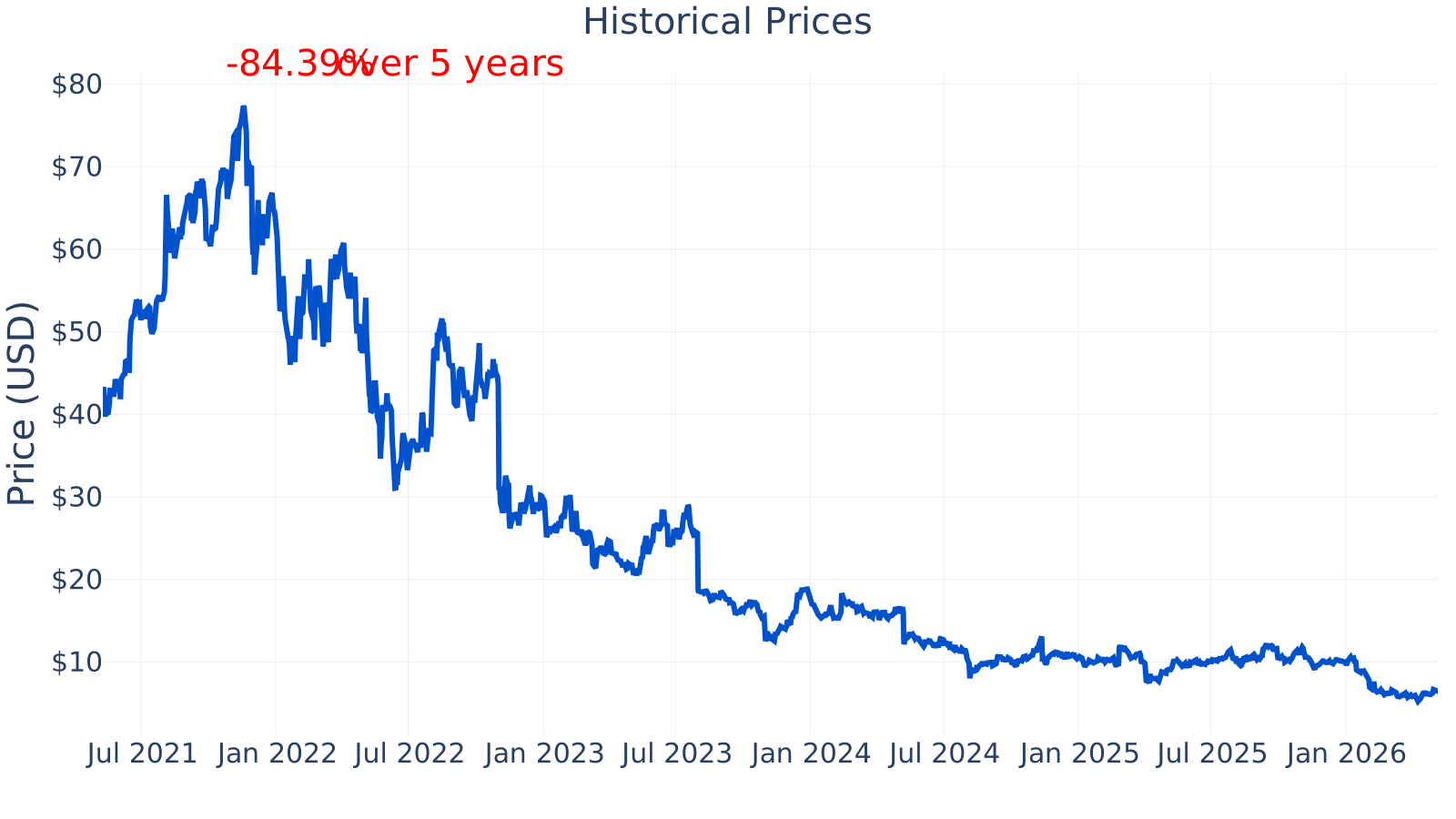
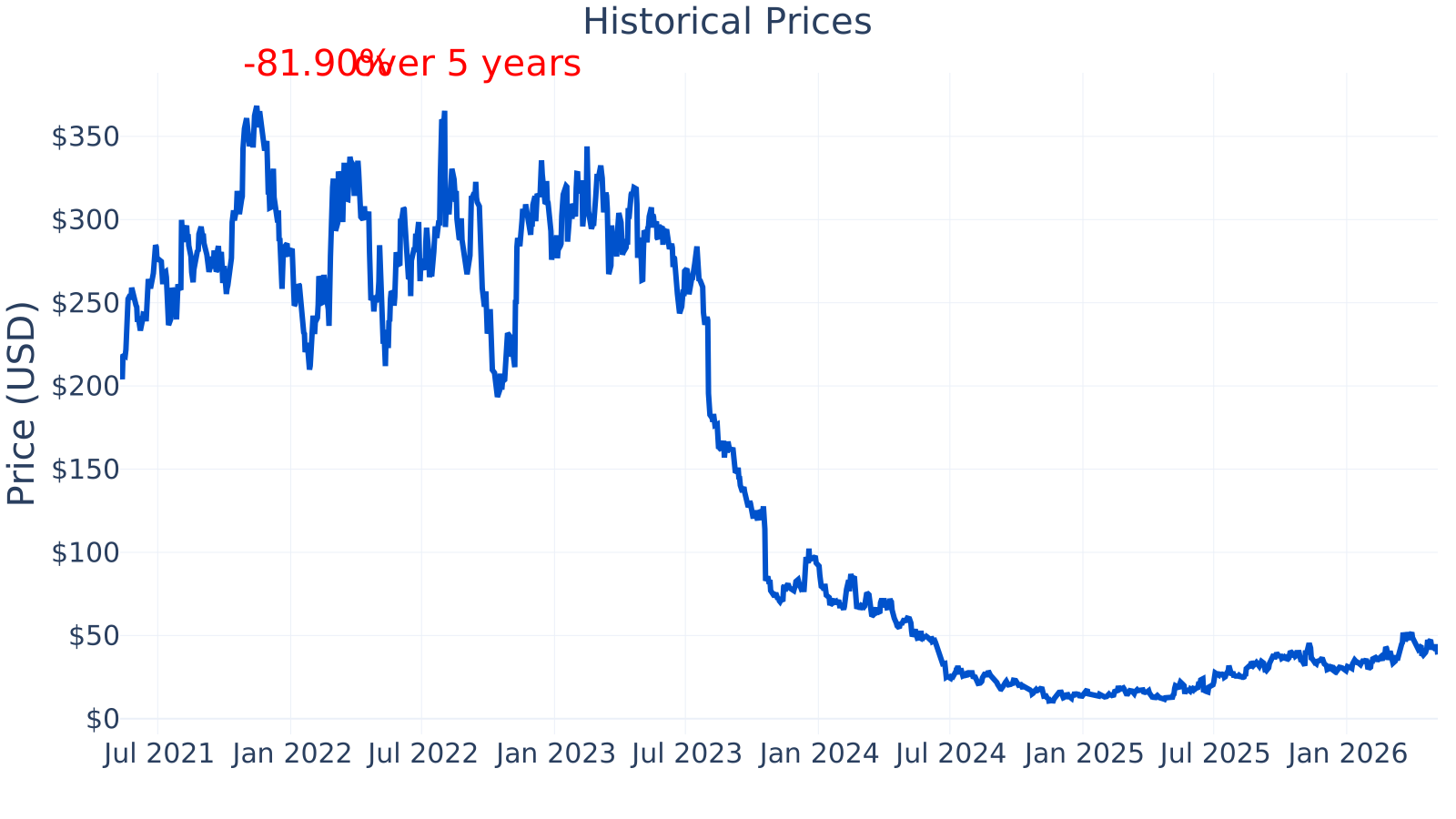
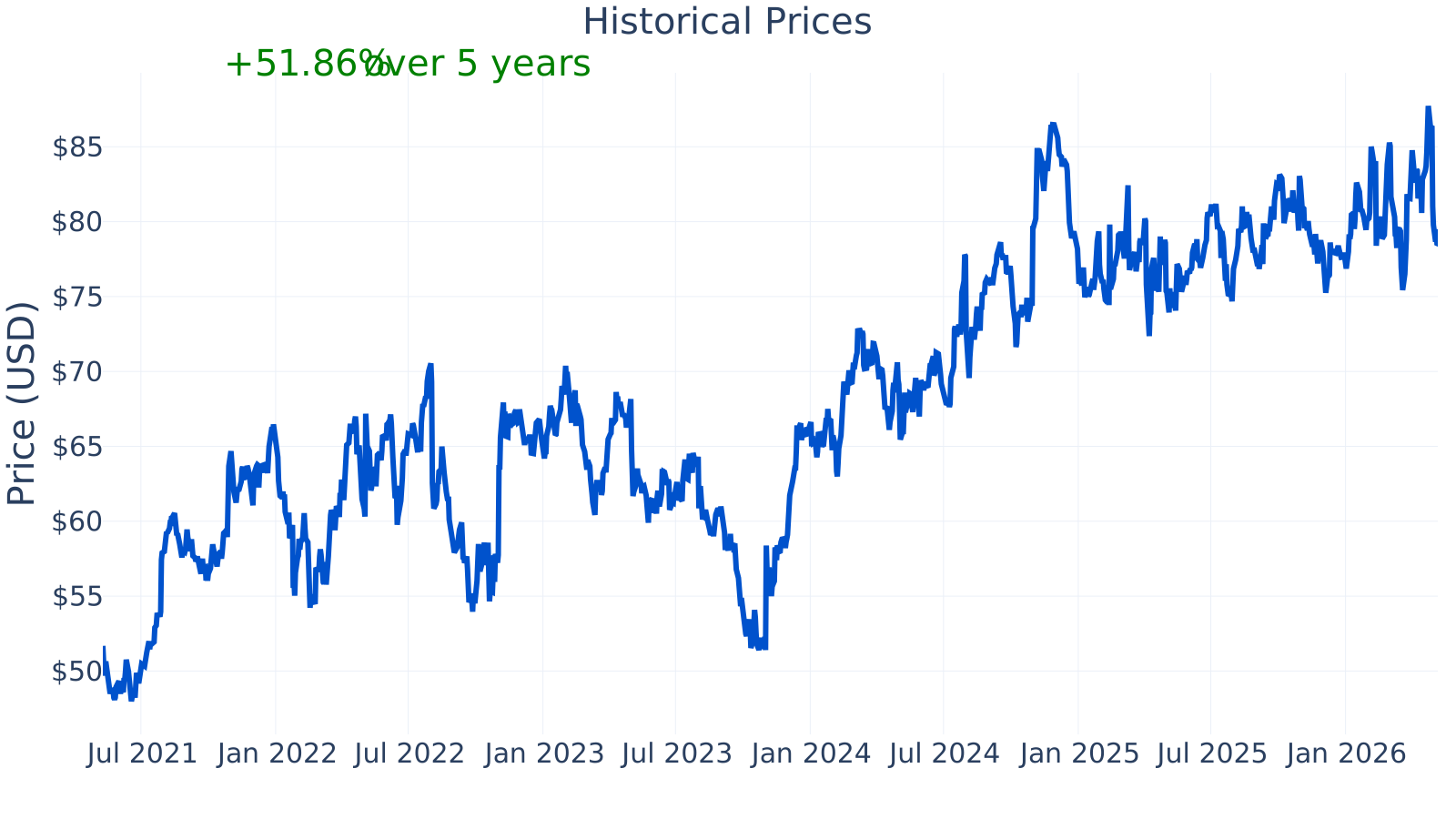
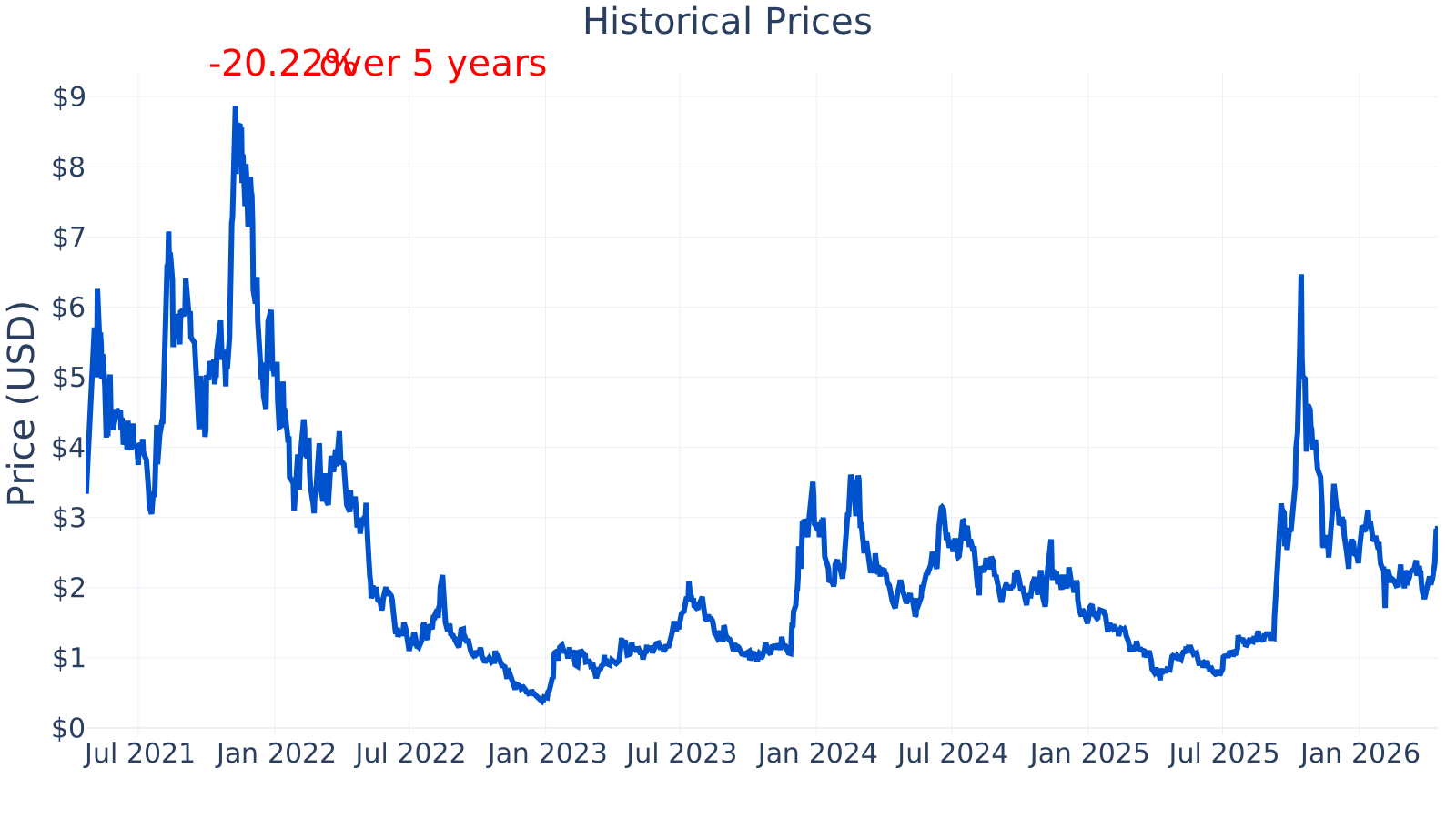
Bitfarms’ latest market capitalization is about $1.74B. The stock’s beta of 3.72 indicates the share price has historically moved much more than the overall market, which is consistent with a business that is closely tied to crypto-asset price cycles.
Profitability and cash generation remain central issues in the current snapshot. The profit margin is -124.11% versus an industry median near 5.35%, and trailing twelve-month free cash flow is about -$326.9M. At the same time, recent year-over-year revenue growth is 39.7%, well above the industry median near 7%, highlighting that the company can grow top-line results even while bottom-line results remain under pressure.
Growth (High)
Bitfarms operates in an industry linked to Bitcoin network activity and digital asset adoption, but it is not a typical “software-style” growth market where demand steadily compounds. Growth tends to be cyclical: mining economics can improve quickly when Bitcoin prices rise or when the company adds efficient capacity, and can deteriorate quickly when Bitcoin prices fall, network difficulty rises, or energy costs increase.
Strategically, future growth for a miner usually depends on scaling and upgrading computing capacity while controlling energy costs and maintaining high uptime. Because mining rewards are earned in a competitive global network, improvements in fleet efficiency and access to reliable, low-cost power are often the practical levers for sustaining operations through different market environments.
Revenue growth has been volatile. After very strong growth in 2021, growth turned negative across several quarters in 2022 and parts of 2023, then rebounded sharply in late 2023 through much of 2024 and 2025, before turning negative again by the end of 2025 (about -72.6% year over year in that quarter). This pattern is consistent with a business whose reported revenue can shift substantially with Bitcoin pricing, production levels, and the timing of capacity changes.
Free cash flow has remained negative across the periods shown (for example, about -$57.8M in 2023 and about -$487.2M in 2025). For long-term business durability, sustained negative free cash flow typically means the company needs some combination of cash on hand, financing, or asset sales to fund operations and expansion.
Common catalysts in this industry include major changes in Bitcoin price, changes to the network’s reward structure, large increases in installed capacity, and improvements in energy strategy (such as adding lower-cost power arrangements). Because these factors can shift quickly, growth outcomes can differ significantly from one year to the next.
Risks (Very High)
Bitfarms’ risk profile is closely tied to the economics of Bitcoin mining. The most important risk is that Bitcoin price declines or network difficulty increases can compress margins quickly, especially if energy costs are not low enough to keep production profitable. In addition, mining is capital-intensive: maintaining competitiveness often requires ongoing investment in newer, more efficient machines and supporting infrastructure.
Leverage has changed materially over time. Debt-to-equity was quite low through much of 2023–2025, but the latest reading shown is about 122%, which is above the industry median near 53%. A higher leverage level can increase financial sensitivity when operating conditions weaken (for example, if cash flow remains negative while funding needs continue).
Margins have been highly unstable and mostly negative since mid-2022. The latest profit margin shown is about -124%, while the industry median is modestly positive. For a miner, negative margins can reflect a combination of unfavorable mining economics, cost structure issues, and accounting impacts (for example, when asset values or digital assets are remeasured under applicable accounting rules). Regardless of the drivers, persistently negative margins reduce the room the company has to self-fund growth.
Competitive positioning in Bitcoin mining is challenging because the “product” (hashing work that earns network rewards) is largely commoditized. Competitive advantages typically come from:
- Power cost and reliability (access to consistently low-cost electricity and resilient infrastructure)
- Scale and operational execution (high uptime, disciplined deployment of new capacity)
- Capital access (ability to finance equipment and facilities through down-cycles)
Bitfarms competes with other publicly listed Bitcoin miners and private operators globally. In general, many large peers focus on the same levers—power strategy, scale, and machine efficiency—so differentiation can be limited. Leadership is often measured by metrics such as installed capacity, cost per coin mined, balance sheet strength, and execution pace; these rankings can shift as companies add capacity or restructure.
Other meaningful risks include regulatory and policy changes affecting digital assets and energy usage, counterparty and infrastructure risks (facility interruptions, equipment delivery delays), and dilution risk if the company raises equity capital to fund operations or expansion during weak market conditions.
Valuation
For Bitfarms, the price-to-earnings (P/E) ratio is not consistently informative across time because earnings have often been negative (which typically results in an undefined or non-meaningful P/E). The P/E chart reflects that the company’s P/E is frequently not shown, while the broader industry median P/E has generally been in the mid-20s range in the periods displayed.
In practice, valuation discussion for a Bitcoin miner often centers more on balance sheet strength, liquidity, cash burn versus funding capacity, and sensitivity to Bitcoin price and network conditions. With a current snapshot that includes negative profit margin and negative free cash flow, traditional earnings-based comparisons to industry medians can be difficult to interpret. At the same time, the company’s revenue growth has recently been above the industry median, which can support higher expectations for scale—but only if costs and cash generation improve over time.
Conclusion
Bitfarms is primarily a Bitcoin mining operator, meaning business results are strongly linked to Bitcoin price cycles, mining difficulty, and electricity and infrastructure costs. Revenue has increased from 2021 to 2025, but profitability has been inconsistent, with negative net income in multiple recent years and negative free cash flow in the periods shown.
From a long-term perspective, the main issues to track are whether the company can convert growth into durable cash generation, how it manages power and operating costs, and whether the balance sheet remains resilient if industry conditions weaken. The stock’s high historical volatility and the recent increase in leverage underscore that outcomes can vary widely across different market environments.
Sources:
- U.S. SEC EDGAR Database — Bitfarms Ltd filings (annual reports and quarterly reports)
- Bitfarms Ltd Investor Relations — Company press releases and presentations (business description and operational updates)
- Wikipedia — “Bitfarms” (basic company background)
This article is for informational purposes only and does not constitute financial advice. Some content is AI-generated. See Disclaimer