Stock Analysis · KB Home (KBH)
Overview
KB Home (KBH) is a U.S. homebuilder. In simple terms, it buys and develops land, designs and builds homes, and sells them to homebuyers. The company focuses heavily on “built-to-order” homes, where buyers select floor plans and personalize options, rather than selling only pre-built inventory. KB Home also arranges mortgage services for many buyers through a joint venture, which can help transactions close more smoothly.
Revenue mainly comes from delivering completed homes to customers. Based on typical reporting in KB Home’s annual filings, the business is primarily driven by homebuilding operations, with a smaller contribution from financial services.
Main revenue sources generally include:
- Home sales (homebuilding revenues) — the large majority of total revenue (the core business)
- Financial services — mortgage-related services (a smaller portion of revenue)
Homebuilders are cyclical companies: results can look very strong when housing demand is healthy and financing is available, and can weaken quickly when mortgage rates rise or buyers pull back. That context is important when evaluating KB Home for long-term ownership.
Across the years shown, revenue and profitability do not move in a straight line: revenue rose from about $5.7B (2021) to about $6.9B (2024) and then eased to about $6.2B (2025), while net income peaked in 2022 and declined by 2025. This pattern is consistent with a housing cycle where demand, pricing, and incentives change meaningfully over time.
Key Figures
| Metric | Value | Industry ⓘ |
|---|---|---|
| Date | Feb 08, 2026 | |
| Context | ||
| Sector | Consumer Cyclical | |
| Industry | Residential Construction | |
| Market Cap ⓘ | $3.95B | |
| Beta ⓘ | 1.49 | |
| Fundamental | ||
| P/E Ratio ⓘ | 9.91 | 12.00 |
| Profit Margin ⓘ | 6.88% | 8.48% |
| Revenue Growth ⓘ | -15.30% | -4.90% |
| Debt to Equity ⓘ | 44.42% | 34.53% |
| PEG ⓘ | 0.63 | |
| Free Cash Flow ⓘ | $290.25M | |
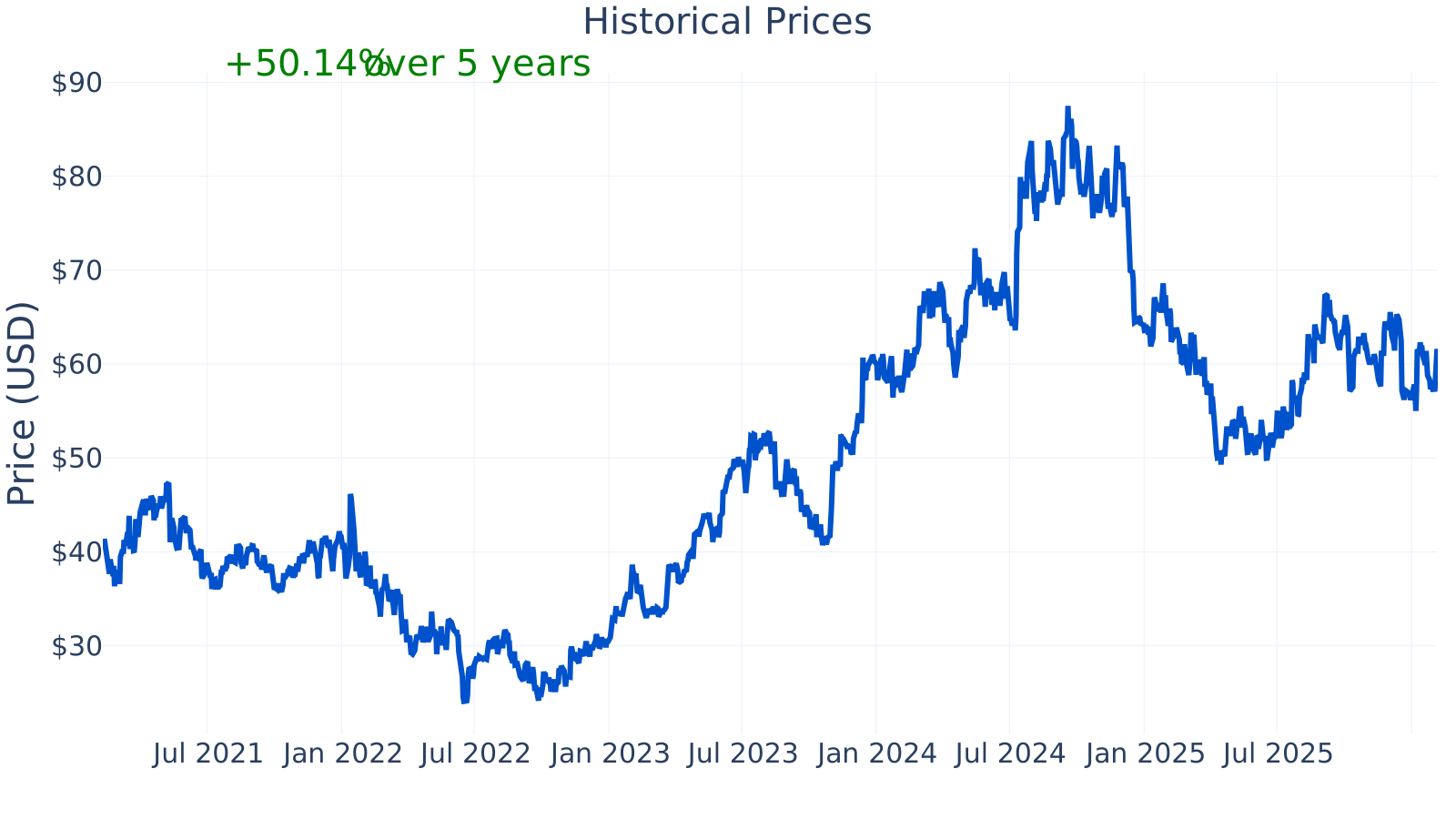
At a market capitalization of about $3.95B, KB Home is a mid-sized publicly traded homebuilder. The stock’s beta of ~1.49 suggests it has tended to move more than the broader market (higher volatility). The latest P/E ratio is ~9.9, below the industry median (~12.0), while the profit margin is ~6.9%, below the industry median (~8.5%). Recent year-over-year revenue growth is about -15.3% (industry median about -4.9%), and debt-to-equity is ~44% versus an industry median around 35%. Trailing twelve-month free cash flow is about $290M, showing the business can generate cash, although this metric can swing significantly for homebuilders depending on land spending and inventory changes.
Growth (Medium)
Residential construction is a large, long-lived industry tied to population growth, household formation, job trends, and the supply of homes. Over long periods, U.S. housing demand tends to persist, but the path is uneven because affordability (especially mortgage rates) can change quickly. That makes the industry structurally important, but economically sensitive.
KB Home’s strategy centers on serving first-time and first move-up buyers in many markets, emphasizing personalization and managing communities and land positions to match expected demand. In homebuilding, long-term growth often comes from (1) maintaining a replenished lot pipeline, (2) operating efficiently through cycles, and (3) staying aligned with what buyers can afford in each market.
The year-over-year revenue growth pattern shows a shift from very strong growth in 2021–2022 to mixed/negative growth in later periods, including a recent decline (about -15%). For a homebuilder, this can reflect fewer deliveries, lower order volume, more buyer incentives, or deliberate pacing of sales to manage margins and backlog.
Free cash flow has been volatile, moving from positive (2021) to negative (2022), then strongly positive (2023–2024), and slightly negative around early 2025 before returning to a positive level on a trailing basis in the latest table. This is common in homebuilding because cash is heavily influenced by land acquisition/development spending and changes in construction inventory.
Potential catalysts (in a neutral, factual sense) for future improvement typically include: easing mortgage-rate pressure (improving affordability), a stronger spring selling season, better construction costs, and more favorable pricing/incentive dynamics. However, these factors are not controlled by the company and can reverse quickly.
Risks (High)
This article is for informational purposes only and does not constitute financial advice. Some content is AI-generated. See Disclaimer