Stock Analysis · KLA-Tencor Corporation (KLAC)
Overview
KLA-Tencor Corporation (KLA, ticker: KLAC) builds tools used to measure, inspect, and analyze semiconductor wafers during chip manufacturing. In simple terms, KLA’s systems help chipmakers and semiconductor foundries find tiny defects, keep production steps within tight tolerances, and improve how many usable chips come out of each wafer. This type of equipment is often described as “process control,” and it becomes more important as chips get smaller and factories become more complex.
KLA sells a mix of equipment (the inspection/metrology tools) and services (spare parts, upgrades, and support). Revenue exposure is therefore tied both to the chip industry’s capital spending cycle (new tools) and to the installed base of tools already operating in customer factories (service over time).
Based on how the company reports its business in SEC filings, the main revenue sources are typically grouped as:
- Systems (equipment): inspection, metrology, and related tools sold to semiconductor manufacturers (largest portion).
- Services: support contracts, spare parts, and upgrades tied to the installed base (smaller than Systems, but generally steadier across cycles).
The company operates within the Semiconductor Equipment & Materials industry, where demand is ultimately driven by global chip production needs (consumer electronics, data centers, industrial, automotive, and AI-related infrastructure).
Over the period shown, total revenue and net income move meaningfully over time, with operating expenses (including R&D) rising as the business scales. Research and development remains a sizable recurring cost, consistent with competing in a market where tools must keep pace with fast-moving manufacturing requirements.
Key Figures
| Metric | Value | Industry ⓘ |
|---|---|---|
| Date | Feb 07, 2026 | |
| Context | ||
| Sector | Technology | |
| Industry | Semiconductor Equipment & Materials | |
| Market Cap ⓘ | $189.59B | |
| Beta ⓘ | 1.46 | |
| Fundamental | ||
| P/E Ratio ⓘ | 42.02 | 47.44 |
| Profit Margin ⓘ | 35.76% | 9.40% |
| Revenue Growth ⓘ | 7.20% | 9.90% |
| Debt to Equity ⓘ | 114.93% | 20.73% |
| PEG ⓘ | 2.09 | |
| Free Cash Flow ⓘ | $4.38B | |
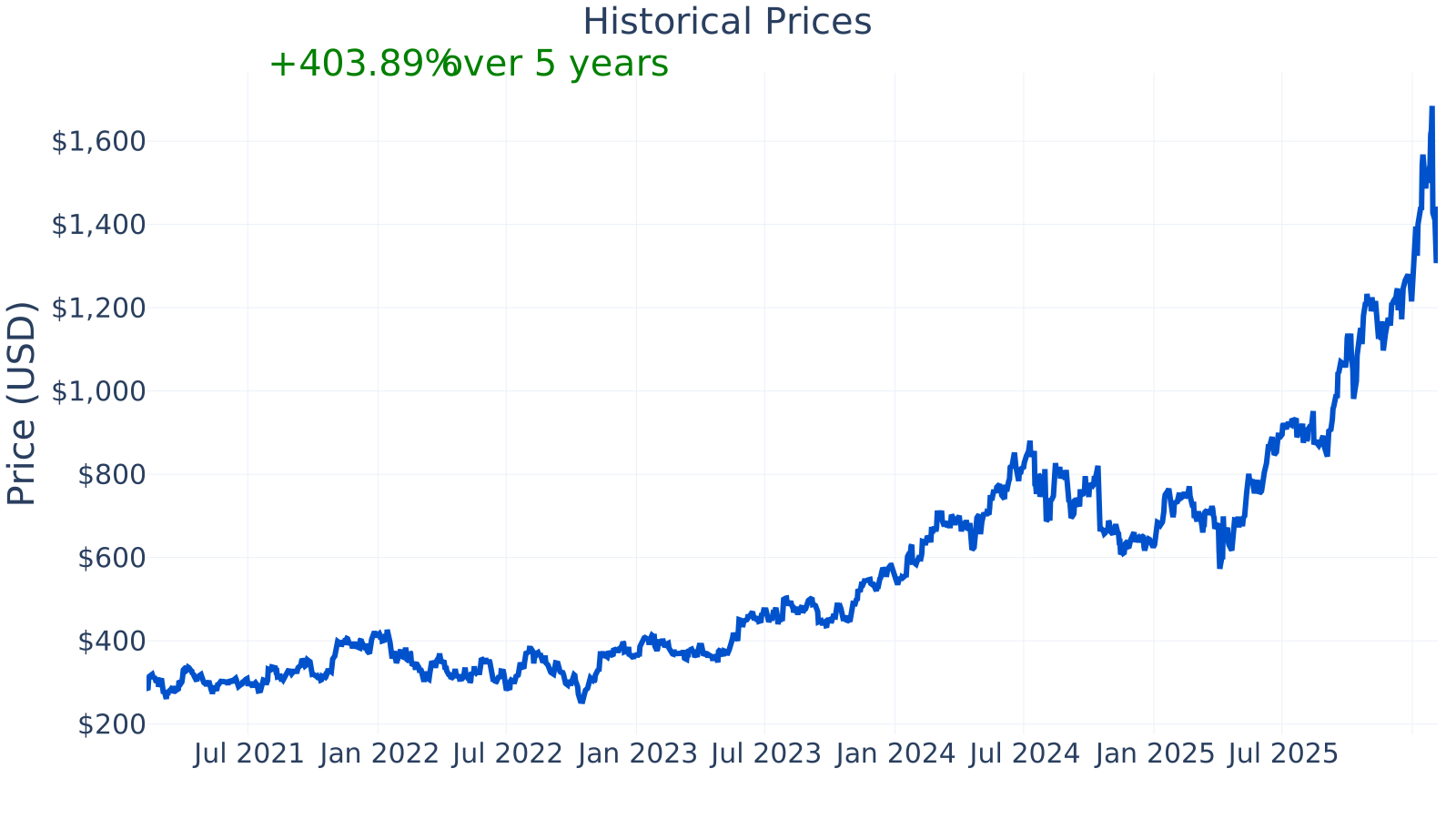
KLA’s market capitalization is about $189.6B, and the stock’s beta (~1.46) indicates it has historically tended to move more than the broader market. The company’s P/E ratio is ~42.0, below the industry median (~47.4) in the same classification set. Profitability stands out: profit margin ~35.8% versus an industry median near 9.4%. Recent year-over-year revenue growth is ~7.2%, below the industry median (~9.9%). Leverage is higher than typical for peers, with debt-to-equity ~115% versus an industry median near 21%. Trailing twelve-month free cash flow is approximately $4.38B.
Growth (medium)
The long-term backdrop for KLA is tied to a growing need for semiconductors and to the increasing complexity of manufacturing advanced chips. As chipmakers push toward smaller features and more advanced packaging approaches, the cost of mistakes rises—making inspection and measurement increasingly central to factory productivity and yield. That structural trend generally supports ongoing demand for process control tools.
However, the semiconductor equipment industry is also cyclical. Chipmakers and foundries tend to ramp spending aggressively during expansions and pause or slow orders during downturns. KLA’s growth profile is therefore shaped by both secular drivers (more complexity, more measurement steps) and cyclical capex swings (timing of large tool purchases).
The year-over-year revenue growth pattern shows strong growth earlier in the period, followed by a contraction phase, and then a return to positive growth. This “surge–slowdown–rebound” shape is consistent with a cycle where customers periodically expand capacity and then digest prior investments.
Free cash flow over the trailing twelve months varies significantly across the timeline shown, including a notable dip and then a recovery to multi‑billion‑dollar levels. For a long-term business assessment, this metric matters because it reflects how much cash remains after operating needs and capital spending—cash that can be used for balance-sheet flexibility, shareholder returns, or reinvestment.
Potential catalysts commonly associated with KLA’s end markets include major technology transitions in manufacturing (which can require new measurement approaches), expansion of advanced-node capacity, and factory upgrades that increase the number of inspection/metrology steps per wafer. The durability of services revenue (supporting an installed base) can also help stabilize results relative to a pure “tool-only” model.
Risks (high)
This article is for informational purposes only and does not constitute financial advice. Some content is AI-generated. See Disclaimer