Stock Analysis · OPENLANE Inc (OPLN)
Overview
OPENLANE Inc (OPLN) operates digital and services-driven marketplaces that help businesses buy and sell used vehicles more efficiently. In simple terms, it connects sellers (such as commercial fleet owners, rental car companies, and other upstream sources of used vehicles) with buyers (primarily dealers) and provides services that make transactions easier—such as inspections, transportation/logistics, and other remarketing support. The goal is to reduce friction in wholesale used-vehicle transactions by combining an online marketplace with supporting services.
Its revenue model is typically tied to transaction activity (fees connected to vehicles sold through its marketplaces) and service revenue related to moving, processing, or otherwise supporting those transactions. Exact revenue mix percentages can vary by period and should be confirmed in the company’s most recent Form 10-K/10-Q, but the main revenue drivers generally fall into these buckets:
- Marketplace/transaction-related fees (fees charged when vehicles are sold through the platform)
- Service revenue (logistics/transport, inspection and condition reporting, and other value-added services)
Over time, the company’s financial profile reflects both the volume of vehicles moving through the ecosystem and the “attach rate” of services (how often customers use paid add-ons like transport or inspections), which can influence profitability.
Looking across recent years, total revenue increased from about $1.45B (2021) to about $1.93B (2025). Gross profit dollars also expanded over the period, while net income was more volatile—most notably turning negative in 2023 before returning to positive territory in 2024 and 2025. This kind of swing can happen when transaction volumes, pricing, and operating costs (including interest expense) shift meaningfully year to year.
Key Figures
| Metric | Value | Industry ⓘ |
|---|---|---|
| Date | Feb 23, 2026 | |
| Context | ||
| Sector | Consumer Cyclical | |
| Industry | Auto & Truck Dealerships | |
| Market Cap ⓘ | $3.01B | |
| Beta ⓘ | 1.28 | |
| Fundamental | ||
| P/E Ratio ⓘ | 32.53 | 19.15 |
| Profit Margin ⓘ | 9.00% | 2.54% |
| Revenue Growth ⓘ | 8.40% | 3.90% |
| Debt to Equity ⓘ | 92.58% | 157.49% |
| PEG ⓘ | 1.34 | |
| Free Cash Flow ⓘ | $336.50M | |
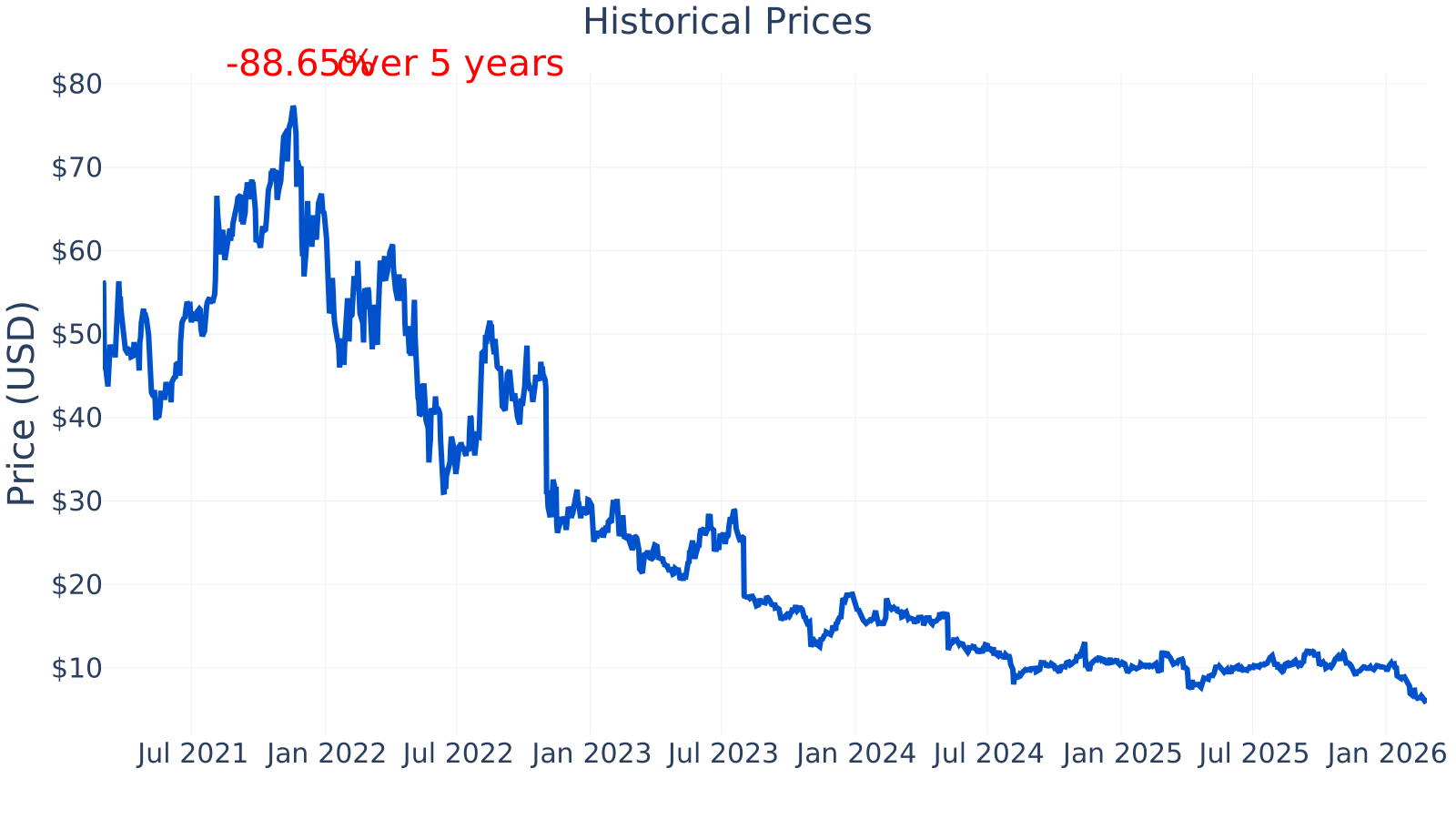
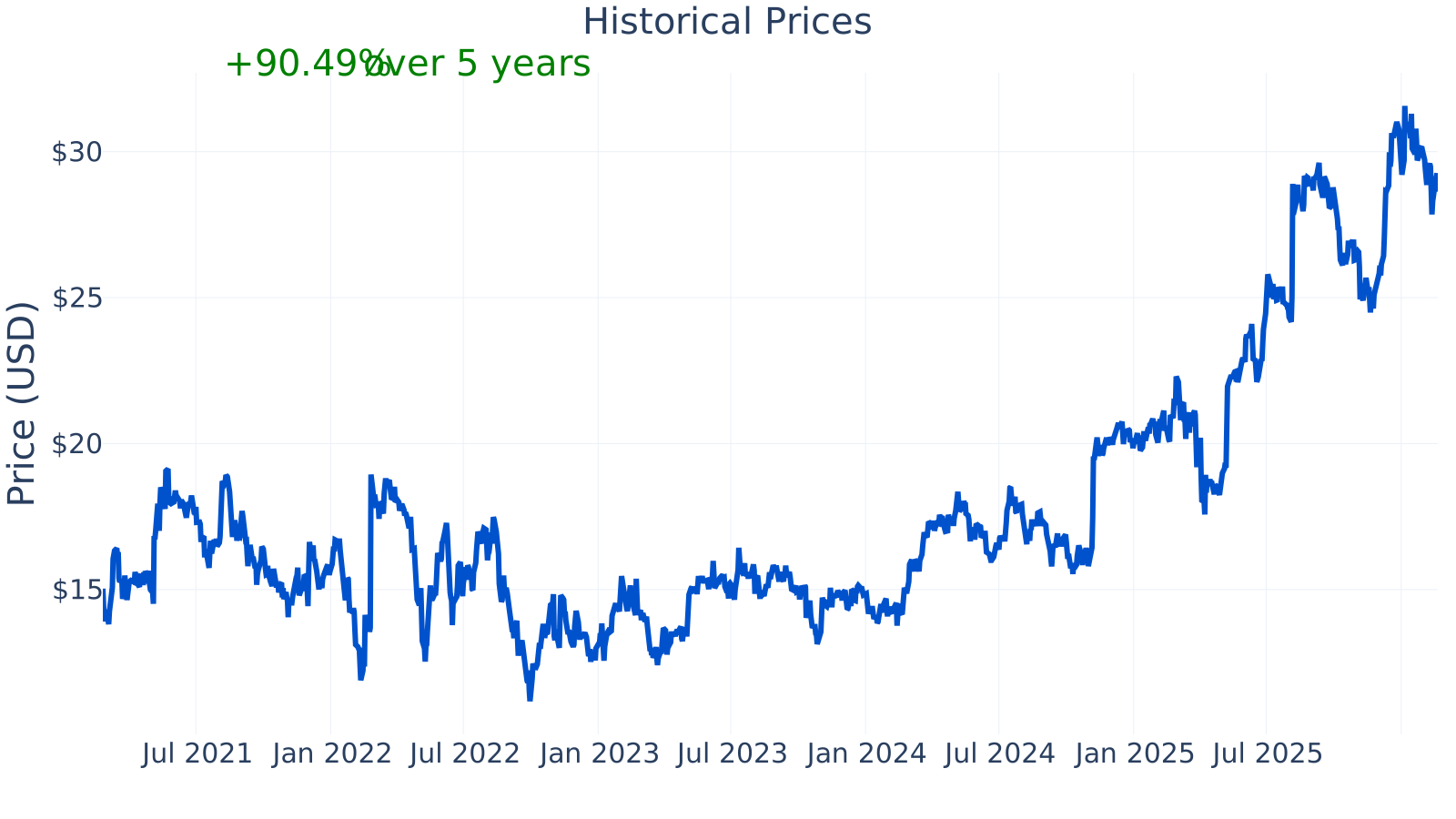
OPENLANE’s market capitalization is about $3.0B, and the stock’s beta (~1.28) suggests it has historically moved more than the overall market. On profitability, the latest profit margin is ~9.0%, which is notably above the industry median (~2.54%) in its peer set. Growth is positive as well: latest year-over-year revenue growth is ~8.4% versus an industry median of ~3.9%. Leverage (debt relative to equity) is around 92.6%, which is below the industry median (~157.5%). The company also reports ~$336.5M in trailing twelve-month free cash flow, indicating the business has recently been generating cash after operating needs and capital spending. Valuation metrics show a P/E of ~32.5 and a PEG ratio of ~1.34, implying the market price embeds expectations for continued earnings growth.
Growth (Medium)
OPENLANE is exposed to the large and ongoing used-vehicle wholesale market, where efficiency, speed, and data-driven decision-making matter. Digital marketplaces can benefit from scale: more buyers can attract more sellers (and vice versa), and a broader network can improve liquidity (the ability to transact quickly at competitive prices). The “services around the transaction” can add another growth lever, because services can expand revenue per vehicle even if unit volumes are not rising rapidly.
Revenue growth has been uneven quarter to quarter, with periods of contraction and acceleration. More recently, the pattern shows mostly positive year-over-year growth rates, including stronger growth in late 2024, followed by more moderate growth readings in 2025. This points to a business that can grow, but one that still appears sensitive to market cycles in used vehicles and wholesale activity levels.
Free cash flow has also fluctuated meaningfully—strong in 2021, down in 2022, negative in 2023, and then improving again through 2024 and 2025 (reaching roughly $261M by the 12 months ending 2025-03-31, and $336.5M in the latest metrics). For long-term business durability, sustained positive free cash flow can matter because it can support reinvestment, debt management, and operational flexibility during weaker industry periods.
Potential catalysts for future growth (described at a high level) often include: increasing adoption of online wholesale channels, expanding ancillary services per transaction, deeper integration with commercial sellers, and operational improvements that lift margins. Whether these translate into steady results depends on execution and the broader vehicle supply/demand environment.
Risks (High)
This article is for informational purposes only and does not constitute financial advice. Some content is AI-generated. See Disclaimer