Stock Analysis · Jumia Technologies AG (JMIA)
Overview
Jumia Technologies AG operates an e-commerce platform focused on several African markets. Through its marketplace model, it connects consumers with sellers and brands, and it also provides supporting services such as logistics (delivery and fulfillment support) and digital payments (JumiaPay). In simple terms, it aims to be a “shopping mall + delivery network + checkout” adapted to local conditions where delivery addresses, payment preferences, and logistics can be more complex than in more mature e-commerce regions.
In its SEC filings, Jumia typically describes revenue in a few main buckets tied to marketplace activity and services around it. The exact mix can shift over time as the company changes incentives, marketing intensity, and the level of direct first-party sales versus third-party marketplace activity.
Main revenue sources commonly referenced in company filings include:
- Marketplace revenue (commissions and fees charged to sellers for transactions on the platform)
- Logistics revenue (fulfillment, shipping, and delivery-related services, including services provided to third parties where applicable)
- Other revenue streams (which may include advertising and additional platform services, depending on the period)
Because revenue-category percentages vary by reporting period and are not provided here as a complete breakdown, this section focuses on the business model rather than fixed percentages. The key practical point for long-term readers is that Jumia’s model depends on building enough scale (buyers, sellers, orders) so that transaction-related income can cover the fixed costs of running the platform, customer support, technology, and delivery operations.
Across 2021–2024, total revenue stayed in a similar range (about $167–203 million), while operating losses narrowed meaningfully. Operating expenses declined from about $323 million (2021) to about $166 million (2024), and net loss improved from about -$227 million (2021) to about -$99 million (2024). This points to a strategy centered on cost reduction and efficiency rather than rapid top-line expansion over that period.
Key Figures
| Metric | Value | Industry ⓘ |
|---|---|---|
| Date | Feb 08, 2026 | |
| Context | ||
| Sector | Consumer Cyclical | |
| Industry | Internet Retail | |
| Market Cap ⓘ | $1.23B | |
| Beta ⓘ | 2.30 | |
| Fundamental | ||
| P/E Ratio ⓘ | N/A | 34.01 |
| Profit Margin ⓘ | -42.52% | 6.32% |
| Revenue Growth ⓘ | 25.10% | 11.35% |
| Debt to Equity ⓘ | 35.31% | 34.80% |
| PEG ⓘ | N/A | |
| Free Cash Flow ⓘ | -$77.59M | |
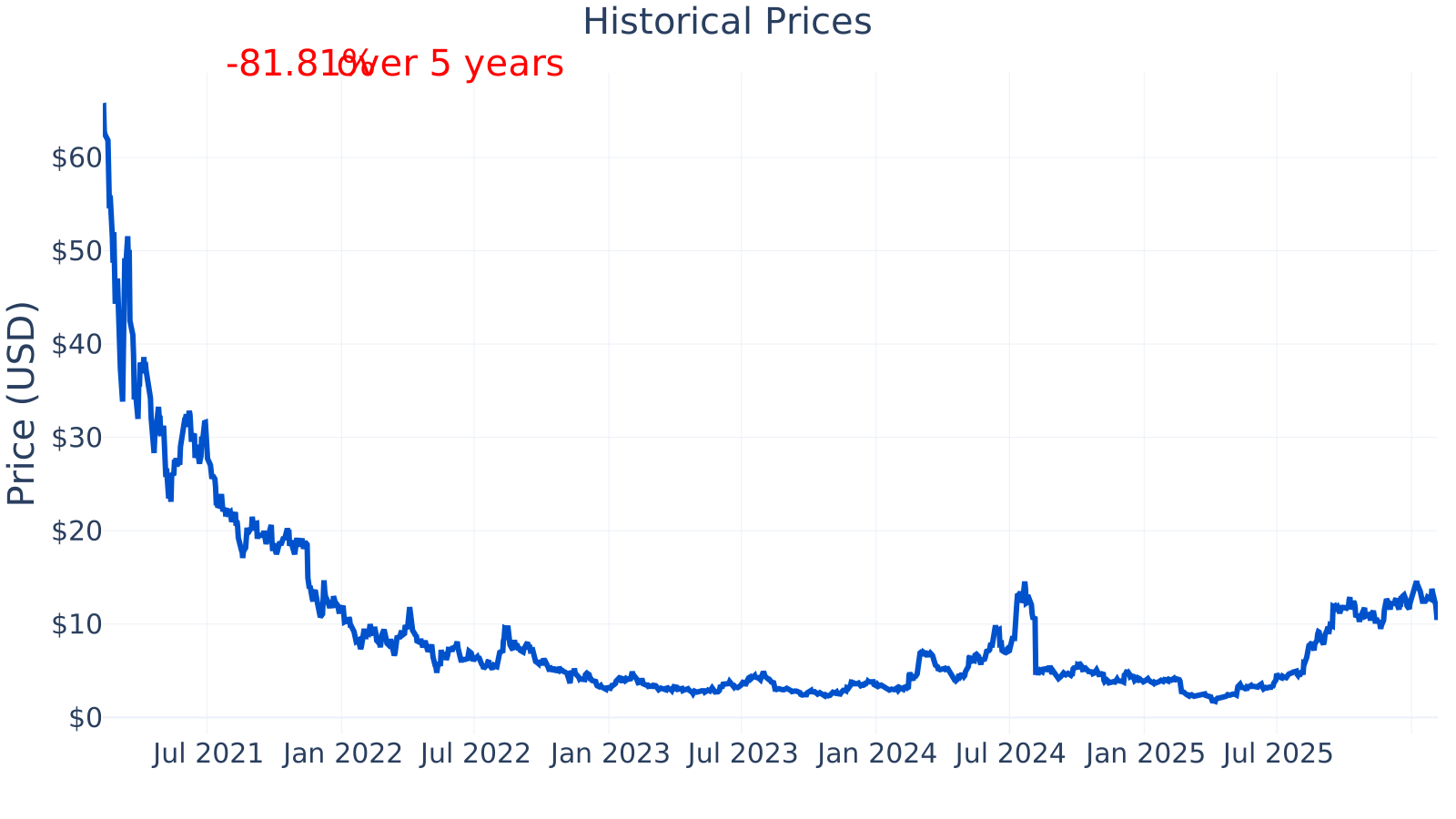
Jumia’s market capitalization is about $1.23 billion. The stock’s beta of ~2.30 indicates it has historically been much more volatile than the broader market. Profitability remains a major gap: the latest profit margin shown is about -42.5% versus an industry median around 6.3%. Growth has been uneven, but the latest year-over-year revenue growth shown is about 25.1% (industry median about 11.3%). Leverage (debt-to-equity) is about 35.3%, close to the industry median (~34.8%). Free cash flow over the trailing twelve months is about -$77.6 million, meaning the business is still consuming cash overall.
Growth (Medium)
Jumia operates in online retail and related services, an industry supported by long-term trends such as increasing smartphone penetration, improving internet access, and rising comfort with digital payments. In many African markets, e-commerce can still be early-stage compared with the U.S. or parts of Europe, which creates potential room for growth over time. However, the “growth runway” depends not only on consumer demand but also on practical execution: delivery reliability, payment options, returns handling, customer trust, and seller quality.
The company’s strategy has emphasized improving unit economics (reducing losses per order, lowering overhead, focusing on more efficient marketing, and tightening cost controls). The income statement trend shown earlier (lower operating expenses and smaller net losses from 2021 to 2024) is consistent with that approach. For long-term outcomes, the central question becomes whether the platform can return to steadier revenue expansion while keeping costs controlled.
Revenue growth has been volatile over the last several years, including periods of contraction followed by rebounds. The most recent points show a return to positive year-over-year growth (around 25% in mid-to-late 2025), but prior quarters include meaningful declines. This pattern suggests that reported growth may be sensitive to changes in strategy (for example, pulling back on promotions or exiting lower-quality volume) and to macro conditions in the countries where Jumia operates.
Free cash flow has improved substantially versus earlier periods (from roughly -$219 million at one point in 2022 to roughly -$50 million in 2024), though it remains negative more recently (about -$87 million in early 2025 and -$77.6 million trailing twelve months in the latest metrics). A durable shift toward positive free cash flow would generally require sustained gross profit generation and continued discipline on operating costs, working capital, and capital spending.
Risks (High)
This article is for informational purposes only and does not constitute financial advice. Some content is AI-generated. See Disclaimer