Stock Analysis · Jamf Holding (JAMF)
Overview
Jamf Holding (JAMF) is a software company focused on managing and securing Apple devices (Mac, iPhone, iPad, Apple TV) in organizations. In simple terms, its tools help IT teams set up devices, keep them updated, enforce security rules, and support employees—especially in workplaces where Apple devices are common.
The business model is primarily recurring: customers typically pay subscription fees to use Jamf’s software over time. This kind of model can create predictable revenue when customer retention is strong, but it also depends on continued renewals and new customer additions.
In its SEC filings, Jamf describes its revenue as mainly coming from subscriptions, with a smaller portion from services. A commonly described breakdown is:
- Subscription revenue (the large majority): ongoing access to Jamf’s software products and cloud services.
- Services revenue (smaller portion): implementation, training, and related professional services.
Operationally, recent years show that Jamf has been growing revenue while working to narrow losses, with meaningful spending on research & development and sales/marketing to support product development and customer acquisition.
Across 2021 to 2024, total revenue increased (about $366M to about $627M), and gross profit also increased (about $276M to about $486M). At the same time, operating expenses remained substantial, which helps explain why operating income and net income were still negative in 2024 even after improvement versus 2022–2023.
Key Figures
| Metric | Value | Industry ⓘ |
|---|---|---|
| Date | Feb 08, 2026 | |
| Context | ||
| Sector | Technology | |
| Industry | Software - Application | |
| Market Cap ⓘ | $1.75B | |
| Beta ⓘ | 0.52 | |
| Fundamental | ||
| P/E Ratio ⓘ | N/A | 27.79 |
| Profit Margin ⓘ | -5.98% | 6.02% |
| Revenue Growth ⓘ | 15.20% | 15.80% |
| Debt to Equity ⓘ | 97.78% | 25.15% |
| PEG ⓘ | N/A | |
| Free Cash Flow ⓘ | $108.00M | |
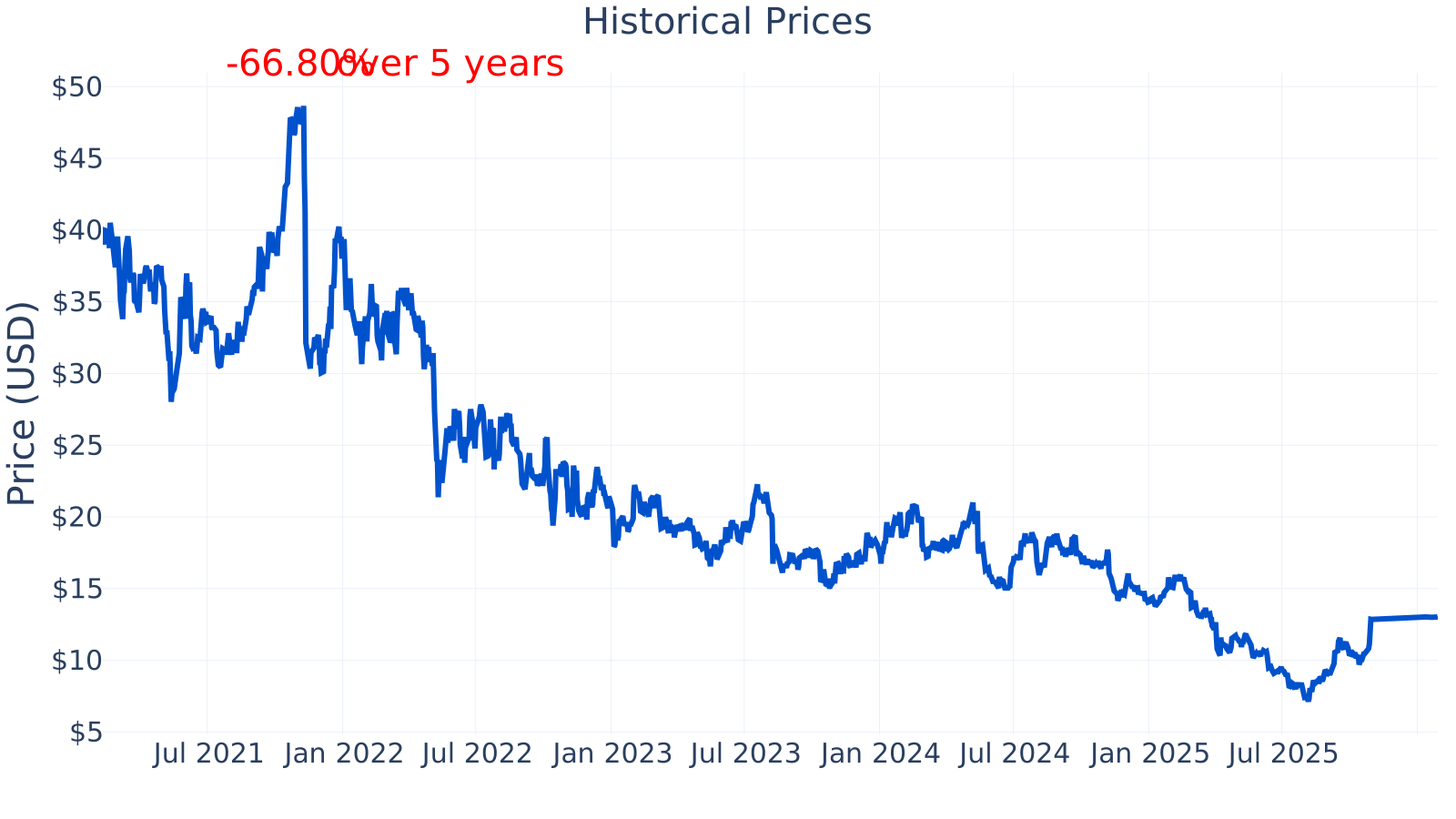
Jamf’s market capitalization is about $1.75B and the stock’s beta is ~0.52, which indicates historically lower volatility than the broader market. The latest profit margin is about -6.0% versus an industry median near +6.0%, meaning the company is still unprofitable on a net basis even though the gap has narrowed over time. Year-over-year revenue growth is about 15.2%, close to the industry median (~15.8%). Debt-to-equity is ~97.8%, which is notably higher than the industry median (~25.2%). Trailing twelve-month free cash flow is about $108.0M, showing the business has been generating cash despite reported net losses. A meaningful P/E ratio is not shown here because the company’s earnings have been negative, which often makes P/E not informative.
Growth (Medium)
Jamf operates in device management and endpoint security—areas supported by long-running trends such as mobile/remote work, higher security requirements, and the continued adoption of Apple devices in business, education, and healthcare. These trends can support steady demand because organizations must keep devices configured, compliant, and secure throughout their lifecycle.
Strategically, Jamf’s focus on Apple ecosystems is clear and consistent: it aims to be the specialized platform for organizations that standardize on Apple or run mixed environments with a meaningful Apple footprint. This specialization can make sense if Apple’s presence in the workplace remains durable and if Jamf continues to integrate security and management features tightly into Apple workflows.
The year-over-year revenue growth rate has cooled from the mid-30% range in 2021 to low-to-mid teens more recently (around 15% in the latest period shown). This pattern is common as companies scale, but it also means future progress relies more on execution (upsell/cross-sell, retention, and new customer wins) than on “easy” early-stage growth.
Free cash flow has been positive in the periods shown and is meaningful in the context of a software subscription model. Even though the time series shown includes lower levels around 2024–2025 compared with earlier points, the latest metric table shows about $108M of trailing twelve-month free cash flow, which highlights that cash generation and accounting profitability can diverge (for example, due to non-cash expenses).
Potential catalysts discussed in company materials typically revolve around continued Apple adoption in enterprises, expanding security capabilities alongside management, and increasing revenue per customer through broader product usage. The magnitude and timing of those drivers depend on competitive dynamics and IT spending conditions.
Risks (High)
This article is for informational purposes only and does not constitute financial advice. Some content is AI-generated. See Disclaimer


