Stock Analysis · Itron Inc (ITRI)
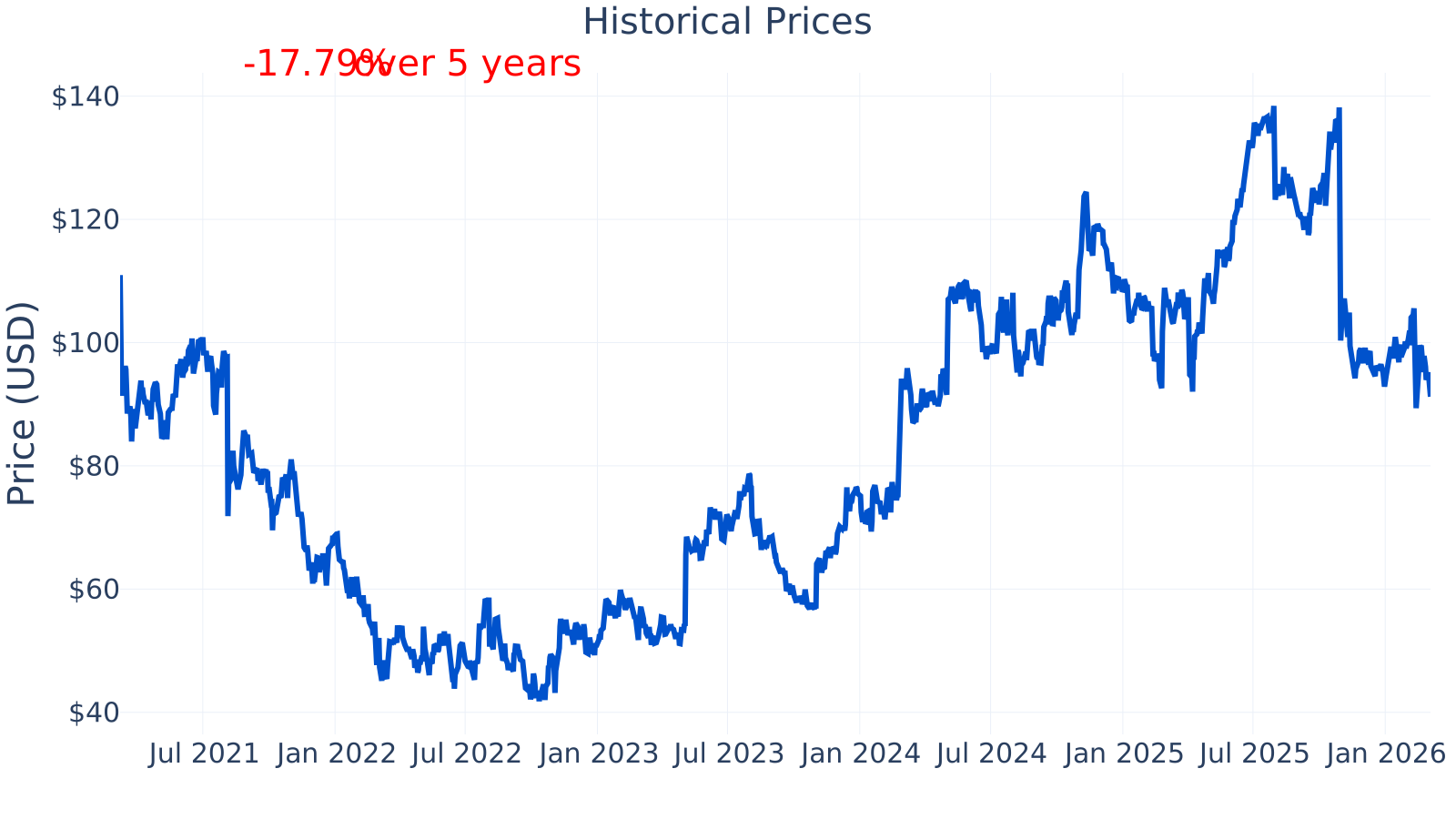
Overview
Itron Inc. (ITRI) is a technology company focused on how utilities and cities measure, manage, and optimize the delivery of energy and water. In practical terms, it provides “smart” meters, communications devices that connect those meters, and software/services that help customers collect data, monitor usage, and operate infrastructure more efficiently. Its customers are primarily electric, gas, and water utilities, along with other organizations involved in grid modernization and resource management.
Itron describes its business in three main segments that reflect how it generates revenue:
- Device Solutions: hardware such as electricity, gas, and water meters and related devices.
- Networked Solutions: communications networks and hardware that connect endpoints (for example, smart meters) and move data reliably.
- Outcomes: software, analytics, and services that help customers operate and maintain these systems over time.
Public filings explain the segment mix, but the exact percentage split can vary by period and contract timing. Over the long run, revenue tends to be influenced by large utility deployment cycles, multi-year modernization programs, and the pace at which customers replace or upgrade metering and communications technology.
Across the years shown, total revenue rises overall from about $2.0B (2021) to about $2.37B (2025), while profitability improves materially: net income moves from a loss (2021–2022) to meaningful profits (2023–2025). Operating expenses appear relatively stable compared with the revenue base, while gross profit expands, which is consistent with improved operating leverage as volumes and execution improve.
Key Figures
| Metric | Value | Industry ⓘ |
|---|---|---|
| Date | Mar 06, 2026 | |
| Context | ||
| Sector | Technology | |
| Industry | Scientific & Technical Instruments | |
| Market Cap ⓘ | $4.10B | |
| Beta ⓘ | 1.52 | |
| Fundamental | ||
| P/E Ratio ⓘ | 14.03 | 37.61 |
| Profit Margin ⓘ | 12.72% | 12.72% |
| Revenue Growth ⓘ | -6.70% | 7.60% |
| Debt to Equity ⓘ | 75.01% | 23.85% |
| PEG ⓘ | 0.81 | |
| Free Cash Flow ⓘ | $381.03M | |
Itron’s market capitalization is about $4.10B, and its beta of ~1.52 suggests the stock has historically moved more than the broader market (higher volatility). The latest P/E ratio is ~14.0, below the industry median shown (~37.6), while the profit margin is ~12.7%, roughly in line with the industry median in the table. Recent year-over-year revenue growth is -6.7% versus an industry median of +7.6%, indicating a recent slowdown. Leverage is higher than the industry median: debt-to-equity is ~75% versus ~24% for the median peer in the table. Free cash flow over the trailing twelve months is about $381M, and the PEG ratio (~0.81) is commonly interpreted as a price-to-earnings measure adjusted for growth expectations (though it depends heavily on how growth is estimated and can change quickly).
Growth (medium)
Itron operates in areas tied to long-term infrastructure needs: modernizing electric grids, replacing aging metering fleets, improving outage detection, reducing losses (including theft), and enabling more detailed measurement for water management. These needs can persist for many years because utilities often run multi-year capital plans and upgrade in phases rather than all at once. In addition, once utilities deploy advanced metering and communications, they often require ongoing software and services, which can support recurring revenue over time.
The year-over-year revenue pattern is uneven. After a period of declines (2021–2022), growth turned strongly positive through much of 2023 and 2024, then cooled substantially and turned slightly negative by late 2025 (about -6.7% most recently). For a company tied to project-based utility deployments, this kind of “lumpy” trajectory can happen when large programs ramp, then normalize. The key long-term question is whether deployments and software/services attach rates can produce steadier expansion across cycles.
Cash generation improved meaningfully after a weak period. Trailing free cash flow moves from roughly breakeven/negative around 2023 to positive and rising in 2024 and 2025 (about $381M most recently). For long-term business durability, consistent free cash flow can matter because it supports investment in product development, working capital needs for large deployments, and balance-sheet flexibility.
Potential catalysts described in filings and investor materials typically relate to: (1) utilities accelerating grid and metering upgrades, (2) increased adoption of connected devices and analytics, and (3) converting a larger installed base into software/services relationships. Because procurement decisions can be slow and regulated, growth may depend as much on contract wins and execution as on overall end-market demand.
Risks (medium-high)
Itron’s leverage has increased compared with earlier periods and sits above the industry median shown. The latest debt-to-equity is about 75%, while the peer median in the table is about 24%. Higher leverage can amplify results: it may help fund operations and investment, but it can also increase sensitivity to interest costs, covenant constraints, or downturns if margins compress or working capital needs rise.
Profitability improved sharply over time. The profit margin moves from negative levels in 2021–2022 to positive and rising through 2023–2025, reaching about 12.7% most recently (around the industry median in the table). While this demonstrates improved execution, it also highlights a risk: margins have not always been stable, and a return to cost pressures (components, manufacturing, project overruns, pricing, or mix changes) could affect earnings.
Competitive dynamics are an important consideration. Itron participates in smart metering and utility communications where customers demand high reliability, cybersecurity, long product lifecycles, and proven large-scale deployments. Competitive advantages in this space often come from an installed base, long-term customer relationships, certified interoperability, and the ability to deliver end-to-end solutions (devices + network + software/services). However, utilities also run formal bid processes, and switching decisions can be influenced by pricing, technology roadmaps, and regulatory requirements.
Main competitors depend on the product area (electric, gas, water metering; communications; software). Commonly cited competitors in company disclosures include large metering and grid-technology vendors such as Landis+Gyr, Badger Meter (water), Honeywell (certain metering/solutions), and Sensus (a Xylem brand), among others. Itron is a well-known established provider in advanced metering infrastructure, but leadership varies by geography, utility type, and specific technology choice. Another structural risk is customer concentration and the timing of large utility programs: a small number of delayed or canceled deployments can affect near-term results.
Valuation
The latest P/E ratio shown is about 14.0, which is lower than the industry median in the table (~37.6). The historical P/E series also shows that the multiple has come down from much higher levels in 2023–2024 toward the mid-to-high teens by late 2025. In general, a lower P/E can reflect a market view of slower future growth, higher perceived risk, more cyclical revenue, or simply improved earnings (which mechanically reduces the P/E if the stock price does not rise as fast as profits).
Whether the current pricing is “expensive” or “cheap” cannot be determined from a single metric alone. Here, the picture is mixed: profitability and free cash flow improved significantly, which can support valuation. At the same time, the most recent revenue growth is negative and leverage is higher than the industry median, which can weigh on valuation multiples. The result is a profile that looks less like a high-multiple growth stock and more like an operating-improvement story where consistency of execution, backlog conversion, and cash generation can matter more than headline growth rates.
Conclusion
Itron is positioned in long-lived infrastructure markets where utilities and cities continue to invest in smarter measurement and better system management. The company’s recent years show a clear shift from losses to sustained profitability and stronger cash generation, suggesting improved execution and operating leverage.
At the same time, the business can be uneven quarter-to-quarter and year-to-year because large utility deployments and procurement cycles can change the timing of revenue. The recent slowdown in year-over-year revenue growth and a higher debt-to-equity level than the peer median are notable factors that can increase sensitivity to execution issues or market pauses. Overall, the long-term profile depends on maintaining margins, managing leverage, and converting infrastructure demand into steady deployments and durable software/services revenue streams.
Sources:
- Itron, Inc. — Annual Report (Form 10-K): “Business” and “Management’s Discussion and Analysis of Financial Condition and Results of Operations”
- SEC EDGAR — Itron, Inc. filings (Forms 10-K, 10-Q, 8-K)
- Itron — Investor Relations materials and earnings materials posted by the company (including prepared remarks / transcripts when company-hosted)
- Wikipedia — “Itron” (basic company background only)
This article is for informational purposes only and does not constitute financial advice. Some content is AI-generated. See Disclaimer


