Stock Analysis · IONQ Inc (IONQ)
Overview
IONQ Inc. is a U.S.-listed company focused on building quantum computers and making quantum computing usable through cloud access. Quantum computers are an emerging type of machine designed for certain complex problems that can be difficult for traditional computers, such as some optimization tasks, simulation of molecules and materials, and certain machine-learning workflows. IONQ’s approach is based on trapped-ion technology, and the company generally aims to (1) advance its hardware performance over time and (2) make that hardware available to customers through partnerships and cloud marketplaces.
In practice, IONQ’s business today is still early-stage. It centers on research and development of quantum systems, plus commercialization via customer projects and cloud-based access. Because the overall market is still developing, revenue tends to be tied to a relatively small number of contracts and usage arrangements, and results can vary meaningfully from period to period.
Main revenue sources (based on how IONQ describes its business in SEC filings; detailed percentages may vary by period and are not always disclosed as fixed shares):
- Quantum computing access and related services (making quantum systems available through cloud platforms; usage and access arrangements)
- Professional services / customer projects (application development, feasibility work, and other services connected to quantum use cases)
- Other early-stage revenue items (smaller or less recurring items depending on the period)
The chart below summarizes how revenue turns into profit or loss and highlights that operating expenses—especially research and development—are currently the dominant use of funds.
One visible pattern is that revenue has grown materially over the last few years, but operating expenses (notably R&D) have grown faster, which has kept operating results deeply negative.
Key Figures
| Metric | Value | Industry ⓘ |
|---|---|---|
| Date | Feb 07, 2026 | |
| Context | ||
| Sector | Technology | |
| Industry | Computer Hardware | |
| Market Cap ⓘ | $16.08B | |
| Beta ⓘ | 2.59 | |
| Fundamental | ||
| P/E Ratio ⓘ | N/A | 25.91 |
| Profit Margin ⓘ | N/A | 3.74% |
| Revenue Growth ⓘ | 221.50% | 21.50% |
| Debt to Equity ⓘ | 1.25% | 4.92% |
| PEG ⓘ | N/A | |
| Free Cash Flow ⓘ | -$262.83M | |
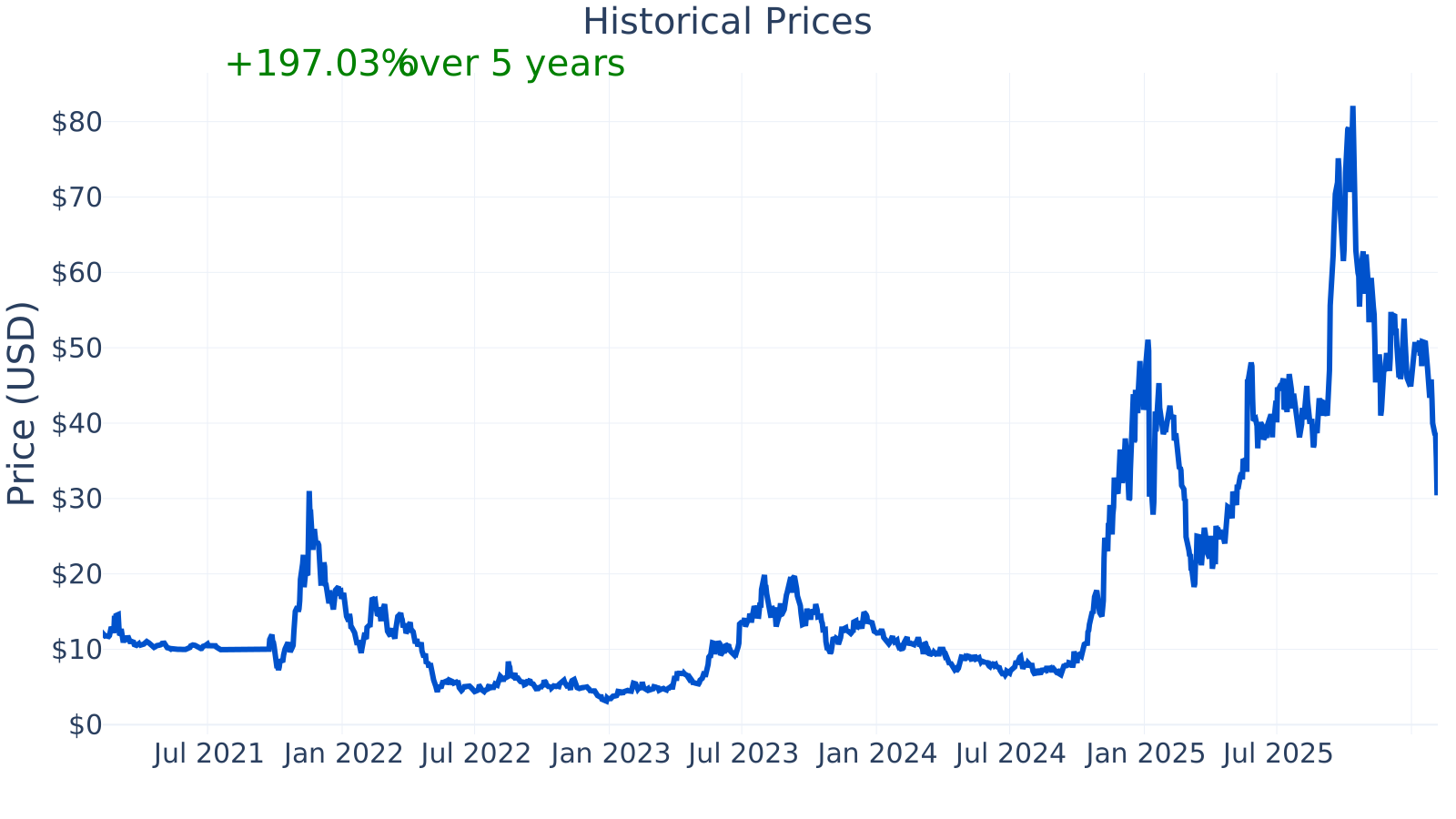
IONQ’s market capitalization is about $16.1B, and the stock shows high historical volatility (beta around 2.59). Profitability is currently negative (profit margin shown as 0% in the snapshot, while the industry median is about 3.7%). Reported year-over-year revenue growth is very high in the most recent reading (about 221.5% versus an industry median near 21.5%), which is common for a small but scaling revenue base. Leverage appears low: debt-to-equity ~1.25% versus an industry median near 4.92%. Free cash flow over the trailing twelve months is about -$262.8M, consistent with a company investing heavily ahead of profitability.
Growth (High)
Quantum computing is widely considered a long-horizon technology transition rather than a near-term mature market. The industry’s growth thesis is based on the idea that, over time, quantum hardware and software will improve enough to deliver practical advantages for specific categories of problems. If that happens, the market could expand through (1) cloud-based access models, (2) specialized applications, and (3) longer-term adoption by large enterprises and governments. IONQ’s strategy—improving hardware while distributing access through major cloud ecosystems—fits the “early adoption through cloud” model that many emerging-compute platforms follow.
Near- to medium-term growth often depends less on broad end-user adoption and more on concrete milestones: improving system performance, demonstrating repeatable customer value, and expanding commercial relationships. For a company like IONQ, credible catalysts typically include technical progress (better performance and reliability), additional customer contracts, and deeper integration into cloud marketplaces—each of which can translate into incremental usage and services revenue.
The year-over-year revenue growth line is uneven but can be extremely high in some periods. That pattern usually reflects two realities for early-stage companies: (1) the starting revenue base is small, and (2) timing of contracts and project revenue can move results significantly from quarter to quarter.
Free cash flow remains materially negative and has become more negative over time in the values shown (from roughly -$33.0M to about -$140.3M across the displayed periods, with the latest snapshot showing -$262.8M TTM in the table). This indicates the company is still in a heavy investment phase, where progress depends on sustained funding and disciplined spending relative to revenue growth.
Risks (Very High)
This article is for informational purposes only and does not constitute financial advice. Some content is AI-generated. See Disclaimer