Stock Analysis · Intuit Inc (INTU)
Overview
Intuit Inc. is a software company focused on helping individuals, small businesses, and accounting professionals manage money-related tasks. Its products are best known for tax preparation (TurboTax), small business accounting and payments (QuickBooks), and consumer personal finance (including Credit Karma). The company largely sells subscription-based software and related services, with usage that tends to increase around tax season for certain products.
In its financial reporting, Intuit organizes its business primarily into products for small businesses and self-employed customers, consumer tax, and personal finance. Across these lines, revenue generally comes from software subscriptions, transaction and payment processing services, and professional services connected to the platforms.
Main sources of revenue (based on Intuit’s reported operating segments and how they describe revenue streams in filings) typically include:
- Small Business & Self-Employed: QuickBooks online ecosystem (subscriptions) plus payments, payroll, and other connected services
- Consumer: TurboTax (online tax preparation and related offerings)
- Credit Karma: personal finance platform (largely tied to partner-driven transactions such as referrals)
- ProTax / professional tax: solutions used by accounting and tax professionals (often included within the “Consumer” segment in more recent reporting)
Over time, Intuit’s results show a business model with substantial gross profit, reflecting the economics of scaled software platforms.
From FY2021 to FY2025 (fiscal years ending in July), total revenue increased from about $9.6B to about $18.8B. Over the same period, operating income rose from about $2.6B to about $5.1B, and net income from about $2.1B to about $3.9B. A notable feature is the company’s continued investment in product development: research and development spending increased from roughly $1.7B to $2.9B across those years.
Key Figures
| Metric | Value | Industry ⓘ |
|---|---|---|
| Date | Feb 07, 2026 | |
| Context | ||
| Sector | Technology | |
| Industry | Software - Application | |
| Market Cap ⓘ | $123.55B | |
| Beta ⓘ | 1.23 | |
| Fundamental | ||
| P/E Ratio ⓘ | 30.48 | 27.79 |
| Profit Margin ⓘ | 21.19% | 6.02% |
| Revenue Growth ⓘ | 41.00% | 15.80% |
| Debt to Equity ⓘ | 35.11% | 25.15% |
| PEG ⓘ | 1.17 | |
| Free Cash Flow ⓘ | $6.35B | |
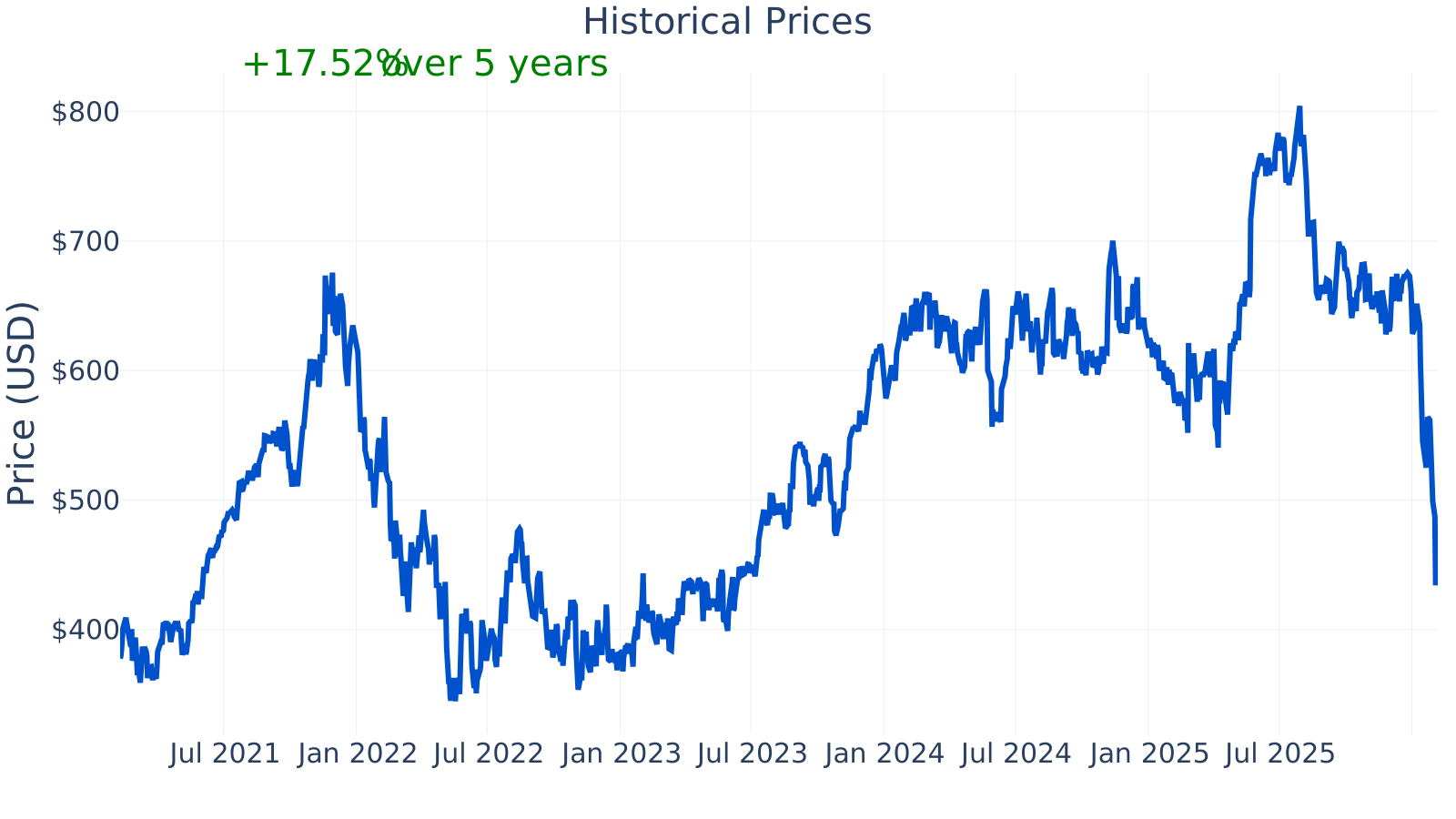
Intuit’s market capitalization is about $123.5B, placing it among the larger public software companies. The stock’s beta (1.23) suggests it has historically moved somewhat more than the overall market. The company shows a profit margin of ~21.19%, which is well above the software application industry median shown here (~6.03%), indicating stronger profitability than many peers.
On growth, the latest year-over-year revenue growth shown is about 41% versus an industry median of about 15.8%. Leverage appears moderate: debt-to-equity is ~35.11% versus an industry median of ~25.15%. Free cash flow over the trailing twelve months is about $6.35B, highlighting meaningful cash generation for a company of this size.
Growth (medium)
Intuit operates in areas with long-term tailwinds: digitization of tax preparation, ongoing migration of small businesses to cloud-based accounting and integrated payments, and increasing use of software to manage personal finances. These are mature needs, but the shift toward cloud subscriptions and connected financial workflows has supported ongoing product expansion and cross-selling across an installed customer base.
The revenue growth pattern shown is uneven from quarter to quarter (which is common for businesses with seasonal demand and product cycle effects), but the more recent period indicates a return to solid double-digit growth, with the latest point around 18.34% year-over-year (and higher earlier in the series). For long-term context, growth that remains consistently above the broader industry median can matter because it can help sustain investment in product development while still expanding profits.
Cash generation has trended upward over the last several years, from about $3.0B (TTM ended Jan 2022) to about $5.6B (TTM ended Jan 2025). For a software company, rising free cash flow often reflects a combination of subscription revenue, renewals, and operating leverage as the customer base grows.
Potential catalysts that are structural (rather than tied to a single event) include deeper integration of accounting, payroll, and payments within QuickBooks, continued movement of tax filers to digital workflows, and product improvements that increase customer retention and monetization within the ecosystem.
Risks (medium)
This article is for informational purposes only and does not constitute financial advice. Some content is AI-generated. See Disclaimer


