Stock Analysis · International Paper (IP)
Overview
International Paper is a large U.S.-based packaging company that makes and sells paper-based packaging materials used to ship and protect goods. In practical terms, it produces containerboard (the paper used to make corrugated boxes), corrugated packaging products, and other fiber-based materials used by industrial and consumer companies.
Its revenue is mainly tied to packaging demand (how many boxes customers need) and to pricing cycles in paper and containerboard markets. Because these products are widely used across the economy, results tend to be sensitive to overall economic activity, input costs (such as fiber and energy), and industry supply/demand balance.
International Paper reports its business in segments in its SEC filings. Based on its reporting structure, the main revenue sources are typically:
- Industrial Packaging (containerboard and corrugated packaging)
- Global Cellulose Fibers (pulp and specialty fibers used in a range of products)
Exact revenue mix percentages can change over time and should be taken from the most recent annual report segment disclosures.
From 2021 to 2024, revenue moved within a relatively similar range (roughly $18.6–$21.2B), while profitability fluctuated meaningfully (operating income and net income were much lower in 2023–2024 than in 2021–2022). In 2025, revenue is shown higher, but operating income and net income turn sharply negative, indicating a year with unusually heavy expenses and/or charges that overwhelmed gross profit.
Key Figures
| Metric | Value | Industry ⓘ |
|---|---|---|
| Date | Feb 07, 2026 | |
| Context | ||
| Sector | Consumer Cyclical | |
| Industry | Packaging & Containers | |
| Market Cap ⓘ | $24.60B | |
| Beta ⓘ | 1.07 | |
| Fundamental | ||
| P/E Ratio ⓘ | N/A | 21.79 |
| Profit Margin ⓘ | -14.88% | 5.56% |
| Revenue Growth ⓘ | 31.10% | 6.00% |
| Debt to Equity ⓘ | 72.86% | 137.29% |
| PEG ⓘ | 1.67 | |
| Free Cash Flow ⓘ | -$159.00M | |
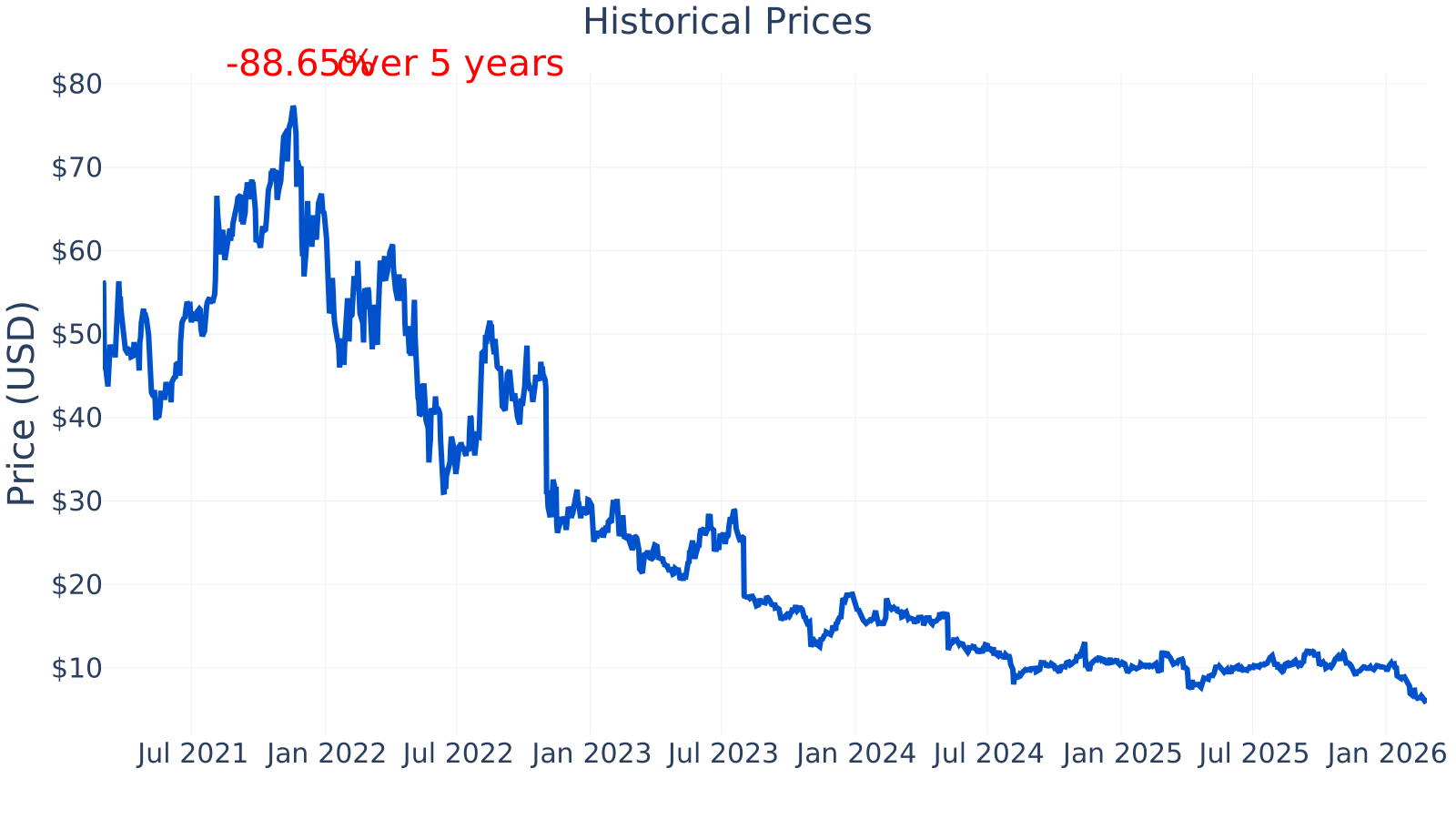
International Paper’s market capitalization is about $24.6B and its beta is about 1.07, which suggests its share price has tended to move roughly in line with the broader market. The company’s profit margin is negative (-14.9%) versus an industry median around +5.6%, which signals that recent profitability has been meaningfully weaker than many peers. At the same time, the latest year-over-year revenue growth is about +31.1% versus an industry median near +6.0%, showing stronger top-line growth in the most recent period. The debt-to-equity ratio is about 72.9%, below the industry median (about 137.3%), indicating less leverage than the typical company in this peer group. Finally, free cash flow (TTM) is about -$159M, meaning cash generation after capital spending has recently been slightly negative.
Growth (Medium)
Packaging is a mature, essential industry rather than a fast-expanding one. Demand is supported by broad drivers such as general consumer activity, industrial production, and shipping volumes. Over long periods, growth often comes from operational improvements, product mix, and disciplined capacity management rather than from rapid market expansion.
For International Paper, future growth potential is usually connected to (1) recovering profitability during stronger parts of the packaging cycle, (2) executing productivity and cost initiatives, and (3) managing its portfolio toward businesses where it can earn acceptable returns. In cyclical packaging markets, “growth” can also mean maintaining volumes and improving margins as prices and input costs move.
The year-over-year revenue growth rate has been volatile: negative through much of 2023–2024, then sharply positive in 2025 (ranging roughly from +27.8% to +42.9% across 2025 quarters, ending at +31.1%). This pattern is consistent with a business influenced by pricing cycles, mix changes, and broader demand conditions rather than steady, linear expansion.
Free cash flow has weakened over time in the period shown: from about $2.37B (2021) to $1.46B (2022), then $0.84B (2023) and $0.83B (2024), turning around breakeven to slightly negative in 2025 (about -$5M at the most recent annual point displayed). For a capital-intensive manufacturer, sustained free cash flow is important because it helps fund maintenance of mills and equipment, reduce debt, and absorb downturns without financial strain.
Risks (High)
This article is for informational purposes only and does not constitute financial advice. Some content is AI-generated. See Disclaimer