Stock Analysis · International Business Machines (IBM)
Overview
International Business Machines (IBM) is a global technology company focused on helping large organizations run, modernize, and secure their IT systems. In practice, this means IBM sells software (including automation and data tools), provides consulting and implementation services, and operates a hybrid cloud platform (technology that helps companies use both on-premises systems and public cloud services together). IBM also develops and commercializes artificial intelligence capabilities for business use cases, and it maintains long-standing relationships with enterprise and government customers.
IBM reports its revenue primarily across a few large business segments (as described in its annual filings):
- Software (including hybrid cloud and automation software)
- Consulting (IT consulting, systems integration, application modernization)
- Infrastructure (including mainframe and related infrastructure offerings)
- Financing (client financing activities)
From a business-model perspective, IBM combines recurring revenue (for example, software subscriptions and support) with project-based revenue (consulting engagements) and product-cycle revenue (notably infrastructure refresh cycles). This mix can make results more stable than purely hardware-driven companies, but it also means growth can depend on enterprise technology spending and large client project activity.
Across the years shown, total revenue trends upward (from about $57.4B in 2021 to about $67.5B in 2025). Over the same period, research and development spending rises (roughly $6.5B to $8.3B), and interest expense also increases (about $1.2B to $1.9B), highlighting the dual focus on continued product investment alongside the cost of carrying debt.
Key Figures
| Metric | Value | Industry ⓘ |
|---|---|---|
| Date | Feb 07, 2026 | |
| Context | ||
| Sector | Technology | |
| Industry | Information Technology Services | |
| Market Cap ⓘ | $279.42B | |
| Beta ⓘ | 0.69 | |
| Fundamental | ||
| P/E Ratio ⓘ | 26.81 | 21.13 |
| Profit Margin ⓘ | 15.69% | 4.91% |
| Revenue Growth ⓘ | 12.20% | 6.15% |
| Debt to Equity ⓘ | 205.69% | 54.49% |
| PEG ⓘ | 2.47 | |
| Free Cash Flow ⓘ | $12.28B | |
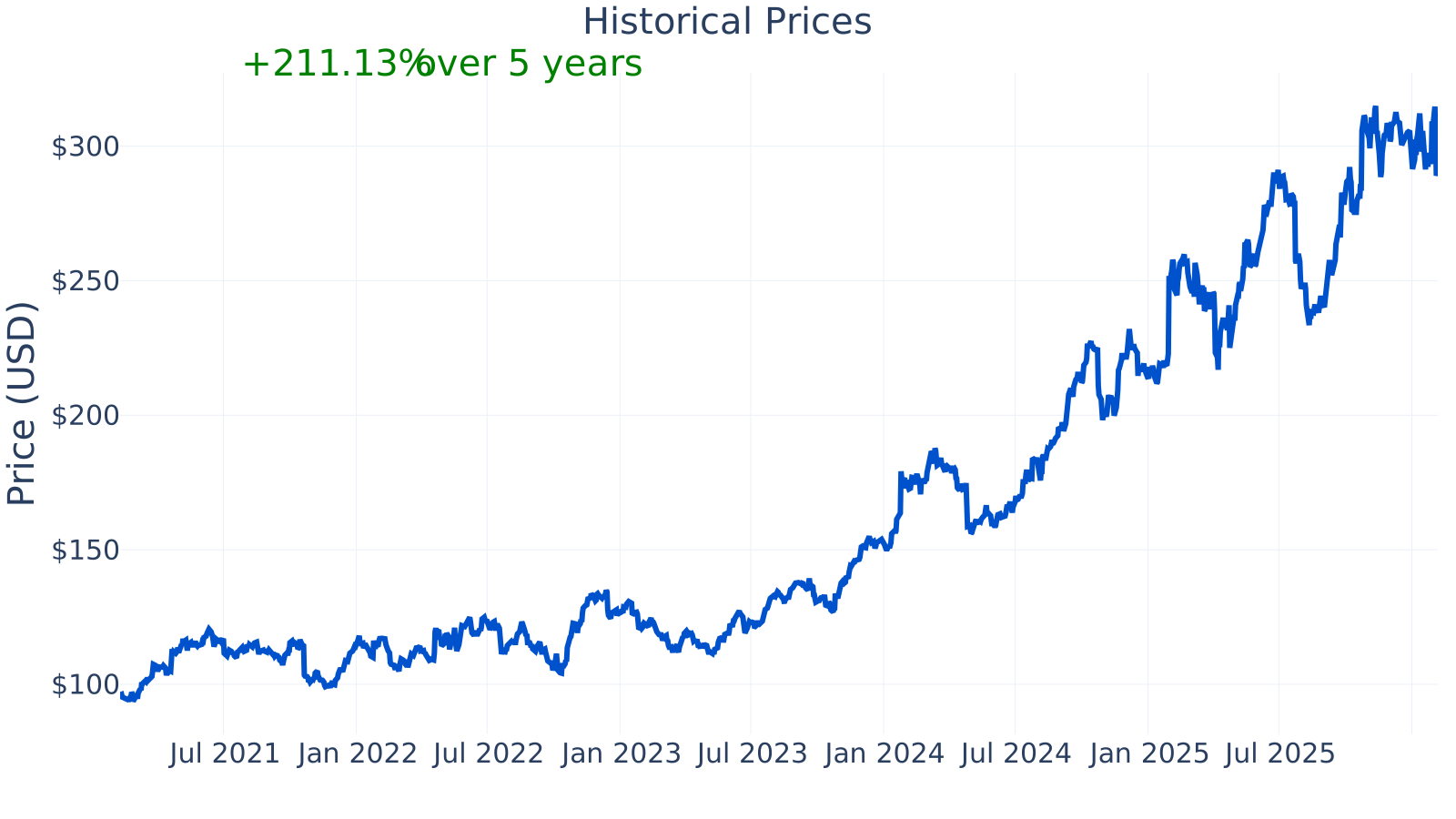
IBM’s market capitalization is about $279.4B. The stock’s beta of ~0.69 suggests it has historically moved less than the broader market on average (though beta can change over time). The latest P/E ratio is ~26.8, above the industry median shown (~21.1). Profitability stands out: IBM’s latest profit margin is ~15.7% versus an industry median of ~4.9%. Recent top-line momentum is also stronger than the industry median in this view: year-over-year revenue growth is ~12.2% versus ~6.2%. A key offset is balance-sheet leverage: debt-to-equity is ~206% compared with an industry median of ~54%. Trailing twelve-month free cash flow is ~$12.3B, which is an important support for debt service, reinvestment, and shareholder distributions.
Growth (Medium)
IBM operates in large, long-duration markets such as enterprise IT services, hybrid cloud, cybersecurity-related infrastructure needs, and AI-enabled software. These areas have structural demand drivers: businesses continue moving applications to cloud environments, modernizing legacy systems, and prioritizing resilience and security. That said, IBM’s end markets are also mature and highly competitive, and enterprise spending can be cyclical when budgets tighten.
Strategically, IBM’s positioning emphasizes hybrid cloud and AI for enterprises, which is designed to meet customers where they are—many large organizations run mission-critical systems on a mix of older infrastructure and newer cloud services. In that context, IBM’s consulting arm can act as a “delivery channel” for software adoption, because modernization projects often lead to ongoing software usage and support contracts.
The year-over-year revenue growth trend shows a shift from contraction in 2021 (large negative rates) to modest growth through 2022–2024, followed by a stronger acceleration in 2025 (ending around 12%). If sustained, that pattern would indicate improved commercial execution and/or better demand conditions relative to the earlier period.
Free cash flow fluctuates over the period shown: it is higher in 2021 (about $15.5B), drops in 2022–2023 (around $8.6B–$9.0B), and then improves again in 2024–2025 (around $12.7B and $11.9B at the points shown). For a services-and-software-heavy business, free cash flow is a key “reality check” metric because it reflects how much cash remains after operating needs and capital spending.
Risks (Medium-High)
This article is for informational purposes only and does not constitute financial advice. Some content is AI-generated. See Disclaimer


