Stock Analysis · InterDigital Inc (IDCC)
Overview
InterDigital, Inc. (IDCC) is a technology company that develops and licenses wireless and video-related inventions. Instead of mainly selling physical products, InterDigital focuses on creating patented technologies that are used in everyday connected devices and networks (for example, smartphones and other cellular-enabled products). Companies that use these technologies typically pay InterDigital license fees, often through multi‑year agreements.
This business model is built around long research cycles and patent protection. In practice, InterDigital spends heavily on research and development, files patents, and then monetizes that intellectual property through licensing programs and, when needed, enforcement of its patent rights.
In its financial reporting, InterDigital’s revenue is largely associated with patent license agreements (commonly discussed by the company as recurring patent royalties plus catch-up or one-time items tied to contract timing). Percentages by revenue stream are not provided in the metrics here, but the company’s public filings describe licensing as the core driver of revenue and profits.
Largest to smallest (high-level) revenue sources commonly described in filings:
- Patent licensing and royalties (the core business)
- Technology solutions / other (smaller, compared with licensing)
Across recent years, revenue and profits expanded meaningfully versus earlier periods, while research and development spending remained a major, steady cost. This is typical for a licensing-focused model: ongoing R&D investment supports future patents, while profitability can rise sharply when large license agreements are signed or renewed.
Key Figures
| Metric | Value | Industry ⓘ |
|---|---|---|
| Date | Feb 07, 2026 | |
| Context | ||
| Sector | Technology | |
| Industry | Software - Application | |
| Market Cap ⓘ | $9.55B | |
| Beta ⓘ | 1.58 | |
| Fundamental | ||
| P/E Ratio ⓘ | 31.47 | 27.79 |
| Profit Margin ⓘ | 48.76% | 6.02% |
| Revenue Growth ⓘ | -37.40% | 15.80% |
| Debt to Equity ⓘ | 45.94% | 25.15% |
| PEG ⓘ | 1.32 | |
| Free Cash Flow ⓘ | $529.37M | |
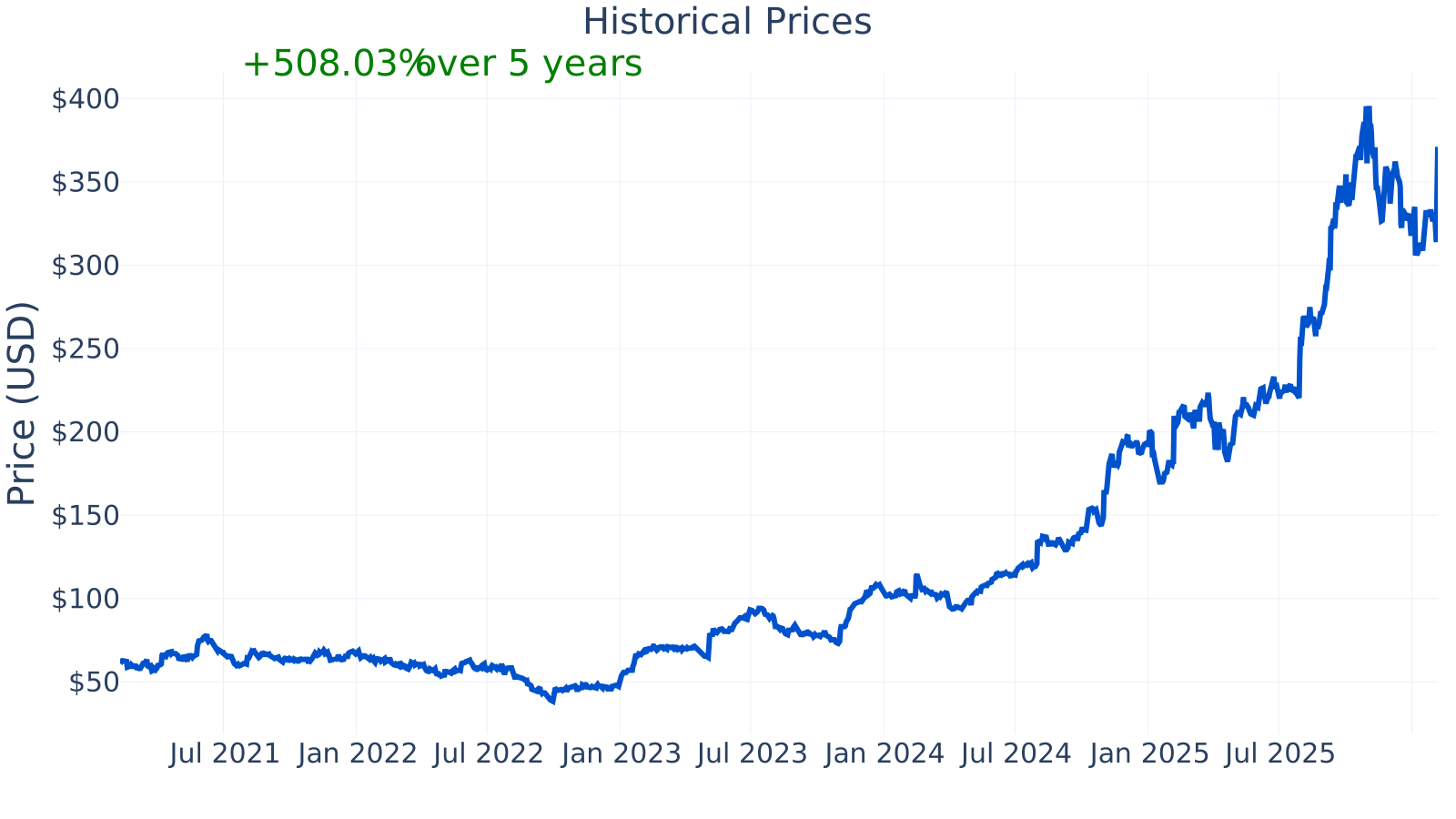
InterDigital’s market capitalization is about $9.6B, and the stock’s beta of ~1.58 suggests it has tended to move more than the broader market. The company’s P/E ratio is ~31.5, above the industry median of ~27.8 in the “Software - Application” peer set shown here.
Profitability stands out: the latest profit margin is ~48.8%, far above the listed industry median of ~6.0%. At the same time, recent year-over-year revenue growth is about -37.4% versus an industry median of ~15.8%, highlighting that revenue can be uneven from period to period. The latest debt-to-equity ratio is ~45.9%, which is higher than the industry median (~25.2%), though not extreme in absolute terms.
Growth (Medium)
InterDigital operates in the broader wireless communications ecosystem, where long-term demand is linked to the continued expansion of connectivity. Over time, each new generation of wireless standards (from 4G to 5G and beyond), plus the growth of connected devices, tends to increase the number of products that may rely on standardized technologies. Companies that contribute patented inventions to widely adopted standards can have opportunities to license that intellectual property across many manufacturers and product categories.
InterDigital’s strategy is straightforward: keep investing in research, secure patents, and license those innovations—especially where inventions are tied to widely used standards. This approach can scale well because a successful patent portfolio can be licensed broadly without requiring manufacturing capacity.
A practical catalyst for companies with this model is the timing of major license renewals and new agreements, which can cause revenue and profits to rise or fall significantly between years. Another potential catalyst is the evolution of wireless standards, where successful R&D outcomes can strengthen the portfolio used in negotiations.
The revenue growth pattern is volatile, with large up-and-down swings across quarters/years. That behavior is often consistent with a licensing business where contract timing, renewals, and one-time items can dominate the year-over-year comparison rather than smooth “unit sales” growth.
Free cash flow over the trailing twelve months is shown at about $529M in the latest metrics, while the historical series illustrates that cash generation has varied materially by period. This matters for long-term evaluation because a licensing model can produce substantial cash, but not always in a steady, predictable cadence.
Risks (High)
This article is for informational purposes only and does not constitute financial advice. Some content is AI-generated. See Disclaimer