Stock Analysis · Interface Inc (TILE)
Overview
Interface, Inc. designs, makes, and sells modular flooring solutions used primarily in commercial spaces. Its best-known products are carpet tile and resilient flooring (such as luxury vinyl tile), which are typically specified by architects and designers and installed in offices, education buildings, healthcare facilities, hospitality venues, and other non-residential environments. The business model combines product design and branding with manufacturing and a sales approach that is closely tied to commercial construction and renovation activity.
In its public filings, Interface describes its revenue as coming mainly from sales of modular carpet and resilient flooring, with sales made across multiple geographic regions and end markets. Over time, management has also emphasized sustainability-related product attributes and operational initiatives as part of the company’s market positioning, which can matter in commercial projects where environmental requirements are part of procurement and building certifications.
Main revenue sources (high-level categories used in company reporting typically center on product type):
- Modular carpet (carpet tile and related products)
- Resilient flooring
- Other / services and accessories (as applicable in company reporting)
The visual below summarizes how revenue turns into profit after major cost categories.
From 2021 to 2025, total revenue increased (about $1.20B to about $1.39B). Over the same period, operating income and net income improved meaningfully, and interest expense declined versus earlier years, which is consistent with a business that has been strengthening profitability and lowering financing costs.
Key Figures
| Metric | Value | Industry ⓘ |
|---|---|---|
| Date | May 05, 2026 | |
| Context | ||
| Sector | Consumer Cyclical | |
| Industry | Furnishings, Fixtures & Appliances | |
| Market Cap ⓘ | $1.56B | |
| Beta ⓘ | 1.92 | |
| Fundamental | ||
| P/E Ratio ⓘ | 14.19 | 23.21 |
| Profit Margin ⓘ | 8.37% | 3.93% |
| Revenue Growth ⓘ | 4.30% | 5.80% |
| Debt to Equity ⓘ | 21.93% | 100.56% |
| PEG ⓘ | 0.89 | |
| Free Cash Flow ⓘ | $121.71M | |
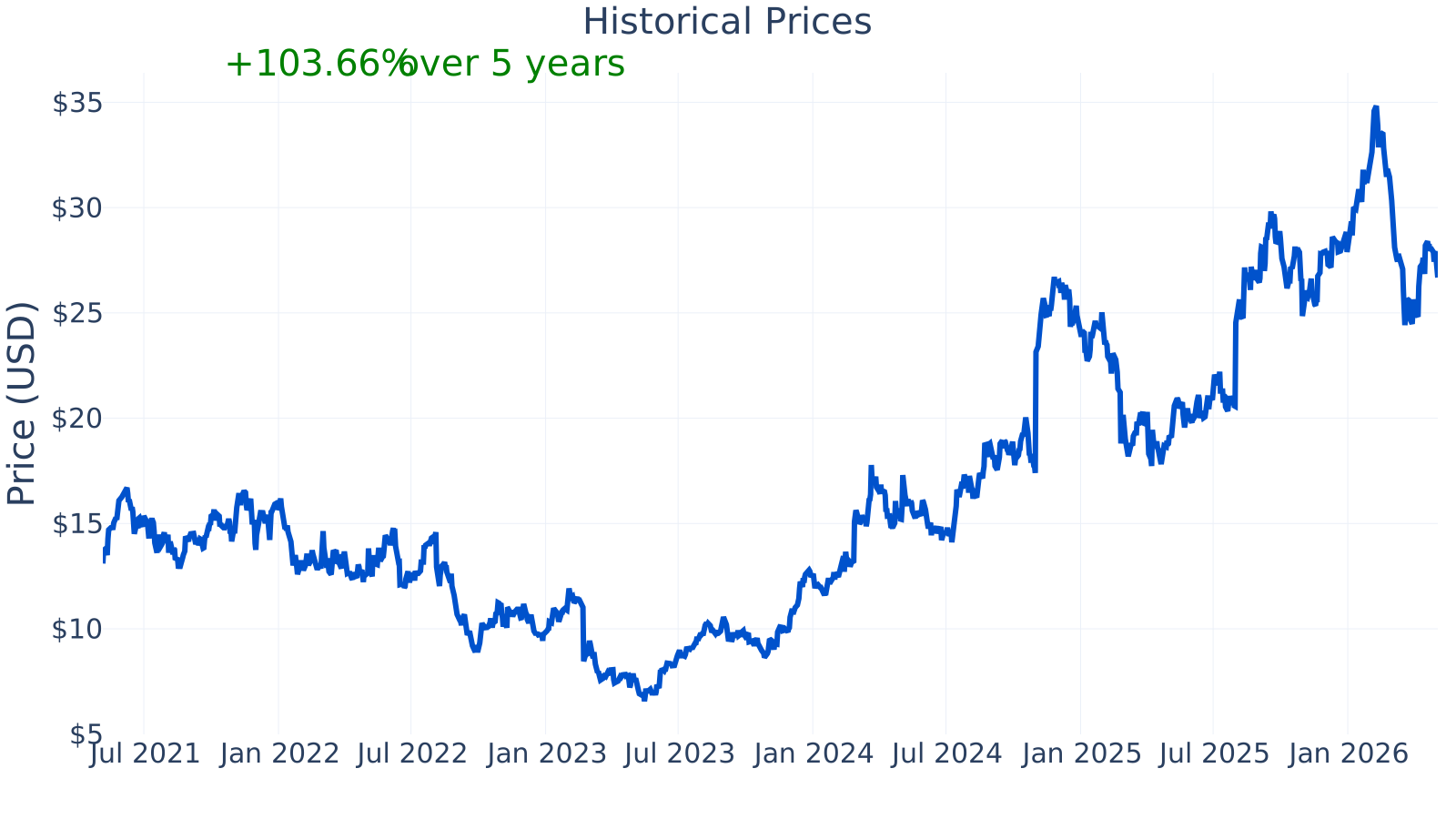
Interface’s market capitalization is about $1.56B, and the stock’s beta is ~1.92, which indicates the share price has tended to move more than the broader market. Profitability (net profit margin) is about 8.37%, which is higher than the industry median (~3.93%) shown here. Year-over-year revenue growth is about 4.3% versus an industry median (~5.8%), suggesting growth has been positive but not leading the peer set on this single snapshot. Leverage appears moderate: debt-to-equity ~21.9% compared with an industry median ~100.6%. The company also shows positive free cash flow (TTM) of ~$121.7M, which can matter for flexibility (reinvestment, debt reduction, or shareholder returns).
Growth (Medium)
Interface operates in commercial flooring, which is tied to long-lived building cycles: new construction, tenant improvements, and renovation/refresh activity. Demand is therefore influenced by broader economic conditions and business investment in offices, schools, hospitals, hotels, and other commercial properties. Within that context, product replacement cycles (wear-and-tear) can provide recurring demand over time, but the timing can be uneven.
Strategically, the company’s focus on modular products can fit long-term renovation trends because modular formats are designed for partial replacement (swapping damaged sections rather than full-floor replacement) and can be marketed around reduced disruption and waste. Another long-term theme is sustainability requirements in commercial procurement; Interface has positioned itself around environmental product attributes and related reporting in its filings, which can support specification in projects where those criteria are formal.
The year-over-year revenue pattern shows a slowdown and some negative periods around 2023 into early 2024, followed by a return to positive growth later in 2024 and into 2025 (recent quarters in the mid-single digits, with a peak above 10% during the rebound). This shape is consistent with a cyclical end market that experienced a softer patch and then improved.
Free cash flow over the trailing twelve months has trended upward over the periods shown (from about $16.5M in early 2022 to about $110.3M by early 2025, and ~$121.7M in the latest metrics). For long-term business resilience, sustained positive free cash flow can be a useful indicator because it reflects cash remaining after operating needs and capital spending.
Risks (Medium)
Interface’s results are exposed to commercial construction and renovation cycles. When macroeconomic conditions weaken, projects can be delayed or canceled, and customers may reduce discretionary upgrades. In addition, shifts in work patterns (including office utilization) can change the mix and timing of demand in certain end markets, even if other segments (such as education or healthcare) are steadier.
Like many manufacturers, Interface faces input-cost and supply-chain risks (materials, energy, transportation). If costs rise faster than pricing actions, margins can compress. The company’s profit trends show that profitability can vary meaningfully over time, which is typical in cyclical, competitive manufacturing categories.
Leverage has decreased substantially over the period shown, moving from levels above 100% earlier in the timeline to about 21.9% most recently. Lower leverage can reduce financial risk (especially in downturns), but it does not eliminate cyclicality or competitive pressure.
Net profit margin improved materially from very low levels during parts of 2023 to about 8.37% most recently, and it is above the industry median displayed. This improvement suggests stronger execution and/or a better demand and pricing environment, but it also highlights that profitability can be sensitive to volume, pricing, and cost conditions.
Competition is a central risk. The commercial flooring market includes large, well-established players with broad product catalogs and strong relationships with architects, designers, and contractors. Key competitors commonly referenced in company filings and industry discussions include Mohawk Industries (including commercial flooring brands), Shaw Industries (a Berkshire Hathaway subsidiary), and other flooring manufacturers and importers across both soft-surface (carpet) and hard-surface (resilient) categories. Interface’s competitive positioning has often emphasized design, modular formats, and sustainability credentials; however, competitors can respond with comparable products, pricing, and their own sustainability programs, which can limit differentiation over time.
Valuation
Based on the latest metrics shown, Interface trades at a P/E ratio of ~14.19, compared with an industry median of ~23.21 in this peer group snapshot. Historically in the period displayed, the company’s P/E ratio has moved widely (including periods with very high readings, which can happen when earnings are temporarily low), and more recently it has tended to sit in the mid-teens range.
Interpreting valuation for this type of company generally requires weighing (1) cyclicality in demand, (2) how durable the current margin level is, (3) balance-sheet strength, and (4) the pace of growth. The current multiple shown is lower than the peer median in the provided comparison, while profitability and leverage metrics appear stronger than the median. At the same time, revenue growth is positive but not the highest versus the median shown, which can matter because slower growth can justify lower multiples in many market environments.
Conclusion
Interface is a commercial flooring manufacturer focused on modular carpet and resilient flooring, with results tied to non-residential construction and renovation cycles. Recent fundamentals in the metrics shown include improved profitability, meaningfully lower leverage, and positive free cash flow, alongside moderate revenue growth that has improved after a softer period.
The main uncertainties for a long-term view tend to come from the industry’s cyclical nature, competitive intensity among large flooring manufacturers, and the durability of recent margin improvement. The valuation indicators presented (including a P/E ratio below the industry median in this comparison) should be read in the context of those cycle and margin risks as well as the company’s strengthened balance-sheet profile.
Sources:
- SEC EDGAR — Interface, Inc. filings (Form 10-K, Form 10-Q)
- Interface, Inc. Investor Relations — Annual Report materials and earnings-related releases (company-hosted)
- Wikipedia — “Interface, Inc.” (basic company background)
This article is for informational purposes only and does not constitute financial advice. Some content is AI-generated. See Disclaimer


