Stock Analysis · InterContinental Hotels Group PLC (IHG)
Overview
InterContinental Hotels Group PLC (IHG) is a global hotel company best known for managing and franchising hotel brands rather than owning most of the physical hotel real estate. Its brand portfolio includes names such as InterContinental, Holiday Inn, Crowne Plaza, Hotel Indigo, Kimpton, and others. In practice, many hotels that display an IHG brand are owned by third-party property owners; IHG provides the brand, reservation systems, loyalty program, and operating standards, and it earns fees for these services.
This “asset-light” approach typically means IHG’s performance is closely linked to travel demand and hotel room pricing, but it can require less capital than owning large numbers of properties. IHG also operates a large loyalty program (IHG One Rewards), which can support repeat stays and strengthen relationships with hotel owners by driving demand through IHG’s distribution channels.
Main revenue streams generally fall into a few buckets (exact splits can change by year and are described in company reporting):
- Franchise fees (fees from franchised hotels using IHG brands and systems)
- Management fees (fees for managing hotels on behalf of owners)
- Revenue from owned/leased hotels and other activities (typically smaller versus fee-based revenues for an asset-light hotel group)
Business mix snapshot from recent years: total revenue increased from about $2.9B (2021) to about $4.9B (2024) and about $5.2B (2025), while operating income rose from roughly $0.5B (2021) to about $1.1–$1.2B (2024–2025). Net income also increased meaningfully from roughly $0.27B (2021) to about $0.63–$0.76B (2024–2025).
Across the period shown, revenue and profits grew overall, but results can fluctuate with travel cycles and cost items such as interest and taxes. One notable pattern is that profitability improved substantially compared with the pandemic-impacted period, with operating income remaining around the $1.1–$1.2B range in 2024–2025 even as costs moved year to year.
Key Figures
| Metric | Value | Industry ⓘ |
|---|---|---|
| Date | Feb 23, 2026 | |
| Context | ||
| Sector | Consumer Cyclical | |
| Industry | Lodging | |
| Market Cap ⓘ | $21.73B | |
| Beta ⓘ | 1.08 | |
| Fundamental | ||
| P/E Ratio ⓘ | 30.60 | 30.60 |
| Profit Margin ⓘ | 14.61% | 14.61% |
| Revenue Growth ⓘ | 2.70% | 7.00% |
| Debt to Equity ⓘ | -168.52% | 44.41% |
| PEG ⓘ | 0.95 | |
| Free Cash Flow ⓘ | $1.56B | |
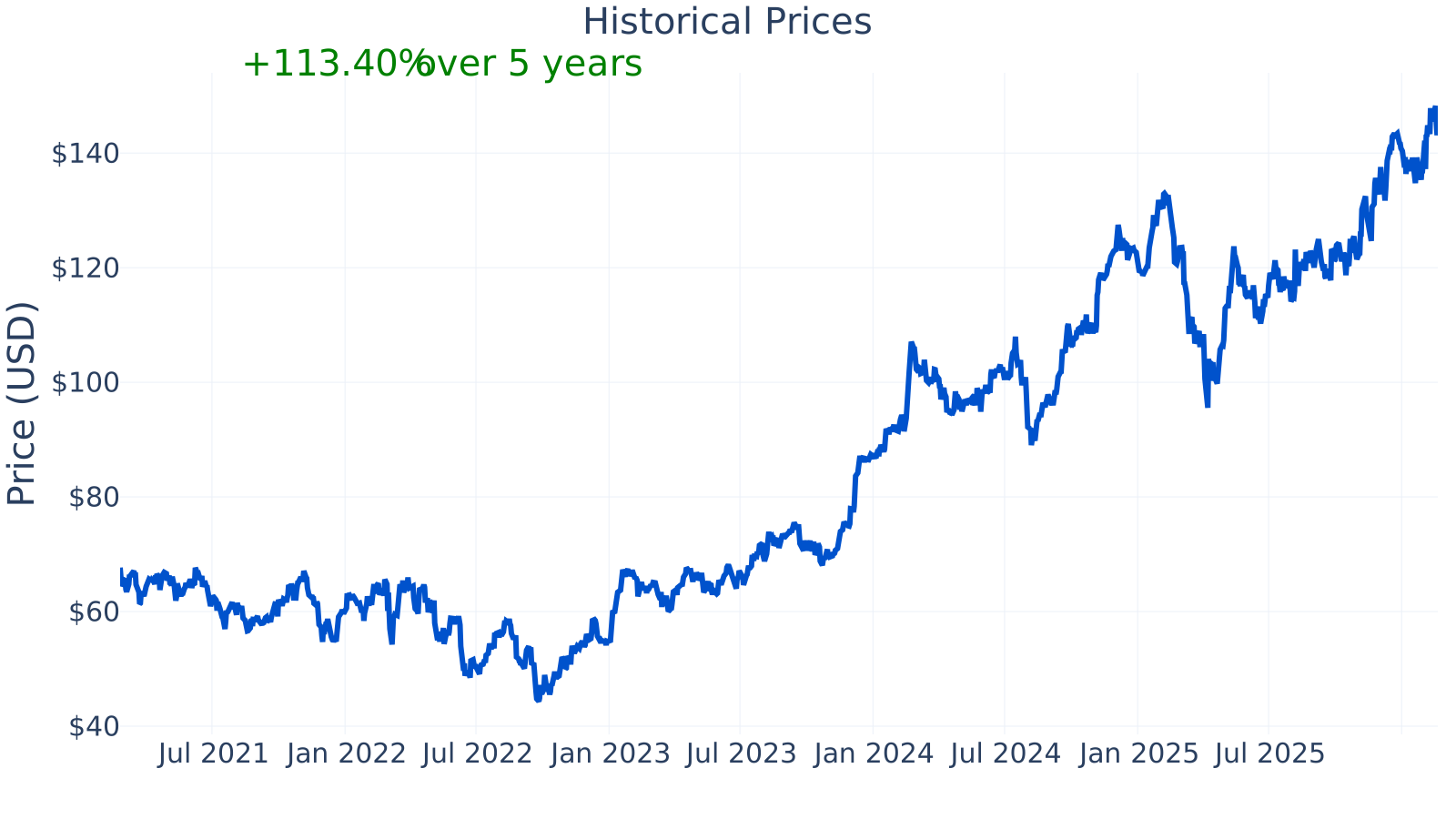
IHG’s market capitalization is about $21.7B, and the stock’s beta is ~1.08, which indicates price swings have been somewhat similar to the broader market historically (slightly more volatile than 1.0). The current P/E ratio is ~30.6, in line with the lodging industry median shown. The profit margin is ~14.6%, also in line with the industry median provided.
Revenue growth over the last year is shown at about 2.7%, which is below the industry median shown (7.0%). Free cash flow over the trailing twelve months is about $1.56B. The reported debt-to-equity is negative (about -169%), which often happens when a company’s accounting equity is negative (for example, due to cumulative buybacks, dividends, or other balance sheet dynamics). This can make debt-to-equity less intuitive than usual and is important to interpret carefully alongside other balance-sheet disclosures in official reports.
Growth (Medium)
IHG operates in the lodging industry, which is fundamentally tied to long-run travel demand (business travel, leisure travel, and group events). Over multi-year periods, the industry tends to benefit from rising global middle-class travel and the ongoing professionalization of hotel distribution (loyalty programs, direct booking platforms, and global brand standards). At the same time, it is a cyclical business: demand can fall quickly in recessions or during disruptions to travel.
IHG’s strategy—focused on franchising and management—generally aims to expand its global hotel “system” (more branded rooms under IHG flags) without needing to own the hotels. For long-term outcomes, the key growth drivers typically include:
- Net rooms growth (adding new hotels and rooms through development pipelines)
- Revenue per available room (RevPAR) and pricing power (reflecting demand and room rates)
- Loyalty and distribution strength (driving bookings toward IHG-branded properties)
- Brand portfolio expansion (adding brands or strengthening positions in fast-growing segments)
The year-over-year revenue growth pattern shows a sharp rebound in earlier years (as travel recovered) and more moderate growth more recently, including a low single-digit reading in the latest period shown. This kind of trajectory is common after a recovery surge, when comparisons become harder and growth normalizes.
Free cash flow has been positive in the periods shown and increased substantially from 2021 to 2023 (from roughly $0.27B to about $0.96B on a trailing basis in the series shown). In an asset-light hotel group, sustained free cash flow can support reinvestment in the business (technology, loyalty program, brand support) and shareholder distributions, although the exact use of cash is a management decision described in official filings.
Risks (High)
This article is for informational purposes only and does not constitute financial advice. Some content is AI-generated. See Disclaimer