Stock Analysis · Intapp Inc (INTA)
Overview
Intapp Inc. is a software company focused on the needs of professional and financial services firms (for example: law firms, accounting firms, consultants, and investment-related organizations). Its products are designed to help these organizations manage client relationships, evaluate and onboard new matters or deals, reduce conflicts and compliance issues, and improve how internal teams work together on client work. In simple terms, Intapp sells business software built for industries where confidentiality, approvals, and risk checks are part of everyday operations.
Intapp primarily earns revenue by selling software subscriptions and related services. Like many software companies, a large portion of revenue typically comes from recurring contracts, while a smaller portion may come from professional services such as implementation and support. (Exact revenue mix percentages can vary by reporting period and are detailed in company filings.)
Revenue sources (typical structure for enterprise software businesses like Intapp):
- Subscription revenue (recurring software access fees; often the largest portion)
- Professional services and other revenue (implementation, training, and related services; typically smaller)
From a business model perspective, the long-term appeal of subscription software is that renewals can create a more predictable revenue base than one-time product sales, assuming customers remain satisfied and contracts are renewed.
Over the periods shown, total revenue increases substantially (from about $214.6M in FY2021 to about $504.1M in FY2025). At the same time, the company still reports operating losses, which suggests Intapp has continued investing heavily in areas like product development and go-to-market rather than prioritizing near-term accounting profitability.
Key Figures
| Metric | Value | Industry ⓘ |
|---|---|---|
| Date | Feb 16, 2026 | |
| Context | ||
| Sector | Technology | |
| Industry | Software - Application | |
| Market Cap ⓘ | $1.90B | |
| Beta ⓘ | 0.67 | |
| Fundamental | ||
| P/E Ratio ⓘ | N/A | 27.48 |
| Profit Margin ⓘ | -4.37% | 7.66% |
| Revenue Growth ⓘ | 15.70% | 15.80% |
| Debt to Equity ⓘ | 3.62% | 24.71% |
| PEG ⓘ | 0.56 | |
| Free Cash Flow ⓘ | $92.62M | |
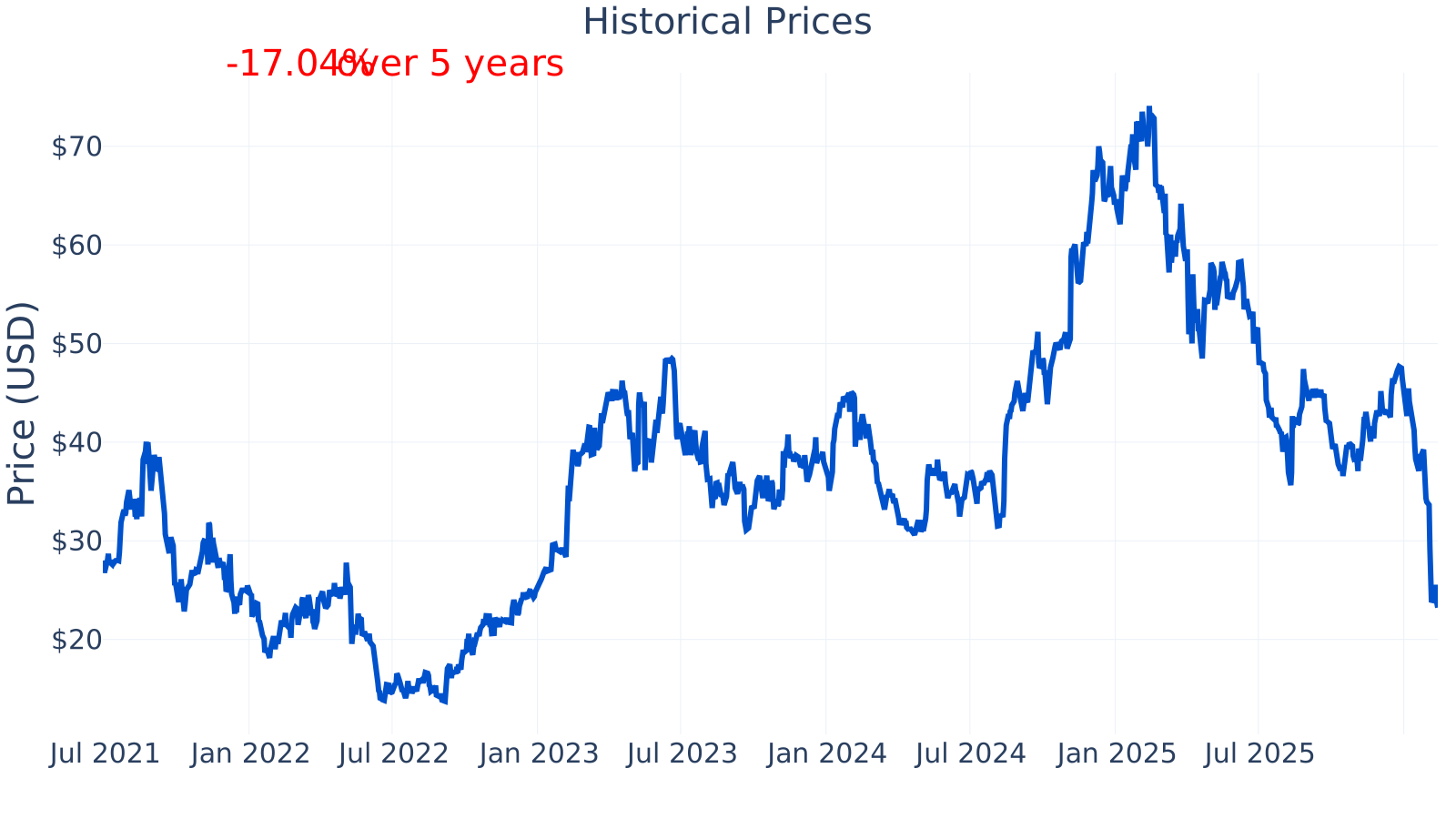
Intapp’s market capitalization is about $1.9B. The stock’s beta of about 0.67 indicates its price has historically moved less than the broader market on average (though single stocks can still be volatile). The company’s most recent year-over-year revenue growth is about 15.7%, roughly in line with the industry median shown (about 15.8%). Profit margin is negative (about -4.4%) versus a positive industry median (about 7.7%), meaning Intapp is still not reporting net profits on this measure. Debt relative to equity is low (about 3.6%) compared with the industry median (about 24.7%), which can reduce financial strain from interest costs. Free cash flow over the trailing twelve months is positive at about $92.6M, showing that cash generation can be stronger than net income due to the way software revenue and expenses are recognized.
Growth (Medium)
Intapp operates in enterprise software, with a specific focus on vertical use-cases for professional and financial services. These industries tend to have ongoing needs around compliance, risk controls, confidentiality, and process standardization. As firms grow and face more regulatory and client-driven scrutiny, demand can increase for systems that help manage conflicts checks, engagement acceptance, client onboarding, and relationship intelligence across the organization.
The company’s strategy appears aligned with long-term software trends: selling recurring subscriptions, expanding product capabilities over time, and embedding into core workflows where switching can be disruptive. In practice, once software becomes the system of record for intake, approvals, and client relationship processes, customers may be less likely to change vendors quickly (though this is not guaranteed and depends on product performance and pricing).
The year-over-year revenue growth rates shown are generally positive, with faster growth earlier in the timeline and a more moderate pace later. The most recent growth rate displayed is about 15.7%, which suggests the company is still expanding, though not at the very high growth rates sometimes seen in earlier-stage software businesses.
Free cash flow improves meaningfully over time, moving from modestly positive levels to about $92.6M (TTM). For long-term business durability, this can matter because cash generation can help fund product development and sales expansion without relying as heavily on new financing.
Potential catalysts for future growth (in a general, non-predictive sense) often include deeper adoption inside existing customers (more users or more modules), expansion into adjacent workflows, and broader enterprise standardization when large firms consolidate tools across offices and teams. The pace of growth will likely depend on successful execution in sales cycles that can be complex and relationship-driven in these end markets.
Risks (Medium)
This article is for informational purposes only and does not constitute financial advice. Some content is AI-generated. See Disclaimer


